

A Unique Way to Stay in the Hebrides
The Isle of Mull and the neighbouring Isle of Ulva offer a distinctive form of island accommodation rooted in one of the world’s oldest dwelling traditions. A stay in a circular canvas home on these Atlantic islands combines simplicity, comfort and a direct connection to landscape. Rather than separating visitors from their surroundings, these structures place them at the centre of sea air, shifting light and wide Hebridean horizons.
On Mull, two yurts are available near Ardtun on the Ross of Mull: one at the Archipelago Folkschool’s boatbuilding croft and another Mull Yurts hosted by Jon on a nearby working croft. Across the Sound, Ulva provides two further options within the grounds of Ulva Hostel at Ardalum House. Each setting reflects a balance between heritage, sustainability and quiet immersion in the natural environment.
The Yurts on Mull
Mull Yurts (Hosted by Jon)

Situated in an enclosed corner of a working croft in Ardtun, this yurt offers an authentic, off-grid island experience. It is designed to comfortably accommodate up to four guests, furnished with a double bed alongside two single chair beds. The interior is kept warm by a traditional woodburner and illuminated by rechargeable lanterns, maintaining a quiet, rustic atmosphere perfectly suited to the Hebridean setting.
For cooking and daily living, the setup remains simple but practical. Guests have access to a two-ring gas hob and a solar-powered fridge for storing provisions. A hot gas shower is located in a dedicated wooden shed just outside, along with a composting toilet situated next to the yurt.
Because it is located on an active croft, visitors often share the surrounding field space with the resident sheep, chickens, and two friendly native ponies. Note that there is also a resident cockerel, adding to the full croft experience. Check availability and book this yurt now.
Yurt on the Boatbuilding Croft (Hosted by Ben)

Located on a 10-acre croft, this 16-foot traditional yurt sits between ancient hazel woodland and old peat cuttings. Hosted by Ben at the boatbuilding workshop, it serves as a secluded retreat strictly for two guests. The space features a king-size bed, comfortable seating, and a simple wood-burning stove to keep the space cosy. While the yurt itself is off-grid and lit by solar lanterns, it offers direct, sweeping views of Ben More, the tallest mountain on Mull.
Though the yurt is secluded, guests have access to modern, shared facilities just 100 meters away. The main boatbuilding workshop houses a fully equipped kitchen with fridges and cooking facilities, as well as conventional toilets and hot showers.
The surrounding croft land is a haven for local wildlife, where guests might spot deer and eagles, along with native birds like snipe, skylarks, and curlews.
Each structure follows the traditional circular form, with timber lattice walls and roof poles rising to meet a central crown. Wood stoves provide warmth, while insulated canvas and solid floors create a comfortable interior suited to the Hebridean climate. Guests step straight from their doorway into open ground shaped by wind and tide, returning in the evening to the quiet enclosure of a round, softly lit space. Check availability and book this yurt now.
Staying on Ulva
A short boat crossing from Mull brings visitors to Ulva, an island with evidence of human settlement stretching back thousands of years. Today it supports a small community and welcomes travellers seeking tranquillity and history. Within the grounds of Ulva Hostel stand two Mongolian style yurts known as Whitetail Yurt and Puffin Yurt.
Whitetail Yurt (Isle of Ulva)

The Whitetail Yurt is a traditional Mongolian dwelling situated on a secluded plot next to Ardalum House on the Island of Ulva. Designed for up to two guests, it features a double bed and a wood-burning stove-oven, making for a cosy retreat with views across Ulva Sound toward Ben More. The yurt has large double-glazed windows and doors, along with an adjustable skylight to take in the surrounding landscape and wildlife.
Guests have full access to the shared facilities within the nearby Ardalum House (Ulva Hostel). This includes a professional-standard kitchen for food storage and cooking, as well as a downstairs shower and toilet. Additional facilities like a sauna, washing machine, and clothes dryer are available for a small fee.
Access to the island is via a small passenger ferry from Ulva Ferry on Mull. Once on the island, the yurt is a 20-25 minute walk from the ferry slip and the Boathouse cafe along rough tracks. Visitors are advised to bring all food supplies, as there are no shops on the island. Check availability and book this yurt now.
Puffin Yurt (Isle of Ulva)

Standing in its own peaceful spot near Ardalum House, the Puffin Yurt offers a similar immersive experience on the car-free Island of Ulva. This traditional Mongolian structure is also equipped with a wood-burning stove and a double bed, providing a warm and atmospheric interior regardless of the Hebridean weather. The large windows look out toward Loch Tuath and the dramatic peaks of Mull.
Staying here allows for the privacy of a canvas home while utilizing the communal amenities of the hostel building. Guests share a spacious kitchen, dining area, and living room, along with hot showers and conventional toilets. The off-grid nature of the yurt is balanced by these reliable facilities just a short walk away. Check availability and book this yurt now.
The surrounding area is rich with nature, including lush woodlands and moorlands that are home to red deer, eagles, and otters. Paths from the yurt lead to the renowned basalt cliffs and archaeological sites like Livingstone’s Cave, offering a direct connection to the island’s deep history and natural beauty.
Positioned to overlook the Sound toward Mull, these circular dwellings provide a simple but thoughtfully designed base. Timber framing supports the canvas exterior, and a stove forms the heart of the interior. Guests share facilities within the nearby hostel, blending communal hospitality with the privacy of a self contained sleeping space. From here, paths lead to raised beaches, grazing land and the remains of earlier settlements that speak to Ulva’s layered past.
Origins in Central Asia
The architectural form seen on Mull and Ulva traces its origins to the grasslands of Central Asia. Nomadic pastoral communities developed the yurt more than three thousand years ago to suit a life defined by seasonal movement. Archaeological evidence from the Eurasian steppe confirms the long continuity of this circular, portable dwelling.

In Mongolia the structure is known as a ger. During the thirteenth century, the expansion of the empire established by Genghis Khan carried this form across vast territories. Despite regional variation, the essential design remained constant. Folding wooden lattice walls supported roof poles that met at a compression ring, while layers of felt made from sheep’s wool insulated the interior against extreme temperatures.

Design That Endures
The enduring success of the yurt lies in the clarity of its construction. The circular plan distributes structural pressure evenly, allowing the building to withstand strong winds when properly tensioned. The roof ring locks the frame together, and the covering forms a protective yet breathable shell. These principles have changed little over centuries.

Inside, the absence of corners creates a unified space that naturally draws attention to the centre. Traditionally, the hearth occupied this position, providing warmth and acting as the focus of domestic life. Modern versions retain the central stove while incorporating contemporary materials that improve insulation and durability without altering the fundamental geometry.
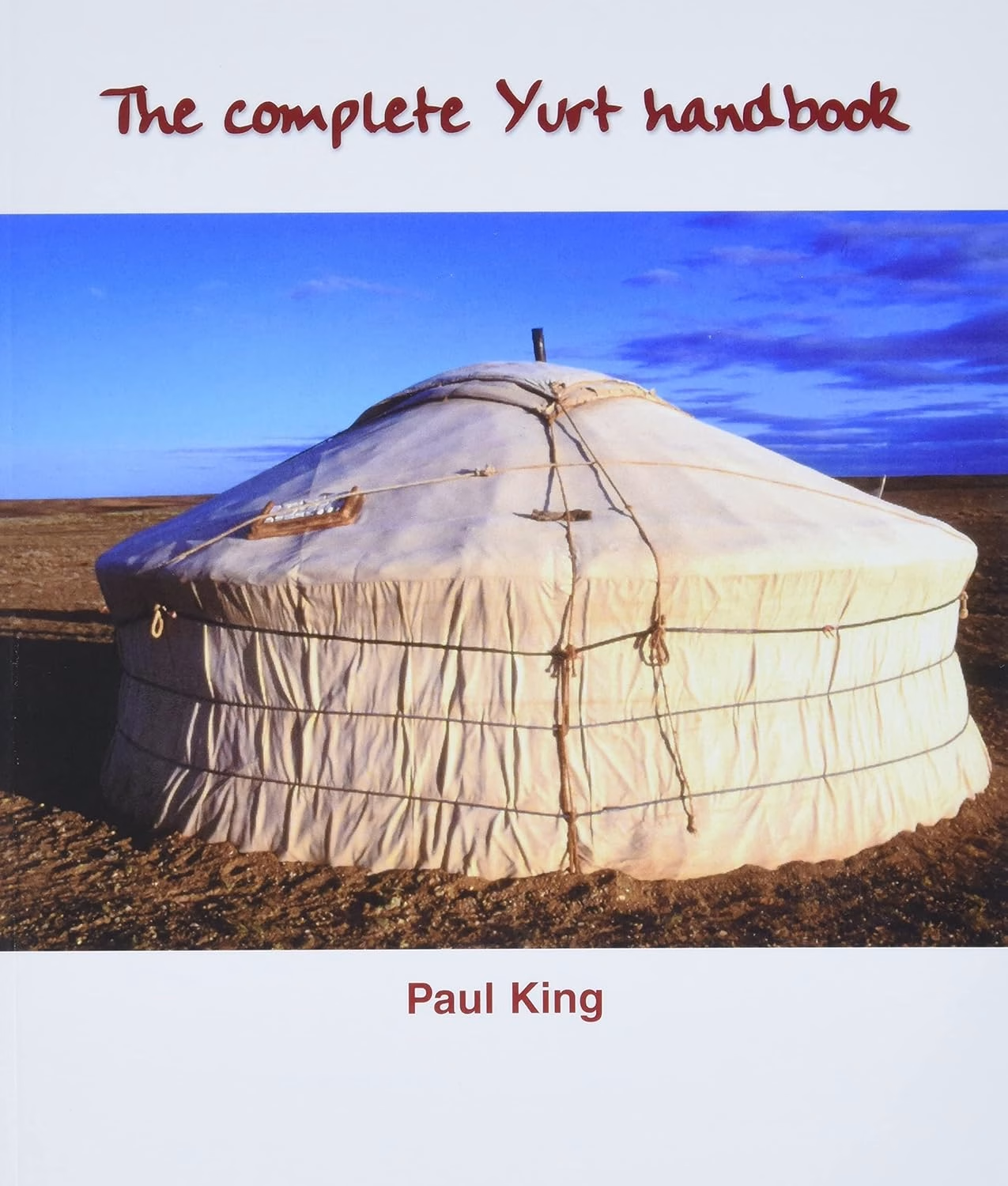
The yurt or ger is a low-impact structure that causes no permanent damage to the land on which it is pitched. It is easy to erect and can be taken down in an hour. It is cool in summer and, with a stove, warm in winter. For centuries, people throughout central Asia have made yurts their homes. Robust and versatile, the yurt has evolved into the ultimate portable dwelling.

An Architectural Bridge Between Landscapes
Although the cultural contexts differ greatly, the open steppe and the Atlantic islands share certain environmental qualities. Both demand resilience from those who inhabit them. Strong winds, shifting weather and exposure to vast horizons shape daily life. The circular canvas dwelling adapts remarkably well to such conditions.
On Mull and Ulva, this ancient design finds new expression within crofting land and island communities. The presence of these structures does not imitate the past of the Hebrides, yet it harmonises with it. Their modest scale and low visual impact suit landscapes where history, archaeology and natural beauty remain central.
Experiencing Island Life Differently
Choosing to stay in one of these round dwellings offers more than a place to sleep. The structure frames the surrounding scenery, filters the sound of wind and sea, and gathers evening light around the stove. Guests wake to natural light entering through the crown and step directly into open landscape rather than into corridors or car parks.
On Mull and Ulva, this experience connects distant histories. A building tradition shaped on the grasslands of Asia now stands on Scotland’s Atlantic edge, maintaining its essential form while adapting to new terrain. The result is accommodation that feels grounded, historically informed and closely tied to the rhythms of island life.