

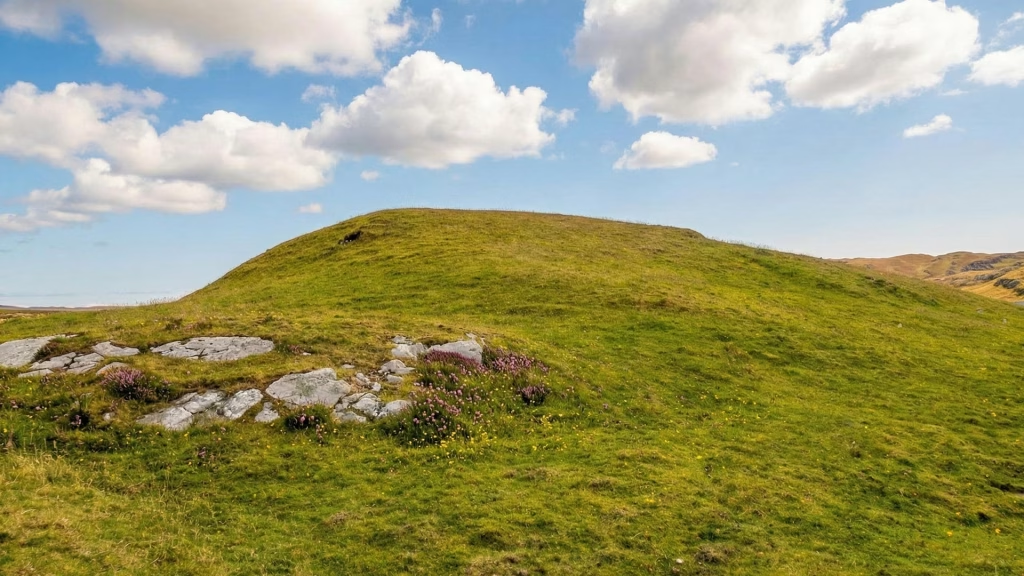
On the small island of Iona there is a gentle grassy rise known as Sìthean Mòr. At first glance it appears ordinary, blending quietly into the surrounding farmland. Yet for centuries this hill has been regarded as a place of deep significance, where the visible world touches something unseen. Stories associated with Sìthean Mòr draw together ancient fairy belief, early Christian tradition, and local memory, making it one of the most evocative sites on the island.
The Meaning of the Name
The name Sìthean Mòr comes from the Gaelic language. Sìthean refers to a fairy hill or mound, a place believed to house the fairy folk, while mòr means big. Throughout Scotland such hills were treated with caution and respect. People believed they were entrances to another realm and that disturbing them could bring illness, loss, or disappearance. The survival of this name suggests that belief in the hill’s otherworldly nature is very old.
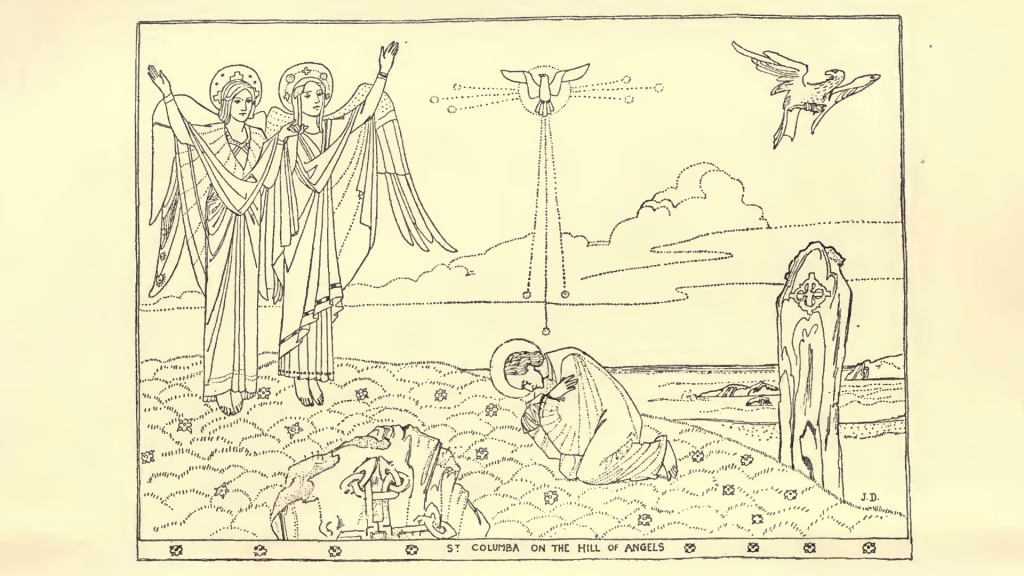
At a later time the hill also became known as Angel Hill. This change reflects the arrival of Christianity on Iona and the way older sacred places were reinterpreted rather than erased. Where fairies had once been imagined, angels now appeared, allowing the site to remain holy while fitting within a Christian worldview.
St Columba and Sacred Vision
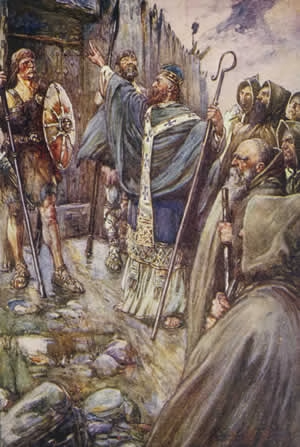
Iona is inseparable from the story of St Columba, who arrived in the sixth century and established a monastery that shaped religious life across much of Scotland. Tradition holds that Columba experienced visions of angels on or near Sìthean Mòr. These accounts strengthened the hill’s reputation as a place where the veil between worlds was thin.
This blending of belief was not unusual. Sacred landscapes often carried meaning across centuries, with each generation reshaping the story while preserving the sense of power attached to the place. Sìthean Mòr became both a fairy dwelling and a Christian holy site without losing its mystery.
Fairy Hills and the Otherworld
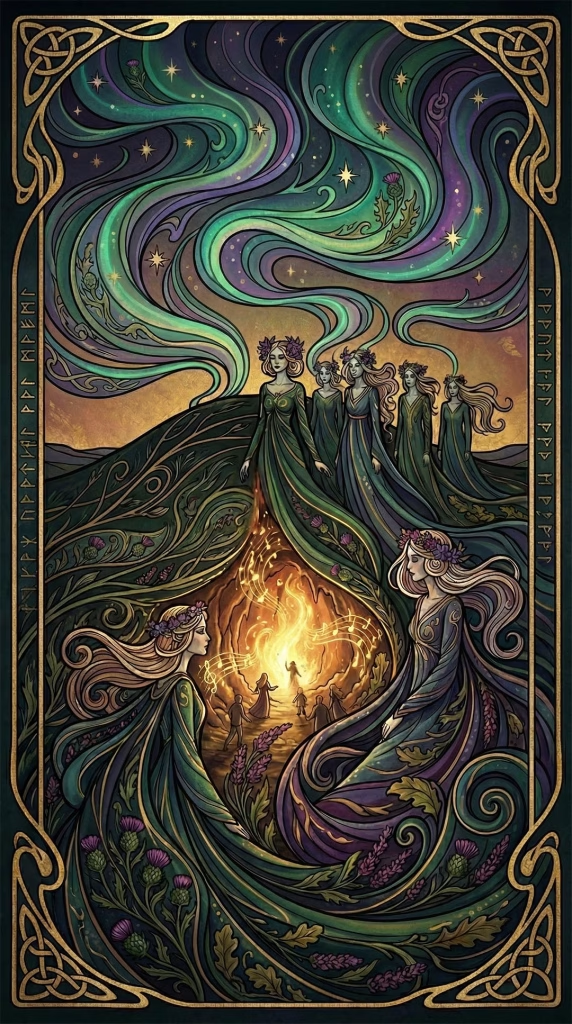
In Gaelic tradition fairies were not harmless or decorative beings. They were powerful, humanlike, and deeply tied to the land. Fairy hills were thought to open at certain times, especially at night or during important seasonal moments. When they opened, music and light spilled out, drawing people closer.
The Otherworld within these hills did not follow human rules. Time moved differently. A person might believe they had been gone for minutes only to return years later. Dancing and music were especially dangerous, as they could cause people to forget their former lives entirely.
Stories of Disappearance and Return
The most haunting stories linked to Sìthean Mòr involve disappearance. These tales were told and retold on Iona for generations, serving as warnings as much as entertainment.
One of the best known stories tells of two young men returning from fishing as evening fell. As they passed the hill they noticed something wrong with the landscape. The side of the hill appeared open, not as a cave but as a smooth hollow glowing faintly from within. Music drifted out, soft and layered, unlike anything made by human instruments. It carried emotion rather than melody, stirring longing and curiosity in those who heard it.
Unable to resist, the two men approached. Inside the hill they saw figures dancing in a wide circle. They looked human but not quite. Their movements were effortless and their faces bright with joy. One of the men stepped forward and joined them. The moment he did, his awareness of the outside world vanished. His fishing gear lay forgotten at the threshold. The music filled his thoughts completely.
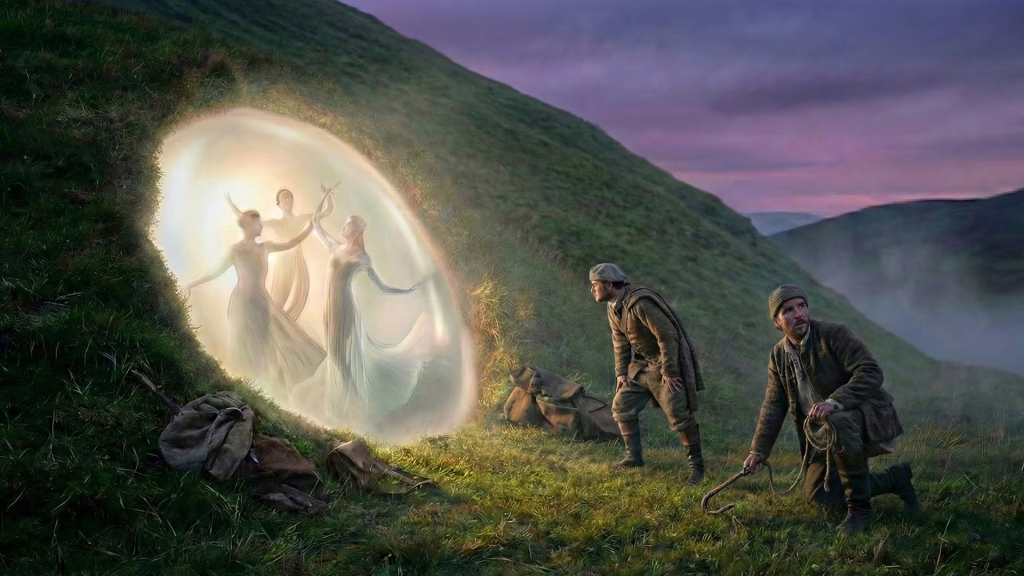
The second man hesitated. Fear broke through the enchantment. He remembered old warnings about fairy hills and the belief that iron could protect against fairy power. He carried an iron fish hook and pressed it into the earth near the opening. At once the pull of the music weakened. He felt himself pushed back toward the familiar world while the entrance behind him began to fade.
He fled and did not look back.
Time Lost and Time Stolen
In some versions of the story the surviving man returned days later, then months later, hoping to rescue his friend. Each time the hill appeared unchanged. Inside, the dancers moved in the same endless circle. His companion was still there, smiling, unaged, and unaware that any time had passed at all.
Other tellings say the man never returned, haunted by guilt and fear. In every version the message is the same. The hill did not give back what it took. Once a person crossed fully into that world, return was uncertain at best and impossible at worst.
The Death of Netta Fornario
In the twentieth century the folklore of Sìthean Mòr gained a tragic real world echo with the death of Netta Fornario (full story here). Found dead near the hill after walking out at night, her story quickly became entwined with older beliefs. Rumors claimed she believed the hill would open for her. Some said she carried a knife either for protection or to keep the hill from closing.
Over time her death took on the shape of legend. Ordinary details blurred and symbolic ones grew stronger. Whether or not she believed in fairies, her story reinforced the sense that Sìthean Mòr was a place where danger lingered beneath the surface.
Ritual Memory and Lost Features
Earlier accounts describe stones and small structures once visible on or near the hill. These may have marked ritual activity, prayer stations, or older ceremonial use. Seasonal customs involving circling the hill suggest that it played a role in marking sacred time as well as sacred space.
Although these features are no longer visible, memory preserved their importance long after the stones themselves disappeared.
Continuity of Belief
Christianity did not erase the older stories of Sìthean Mòr. Instead it reshaped them. Fairies became angels. Otherworldly danger became spiritual awe. Yet the sense of boundary remained. The hill was still a place where one should tread carefully.
This continuity allowed the hill to remain powerful in local imagination across centuries of cultural change.
Sìthean Mòr Today
Today Sìthean Mòr is quiet and unremarkable to the casual visitor. There is no music, no visible opening, no warning sign. Yet its stories endure. They speak of vanished companions, stolen time, and the dangers of curiosity.
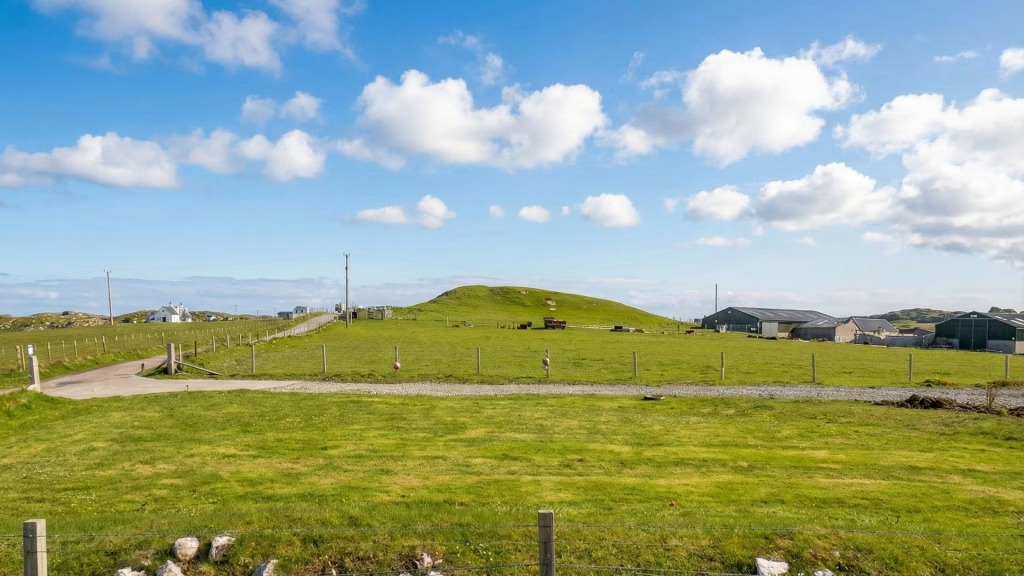
Sìthean Mòr remains a reminder that landscapes carry memory. Long after belief fades, stories stay rooted in the land, waiting to be heard again.