

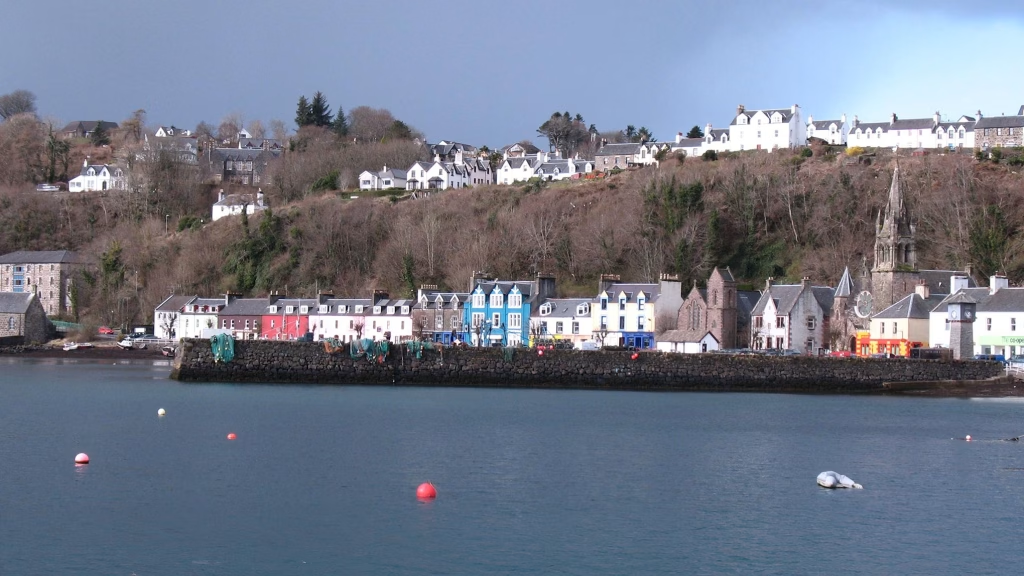
Tobermory is a small town on the Isle of Mull, best known for its colourful waterfront and scenic harbour. Visitors often arrive by ferry or explore the bright buildings along the main quay, but tucked along the bay is the Fisherman’s Pier, which has been central to the town’s working maritime life for over 200 years. Unlike the main harbour, which handles ferries and pleasure boats, the Fisherman’s Pier has always been about practical work, providing local fishing boats with a place to berth, land their catch, and prepare for their next trip out to sea. Its continuous use makes it a rare example of a Scottish working pier that has retained its original purpose for more than two centuries.
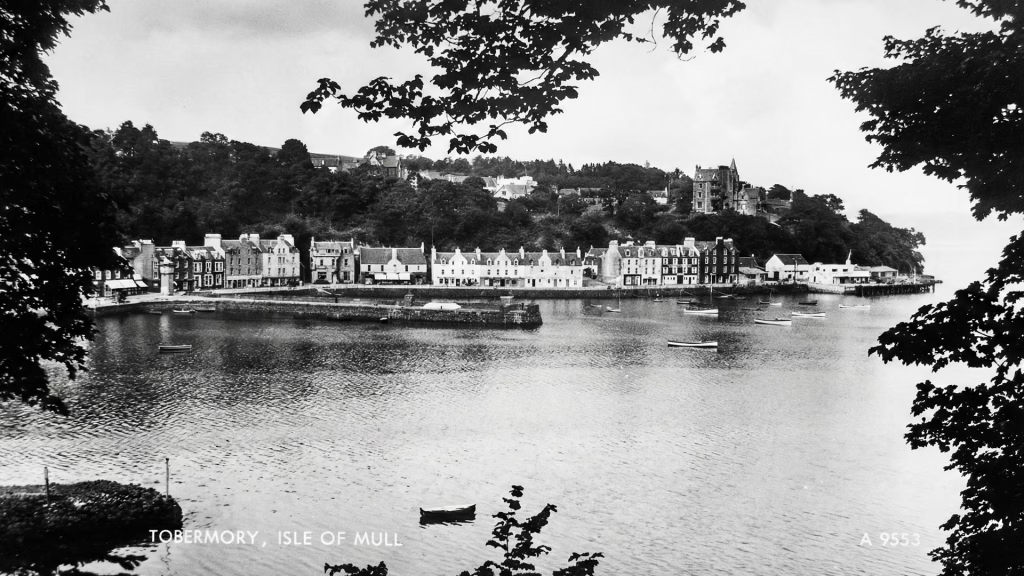
The Founding of Tobermory
The British Fisheries Society established the town of Tobermory in 1788. The Society set up the town to improve the economy of rural Scotland by creating planned fishing settlements. Town planners carefully designed Tobermory from the start, laying straight streets that led down to the bay and building harbours to give fishermen and traders safe access to the sea. The town’s harbour and quays formed the heart of the settlement and remain an important part of its history. Tobermory was designed not only to support fishing but also to provide a functional port that could accommodate trade and supply vessels serving the wider west coast of Scotland. The planning reflects the British Fisheries Society’s ambition to combine economic development with practical maritime infrastructure.
Construction of the Fisherman’s Pier
The British Fisheries Society built the Fisherman’s Pier in 1814. Engineers carried out the construction with advice from Thomas Telford, one of Scotland’s leading civil engineers of the period. They designed the pier to be practical and durable, able to withstand the rough waters of the Sound of Mull. The pier provided a safe and reliable berth for local fishing vessels, allowing Tobermory to operate as a functional fishing port from the town’s earliest days. The stonework and positioning of the pier reflected careful engineering to provide shelter for boats during storms while remaining accessible at all tides, a crucial consideration for a working fishing community.

The Pier in Use
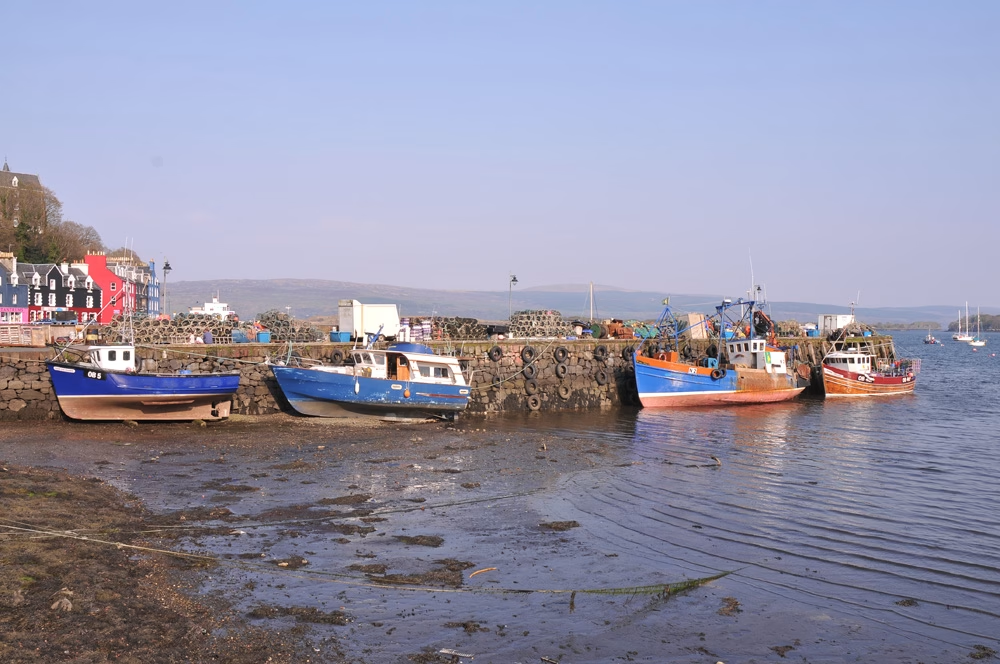
For more than two centuries, the Fisherman’s Pier has served local fishing boats. Its main function has always been practical rather than recreational. The pier provides alongside berthing for fishing vessels and, by arrangement, for visiting boats. It dries at low water, which means that boats resting there at low tide sit on the seabed until the tide returns. This feature is typical of traditional Scottish piers built for working purposes. Fishermen rely on the pier every day to safely load and unload their catches, and it remains an integral part of Tobermory’s maritime operations.
The Harbour and Fishing in Tobermory
Fishing has long been an important part of Tobermory’s economy. The harbour as a whole, including the Fisherman’s Pier, has supported local fisheries, especially shellfish such as scallops, prawns, and lobster. The pier allowed fishermen to land their catch and maintain their vessels close to town. Tobermory’s harbour also received coastal cargo vessels, sometimes called puffers, which brought coal and other supplies to the town. This ensured that the community remained connected to wider trade networks on the Scottish mainland. The combination of fishing activity and supply vessels made Tobermory a functional working harbour rather than just a village dependent on seasonal catches.
Ownership and Management
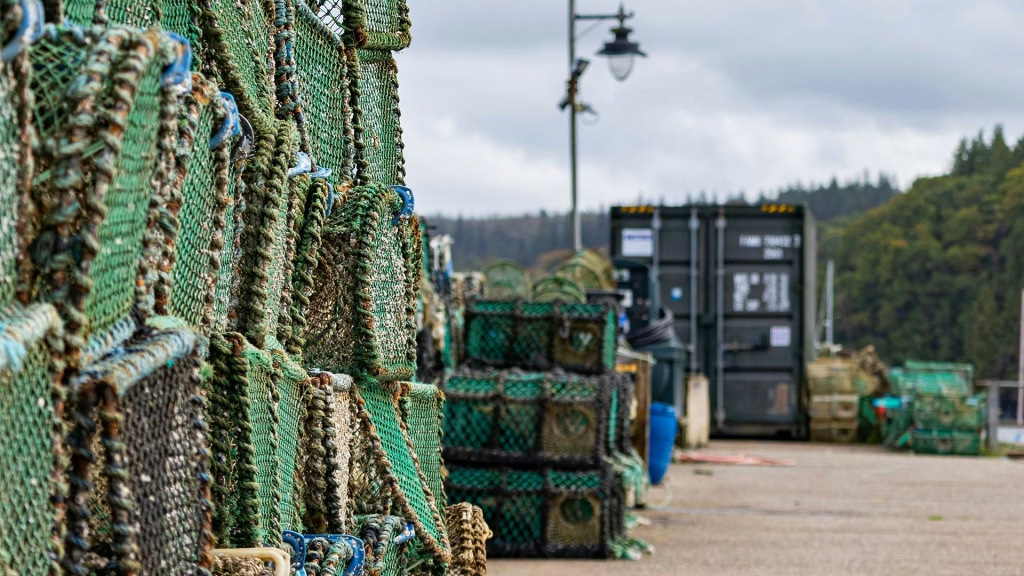
Today, the Fisherman’s Pier is owned and managed by the Tobermory Fishermen’s Association. The association maintains the pier and coordinates the use of berths for local fishing boats and visiting vessels. The pier continues to be a working facility rather than a tourist attraction, allowing fishermen to operate in the town while keeping the pier focused on practical maritime needs. The continued management of the pier ensures that its historical role remains active and relevant to modern fishing operations in the town.
Modern Use
Even in the 21st century, the Fisherman’s Pier continues to serve its original purpose. Local fishing boats use it to land shellfish and other catches. By arrangement, visiting fishing vessels can also moor at the pier. While the town has developed for tourism and visitors often explore the nearby main harbour, the Fisherman’s Pier remains a working structure, reflecting the ongoing maritime heritage of Tobermory. The pier demonstrates the continuity of practical maritime use over more than two centuries and is a rare example of a pier maintaining its original purpose in a modern context.
Significance of the Pier
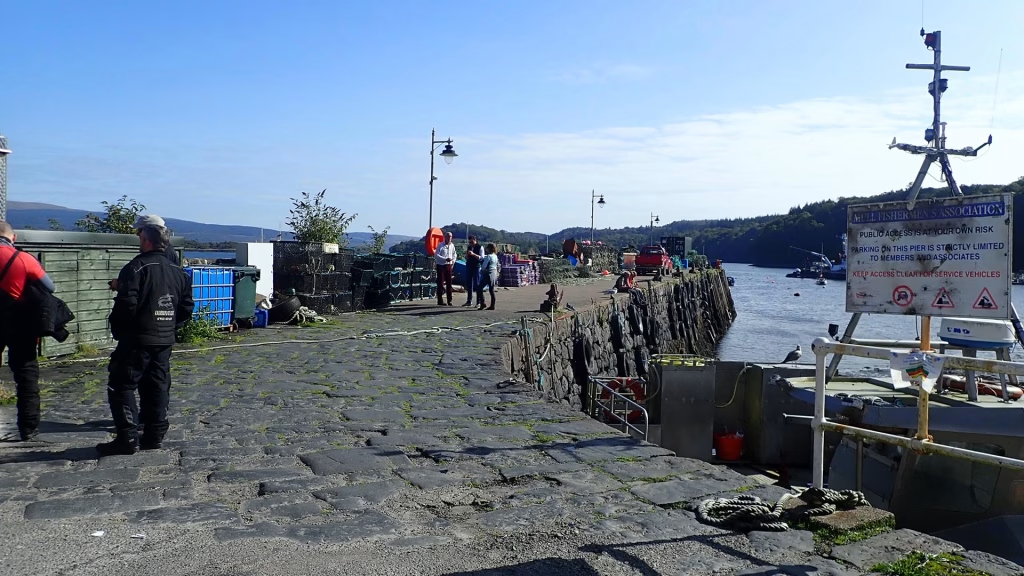
The Fisherman’s Pier is a symbol of Tobermory’s history as a planned fishing settlement. It represents continuity in the town’s maritime life, connecting the present with over 200 years of practical use. While many parts of Tobermory harbour have changed to accommodate modern ferry services, recreational boating, and tourism, the pier retains its original function. It allows the town to maintain a working fishing presence alongside its role as a tourist destination. The pier also serves as a reminder of the town’s origins, linking contemporary Tobermory to its founding principles of planned fishing development and maritime infrastructure.
A Harbour That Stands the Test of Time
Tobermory Fisherman’s Pier is more than a stone structure by the water. It is part of the town’s identity and history, linking the community to the sea for over two centuries. From its construction in 1814 to its use today, the pier has provided a practical and reliable place for fishing vessels, allowing Tobermory to maintain its role as a working harbour. Visitors who explore the town can walk along the pier and see a part of Tobermory that has remained unchanged in its purpose, highlighting the enduring connection between the town and the waters around it. Its long-term use demonstrates the value of maintaining functional maritime structures in small coastal communities and provides a tangible link to Scotland’s historic fishing heritage.
If you’d like to help preserve this important piece of Tobermory’s maritime heritage and support the work of the Tobermory Fisherman’s Pier Association, you can make a donation through their Crowdfunder page.