

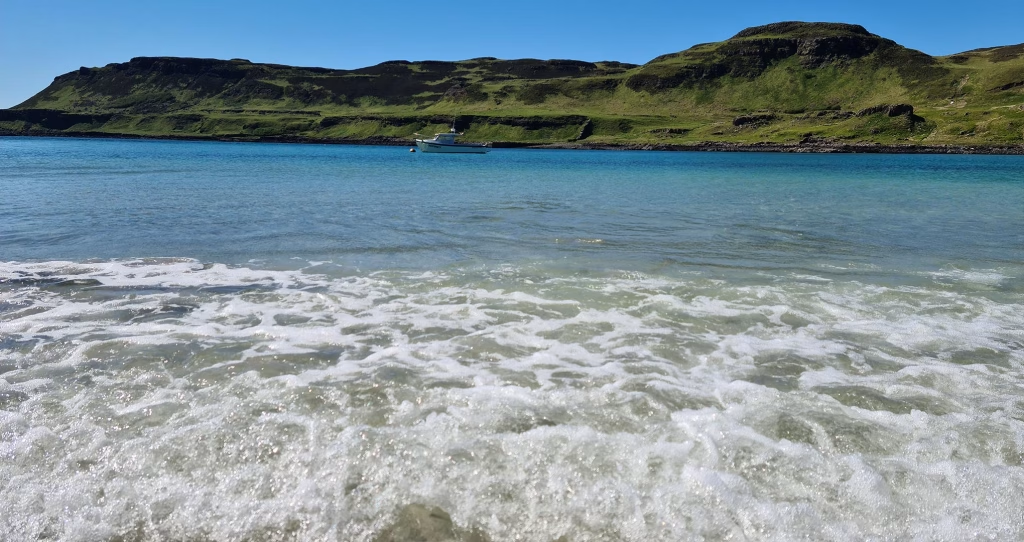
The beautiful and largely untouched north side of Calgary Bay on the Isle of Mull is currently the focus of a significant local debate. A recent planning application, reference 26/00126/PP, submitted to Argyll and Bute Council by Alex and Kezzie Acloque, has sparked a wave of public interest and organized opposition. The proposal outlines the construction of a large four bedroom house, but the surrounding environmental, historical, and community concerns have turned this into a complex issue.
The Proposal: Building on the Bay
Design and Architecture
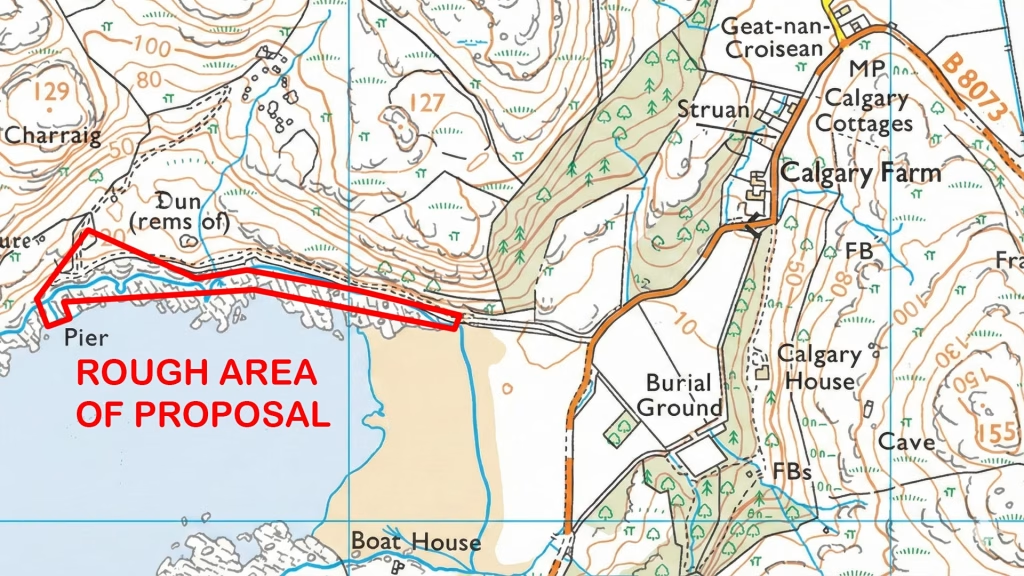
The applicants are seeking permission to build a new residential property near the existing pier. The architectural plans feature three interconnected buildings that surround a central courtyard. Alongside the main house, the project includes the renovation of an old boatshed and the installation of a private waste disposal plant.
Landowner Rights and Vision
Supporters of such developments often point to the rights of landowners to build on their property, provided they meet planning regulations. Proponents of new rural builds sometimes argue that sensitive architectural designs can blend into the landscape and that modern construction methods can ensure energy efficiency. While the applicants detail specific supporting arguments within the official planning documents, the core premise rests on creating a private residence that utilizes the existing topography and revitalizes the old boatshed structure.
The Opposition: Protecting Calgary Bay
Environmental Concerns and Wildlife
Conversely, the proposal has encountered robust resistance from local residents and environmental advocates. A dedicated campaign group has highlighted multiple areas of concern, generating over forty formal objections by mid February 2026. Objectors raise the environmental impact as a primary issue. The proposed site falls within a Local Nature Conservation Area and a Site of Special Scientific Interest.
Opponents argue that the development, along with a wide access road capable of supporting heavy machinery, threatens the habitats of protected species. The local wildlife recorded in the area includes otters, seals, adders, slow worms, transparent burnet moths, hen harriers, golden eagles, white tailed eagles, lizards, newts, toads, and frogs. Objectors also point out that the ecologist conducted the preliminary ecological survey in November, a time when many of these species hibernate or remain absent. This timing leads campaigners to call for a more comprehensive seasonal assessment before the council makes any decisions.
Public Access and Community Impact
Public access and community impact are also major points of contention. The current plans suggest converting the existing public walking path to the pier into a private driveway. Consequently, the developers would relocate the public path closer to the rocky shore. Locals express concern that this new path across foreshore boulders would restrict access for many visitors, could submerge during high tides, and might suffer damage during winter storms.
Planning Policies and Tourism
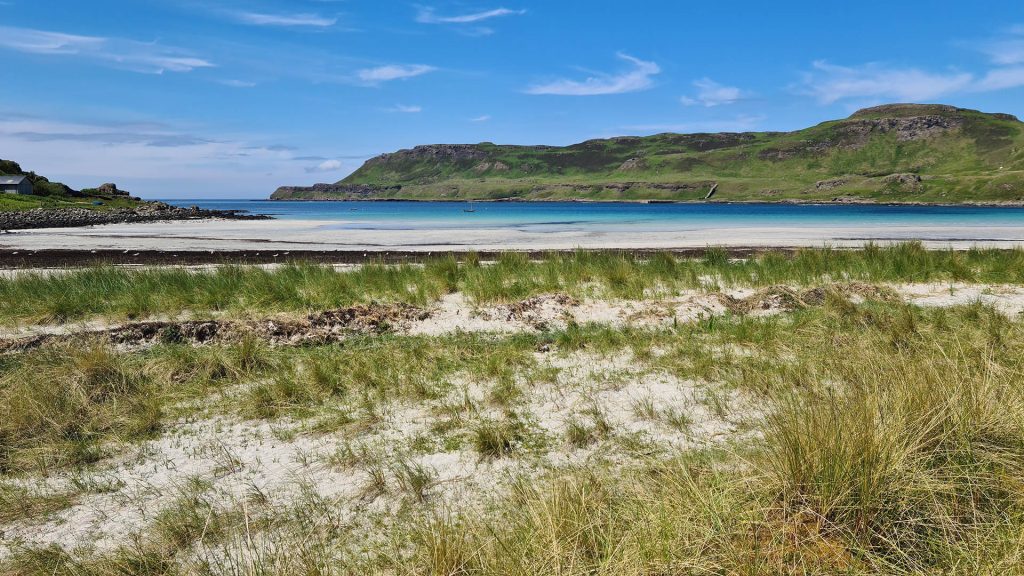
Furthermore, campaigners argue that the development conflicts with the Local Development Plan 2. They state the site lies outside the designated settlement area and does not qualify as standard infill or rounding off housing. Additional concerns include potential pollution to a nearby burn from the waste treatment plant and the visual impact on a landscape renowned for its wild beauty. Tourist guides consider Calgary Bay one of the top ten visitor attractions on Mull, and objectors fear the development will diminish the qualities that support the local tourism economy.
Historical and Archaeological Significance
The area also holds immense historical and archaeological significance. The proposed site sits near the Calgary Dun, which dates from the first to third centuries, as well as the historic Inivea village, the pier, and the boathouse. Opponents fear the construction and significant excavation, particularly the routing of waste pipes around the base of the Dun, could compromise the integrity of these interconnected sensitive sites.
Looking Ahead
The Council Review Process
The situation at Calgary Bay encapsulates a classic planning tension between private development rights and the preservation of natural, historical, and public community assets. Argyll and Bute Council is currently reviewing the application, and the public has until March 4, 2026, to submit their comments or objections. The final decision will require careful consideration of both the rights of the applicants and the profound concerns the community raises regarding the ecological and cultural integrity of the bay.
Development Debate at Calgary Bay: Examining the Planning Application
The beautiful and largely untouched north side of Calgary Bay on the Isle of Mull is currently the focus of a significant local debate. A recent planning application, reference 26/00126/PP, submitted to Argyll and Bute Council by Alex and Kezzie Acloque, has sparked a wave of public interest and organized opposition. The proposal outlines the construction of a large four bedroom house, but the surrounding environmental, historical, and community concerns have turned this into a complex issue.
The Proposal: Building on the Bay
Design and Architecture
The applicants are seeking permission to build a new residential property near the existing pier. The architectural plans feature three interconnected buildings that surround a central courtyard. Alongside the main house, the project includes the renovation of an old boatshed and the installation of a private waste disposal plant.
Landowner Rights and Vision
Supporters of such developments often point to the rights of landowners to build on their property, provided they meet planning regulations. Proponents of new rural builds sometimes argue that sensitive architectural designs can blend into the landscape and that modern construction methods can ensure energy efficiency. While the applicants detail specific supporting arguments within the official planning documents, the core premise rests on creating a private residence that utilizes the existing topography and revitalizes the old boatshed structure.
The Opposition: Protecting Calgary Bay
Environmental Concerns and Wildlife
Conversely, the proposal has encountered robust resistance from local residents and environmental advocates. A dedicated campaign group has highlighted multiple areas of concern, generating over forty formal objections by mid February 2026. Objectors raise the environmental impact as a primary issue. The proposed site falls within a Local Nature Conservation Area and a Site of Special Scientific Interest.
Opponents argue that the development, along with a wide access road capable of supporting heavy machinery, threatens the habitats of protected species. The local wildlife recorded in the area includes otters, seals, adders, slow worms, transparent burnet moths, hen harriers, golden eagles, white tailed eagles, lizards, newts, toads, and frogs. Objectors also point out that the ecologist conducted the preliminary ecological survey in November, a time when many of these species hibernate or remain absent. This timing leads campaigners to call for a more comprehensive seasonal assessment before the council makes any decisions.
Public Access and Community Impact
Public access and community impact are also major points of contention. The current plans suggest converting the existing public walking path to the pier into a private driveway. Consequently, the developers would relocate the public path closer to the rocky shore. Locals express concern that this new path across foreshore boulders would restrict access for many visitors, could submerge during high tides, and might suffer damage during winter storms.
Planning Policies and Tourism
Furthermore, campaigners argue that the development conflicts with the Local Development Plan 2. They state the site lies outside the designated settlement area and does not qualify as standard infill or rounding off housing. Additional concerns include potential pollution to a nearby burn from the waste treatment plant and the visual impact on a landscape renowned for its wild beauty. Tourist guides consider Calgary Bay one of the top ten visitor attractions on Mull, and objectors fear the development will diminish the qualities that support the local tourism economy.
Historical and Archaeological Significance
The area also holds immense historical and archaeological significance. The proposed site sits near the Calgary Dun, which dates from the first to third centuries, as well as the historic Inivea village, the pier, and the boathouse. Opponents fear the construction and significant excavation, particularly the routing of waste pipes around the base of the Dun, could compromise the integrity of these interconnected sensitive sites.
Looking Ahead
The Council Review Process
The situation at Calgary Bay encapsulates a classic planning tension between private development rights and the preservation of natural, historical, and public community assets. Argyll and Bute Council is currently reviewing the application, and the public has until March 4, 2026, to submit their comments or objections. The final decision will require careful consideration of both the rights of the applicants and the profound concerns the community raises regarding the ecological and cultural integrity of the bay.
How to Submit an Objection
If you wish to make your voice heard regarding this development, it is crucial to submit an official comment to Argyll and Bute Council. The strict deadline for all public submissions is March 4, 2026. Any comments received after this date will not be counted.
Online Submissions
The most direct method is through the official council website. You can view the application and submit your comments on the Argyll and Bute Council Planning Portal. You will need to search for the planning reference number 26/00126/PP. If you do not already have an account, you must register on the site before you can leave a comment.
Email Submissions
You can also send your objection directly via email. Send your message to the planning department at planning.olandi@argyll-bute.gov.uk. For your objection to be valid, you must clearly include your full name, your postal address, and the planning reference number 26/00126/PP in the email.
Postal Submissions
If you prefer to send a physical letter, ensure it is signed and arrives well before the March 4 deadline. Include your name, your address, and the reference number 26/00126/PP. Mail your letter to the:
Argyll and Bute Council Planning Department
Municipal Buildings
Albany Street
Oban
PA34 4AW