



Formation of the Mull Combination
The Mull Combination Poorhouse, also known in Gaelic as Tigh na Bochdh, was established around 1860 when seven island parishes on Mull joined to provide formal relief under the Scottish Poor Law, following the provisions of the Scottish Poor Law Amendment Act. By pooling their resources, the parishes could fund and operate a single poorhouse efficiently while maintaining its administration according to legal requirements.
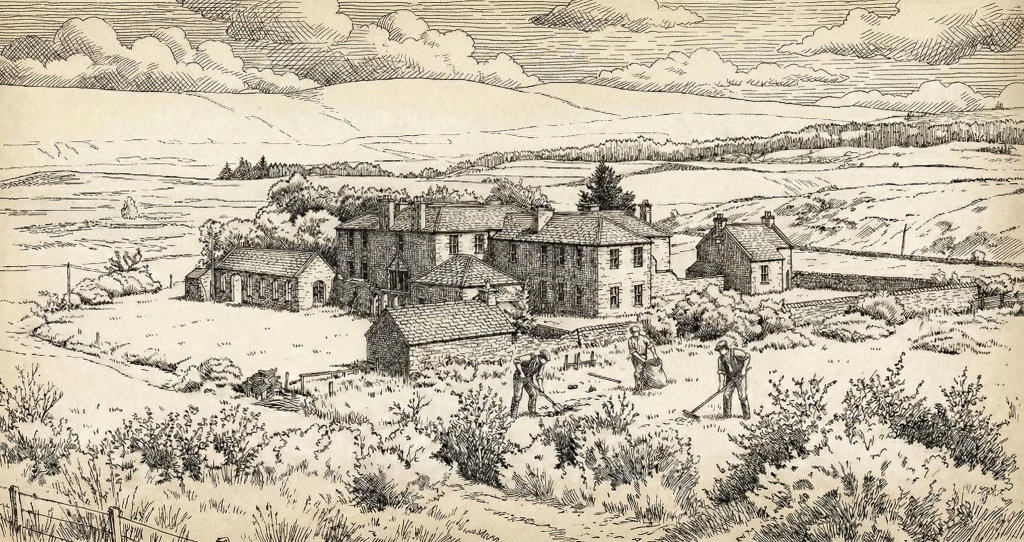
A board of guardians from the participating parishes managed the combination, overseeing financial planning, construction decisions, staffing, and governance. They held regular meetings to review operational and financial matters, ensuring that decision-making and oversight remained consistent throughout the poorhouse’s operational period.
Construction and Design of the Poorhouse
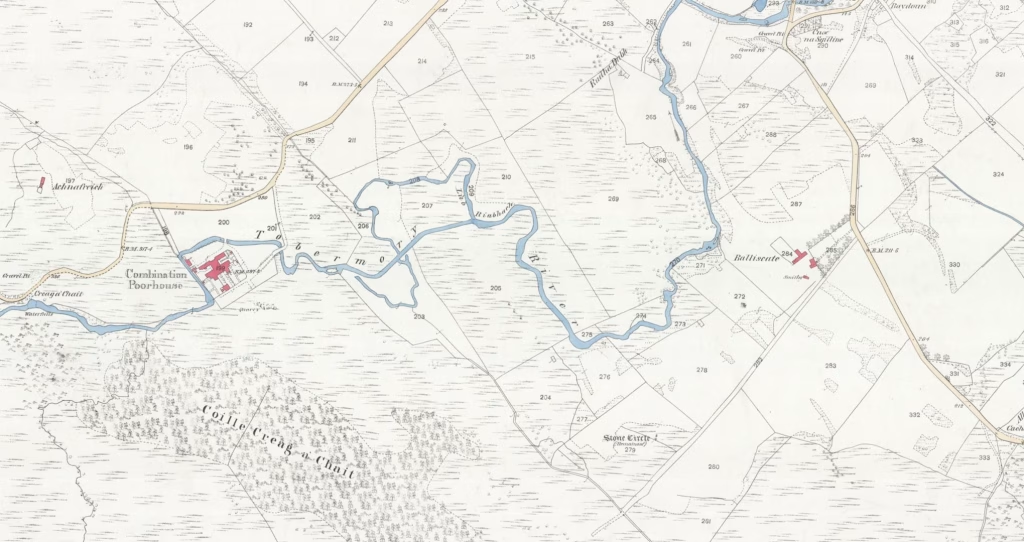
Construction took place between 1861 and 1862 on a five-acre site west of Tobermory. The building was designed by David Cousin, an Edinburgh architect experienced in public buildings. The poorhouse followed a T-shaped plan, separating male and female wings while centering a communal area that served as both a dining hall and chapel. Staff held weekly religious services in Gaelic to accommodate the local population, and the T-plan allowed them to supervise inmates effectively while keeping the male and female sections separate. Architectural records show the presence of the wings, central hall, and overall footprint, but they do not include detailed floor plans.
Capacity, Cost, and Architecture
The poorhouse accommodated approximately 130 inmates, a number determined by the population and projected demand from the seven parishes. Construction cost totaled roughly £7,700, equivalent to around £950,000 in today’s money, reflecting a substantial investment by the combined parishes according to union financial accounts. Architectural features reflected the functional style typical of mid-Victorian Scottish poorhouses, with separate entrances for male and female wings limiting interaction and a central hall providing space for meals and religious observances. Builders used local stone, and contemporary accounts describe the construction as standard for institutional buildings of the period.
Operation and Administration
During its operation, the poorhouse served residents from all seven parishes in the Mull Combination. Guardians maintained minute books, correspondence, and financial records, which survive at Mull Museum and the Argyll and Bute Council Archives. These documents detail administrative decisions, budgeting, and facility management, while also showing that the poorhouse remained active throughout the late 19th and early 20th centuries.
The committee oversaw staffing, food and supply budgets, and building maintenance, ensuring the institution operated according to the standards established by the Mull Combination. The records consistently reflect attention to operational management, financial accountability, and compliance with Scottish Poor Law regulations.
Closure and Demolition
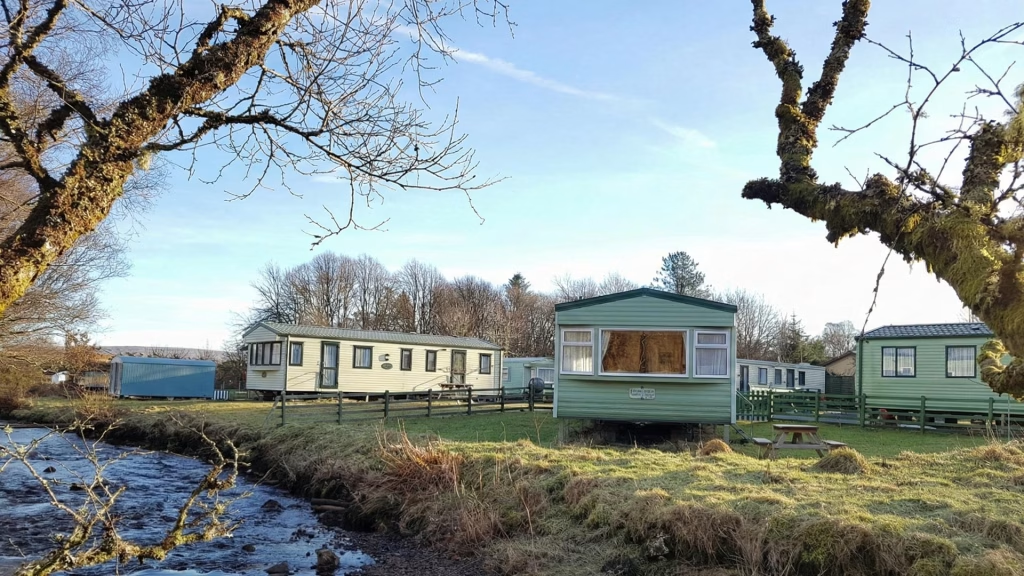
The Mull Combination Poorhouse closed in 1923, and guardians transferred the remaining inmates to the Oban poorhouse. After closure, the building gradually deteriorated, and workers demolished the main structure during the winter of 1973–74. Local reports indicate that builders reused stone from the demolition in projects such as the distillery jetty at Ledaig in Tobermory. Today, the site is occupied by the Tobermory Campsite, which covers the location of the former poorhouse.
Archival Records and Sources
Primary sources connected to the Mull Combination Poorhouse include committee minutes, correspondence, and financial records, all held at Mull Museum and the Argyll and Bute Council Archives. These documents show decisions made by guardians, budget allocations, and operational matters. Researchers seeking detailed operational information, such as staffing levels or parish contributions, must consult the original archival material. The surviving records provide the only verified evidence of the poorhouse’s construction, administration, operation, and closure.
Scottish Poor Law and Combination System
The Scottish Poor Law allowed parishes to form combinations to manage institutional relief. Small or geographically isolated parishes, such as those on Mull, could pool resources to operate a single poorhouse serving multiple communities. Combination poorhouses provided shelter and sustenance while separating male and female inmates and maintaining structured routines.
The Mull Combination Poorhouse illustrates how these laws were applied on a remote island, with archival records confirming its construction, operation, and eventual closure.
