



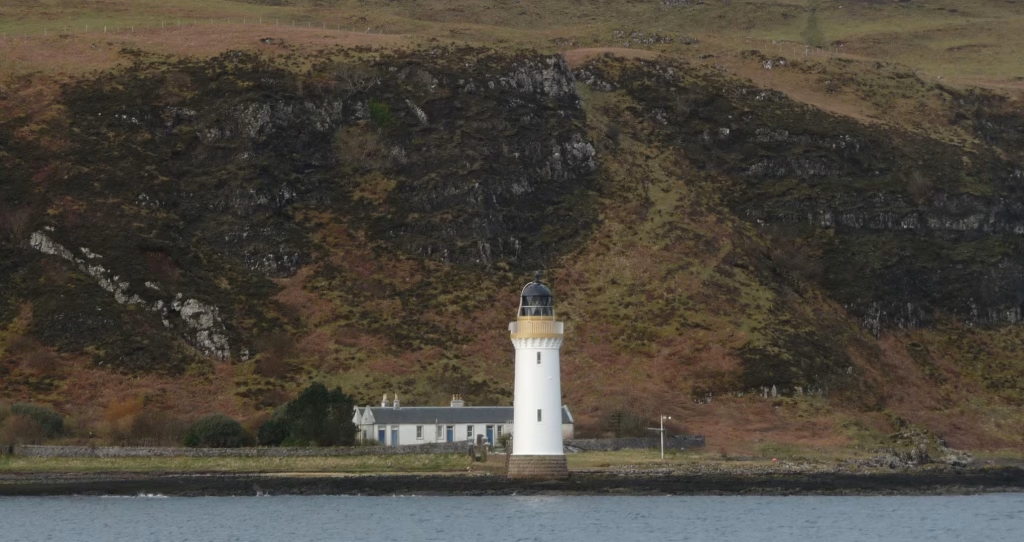
Rubha nan Gall Lighthouse stands on the northeastern coast of the Isle of Mull, overlooking the Sound of Mull, the narrow channel that separates Mull from the Ardnamurchan peninsula and carries regular sea traffic along Scotland’s west coast. The name Rubha nan Gall means Stranger’s Point in Gaelic, and the headland rises sharply from the water with wooded slopes and wide views across the sound towards the mainland, creating a dramatic and exposed setting. Engineers chose this location in the nineteenth century when they decided to place a lighthouse here to guide vessels safely through the northern entrance to the Sound of Mull and onwards towards Tobermory Bay.
The Need for a Lighthouse
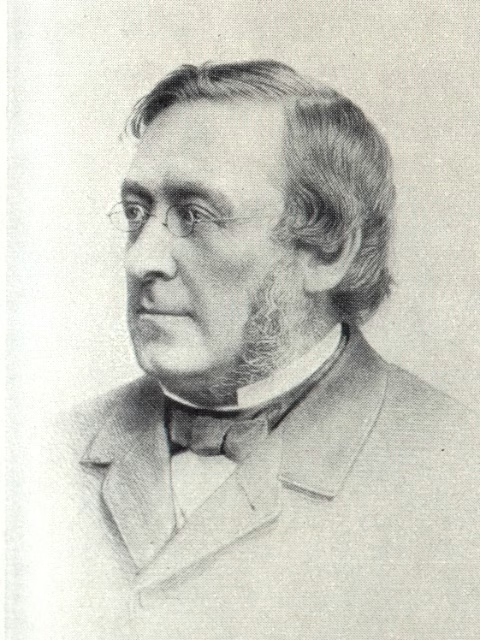
During the mid nineteenth century, shipping increased along Scotland’s western seaboard, and mariners required clearer guidance when navigating narrow coastal channels where tides, weather, and poor visibility could quickly create danger. In 1853 David Stevenson, an engineer with the Northern Lighthouse Board, identified the northern entrance to the Sound of Mull as a location that required a navigational light, explaining that a lighthouse at this point would clearly mark the entrance to the sound while assisting vessels approaching Tobermory. His report prompted the Northern Lighthouse Board to approve the construction of a lighthouse at Rubha nan Gall, recognising the importance of safeguarding this busy maritime route.
Construction and Design
David Stevenson and his younger brother Thomas Stevenson constructed the lighthouse in 1857, continuing the work of a family whose engineering achievements shaped maritime safety throughout Scotland. At Rubha nan Gall they built a cylindrical brick tower about 19 metres tall, finishing it in white with a black lantern and ochre trim around the balcony, creating a structure that was both practical and visually distinctive against sea and sky. Designed to withstand strong winds and heavy coastal weather, the tower combined durability with clarity, ensuring that it remained clearly visible to ships navigating the sound.
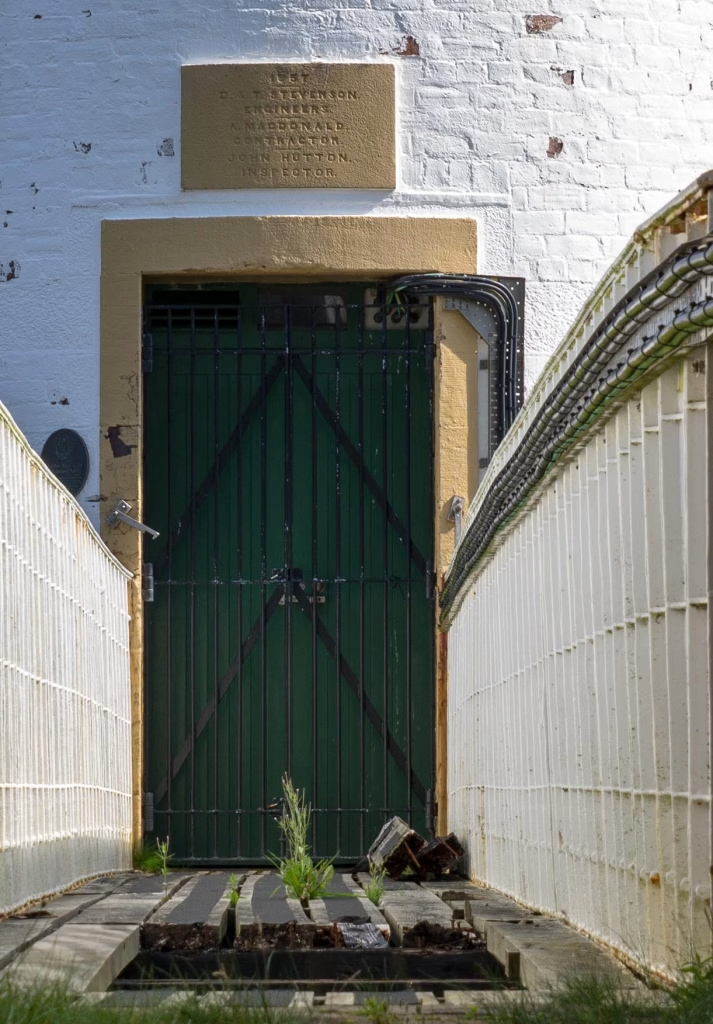
The sign says “D. & T. STEVENSON – ENGINEERS – A. MACDONALD – CONTRACTOR – JOHN HUTTON – INSPECTOR”
The builders positioned the tower carefully on the headland so that ships approaching from the Atlantic, or travelling within the Sound of Mull, could easily identify it against the landscape. The solid brick construction and thoughtful design ensured that the lighthouse would serve mariners reliably for decades.
Lighting the Beacon
The lighthouse first shone its light on 10 November 1857, and from that evening onward sailors relied on its steady signal when navigating the waters around Mull. The light flashes white every three seconds, a distinct pattern that allows mariners to recognise it among other coastal lights, and it reaches up to 10 nautical miles from a focal height of about 17 metres above sea level, giving ships a clear reference as they approach the entrance to the Sound of Mull.
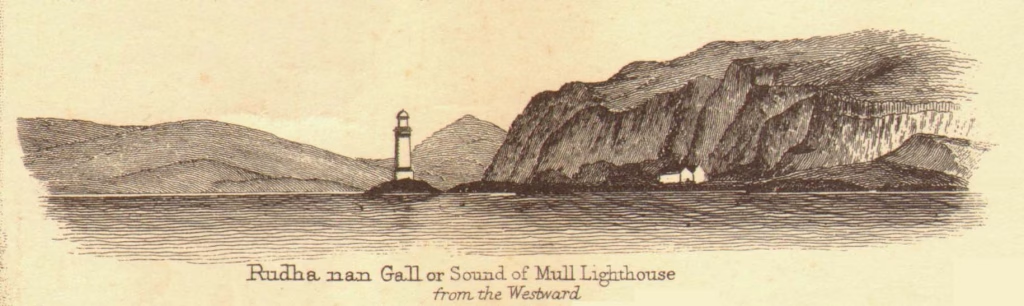
By providing this consistent signal, the lighthouse gave captains greater confidence when travelling at night or during poor visibility, quickly becoming a familiar and trusted feature of the coastline.
Life at the Lighthouse
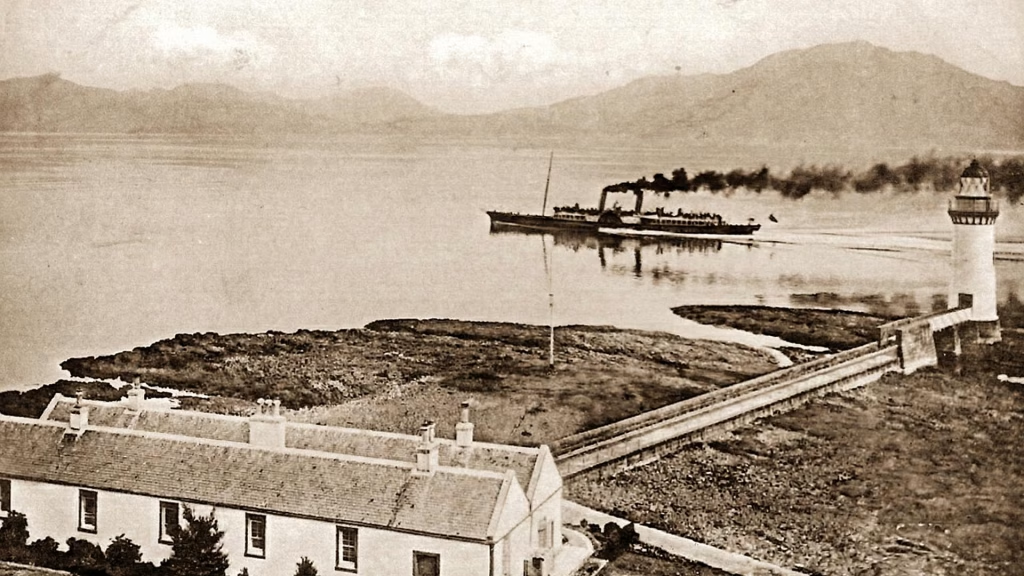
For more than a century, lighthouse keepers lived and worked at Rubha nan Gall, and the Northern Lighthouse Board built keeper’s cottages beside the tower so that staff and their families could remain close to the light at all times. The keepers carried out daily routines that included preparing and maintaining the lamp, checking the equipment, monitoring weather conditions, and ensuring that the light operated correctly each night, responsibilities that demanded discipline and constant attention.
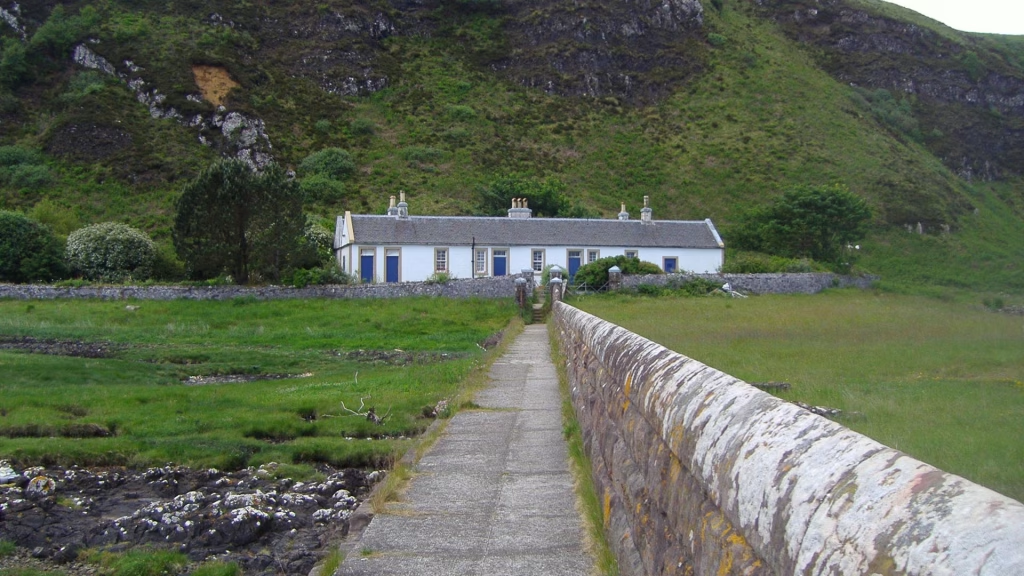
The keepers also maintained the buildings and monitored conditions around the station, walking the coastal path to Tobermory to collect supplies and stay connected with the town. This path stretches about 1.3 miles along cliffs and through woodland, offering expansive views across the Sound of Mull while reminding those who travel it of the station’s isolation. Through their steady work and commitment, the keepers ensured that the lighthouse fulfilled its purpose year after year.
Access and Isolation
The lighthouse has never had a road connecting it to Tobermory or the wider island, and from the beginning people reached the site by boat or on foot along the coastal path, a reality that shaped daily life at the station and required careful planning whenever supplies or equipment needed to be transported.
The remote setting also preserved the natural character of the headland, and visitors who walk the path today experience the same gradual approach that generations of keepers and sailors once knew, with the white tower appearing against the backdrop of sea and sky as they near the point.
Automation and a New Era
In the mid twentieth century, advances in technology transformed lighthouse operations across Scotland, and engineers developed automated systems that no longer required full time resident keepers. In 1960 the Northern Lighthouse Board automated Rubha nan Gall Lighthouse, ending the long period during which keepers lived on site.
After automation, the Board continued to maintain and monitor the lighthouse while modern equipment controlled the light’s operation, and although technology changed how the lighthouse functioned, it did not change its essential role. The beacon continued to guide vessels safely through the Sound of Mull.
Modern Upgrades
Over time technicians upgraded the lighthouse with modern systems to improve efficiency and reliability, and the light now operates using solar power, reducing the need for frequent maintenance and external power sources while ensuring consistent performance. Despite these updates, the lighthouse retains its original flashing pattern of one white flash every three seconds and continues to reach up to 10 nautical miles.
These improvements allow the lighthouse to combine nineteenth century design with twenty first century technology, and mariners still look to Rubha nan Gall as a key reference point when entering the sound or heading towards Tobermory.
The Keeper’s Cottages Today
After automation removed the need for resident staff, the keeper’s cottages no longer housed lighthouse families, and over time the buildings became vacant until, around 2013, new private owners purchased the cottages and began restoring them with careful attention to their historic character.
Because no road reaches the site, workers transported materials by boat and carried them along the path to the cottages, preserving original windows, wooden floors, plasterwork, and brass fittings wherever possible while also restoring a natural spring to provide water and installing solar panels to generate electricity.
Today one cottage serves as a private home while the other operates as a self catering retreat, allowing guests to experience the same dramatic setting that lighthouse keepers once knew, although modern comforts now make life far easier than it was in the nineteenth century.
A Lasting Landmark
For more than 160 years, Rubha nan Gall Lighthouse has marked the northern entrance to the Sound of Mull and helped ships navigate these waters with greater safety since David and Thomas Stevenson built it in 1857 to meet a clear maritime need. Generations of keepers maintained it with care and commitment until automation began a new chapter in 1960.
Today the lighthouse continues to operate as an active navigational aid while also standing as a reminder of Mull’s maritime heritage. Walkers on the coastal path, sailors in the sound, and visitors staying in the restored cottages all encounter a structure that still performs the task for which its builders intended it, maintaining a quiet but constant presence on Stranger’s Point.
