



Early Settlement and Pre-Christian Context
The Isle of Iona lies just off the western coast of Scotland within the Inner Hebrides and formed part of the early Gaelic kingdom of Dál Riata during the early historic period. This kingdom linked western Scotland and northeastern Ireland and allowed movement of people, culture, and religious ideas across the Irish Sea.
Archaeological evidence for prehistoric habitation on Iona remains limited compared to mainland Scotland, yet its geographical position ensured integration into early maritime networks. By the early medieval period, Gaelic-speaking communities had settled on the island and maintained cultural and political ties with Ireland.
This context explains the island’s later significance, as its location created a natural bridge between Irish monastic traditions and the developing societies of northern Britain.
The Arrival of St Columba and the Foundation of the Monastery
The defining moment in Iona’s history occurred in AD 563 when the Irish monk St Columba arrived with twelve companions and founded a monastery that became one of the most influential religious centres in the British Isles.
From this base, Columba and his followers carried out missionary work across Scotland and northern England and helped spread Christianity among the Picts and other communities.
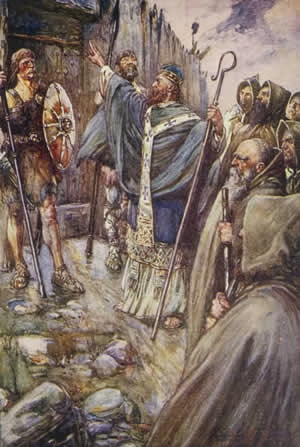
The monastery quickly developed into a major ecclesiastical institution and served as a religious centre, a place of education, and a hub for manuscript production and artistic expression. Pilgrims began travelling to Iona as early as the seventh century and established a tradition that continues today.
The influence of Iona extended far beyond its physical size and shaped religious life across much of northern Britain.
Iona as a Centre of Learning and Art
During the seventh and eighth centuries, Iona reached the height of its cultural and intellectual influence and gained recognition for scholarly activity, particularly in manuscript production and religious art.
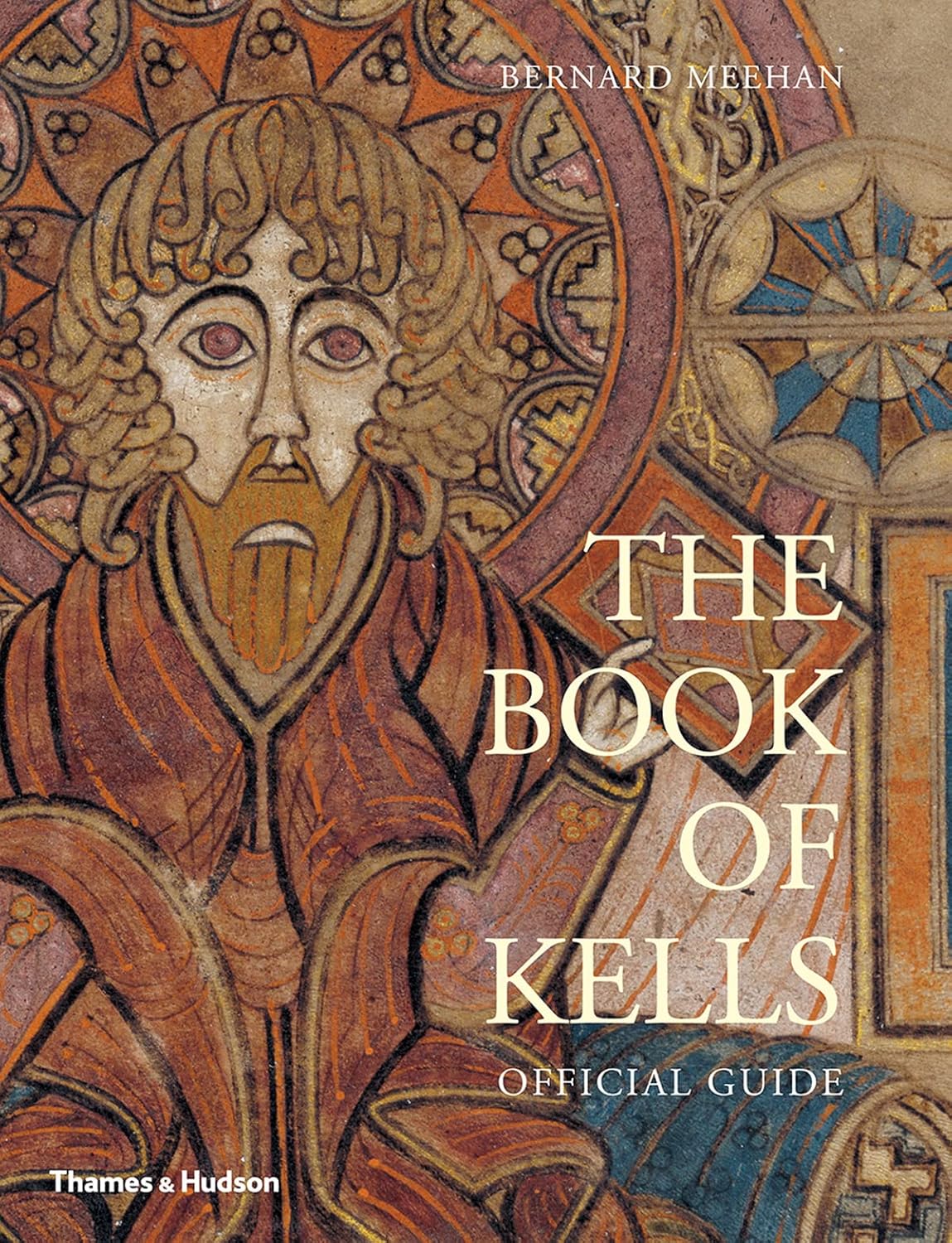
Among its most significant contributions, scribes created illuminated manuscripts, including the Book of Kells, which scholars believe originated or began on Iona in the late eighth century.
The Book of Kells, dating from about 800, is a brilliantly decorated manuscript of the four Gospels. This new official guide, by the former Keeper of Manuscripts at Trinity College Library, Dublin, provides fascinating insights into the Book of Kells, revealing the astounding detail and richness of one of the greatest works of medieval art.

Stone carvers also produced high crosses, many with intricate decoration, and erected them near the monastery to reflect both artistic achievement and religious devotion.
Iona’s monastic network extended across Britain and Ireland, and communities established daughter houses in places such as Lindisfarne. This network spread religious practices and learning and reinforced Iona’s position as a central authority within early medieval Christianity.
The island’s role as a centre of learning ensured that its influence reached far beyond its geographical boundaries.
Viking Raids and Decline of the Monastery
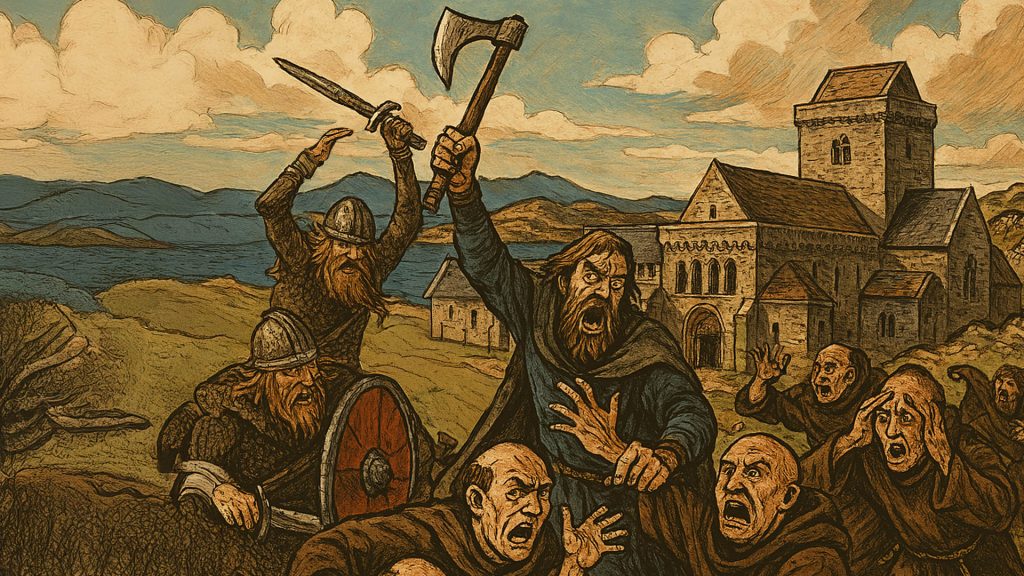
From the late eighth century onwards, Viking raiders attacked Iona repeatedly. The first recorded raid occurred in AD 794, and a particularly devastating attack in 806 resulted in the deaths of many monks.
Further raids in the ninth and tenth centuries disrupted monastic life and led to the loss of valuable manuscripts and treasures. In response, custodians removed relics associated with St Columba from the island in 849 and took them to Scotland and Ireland for safekeeping.
Although religious activity continued, the monastery lost much of its prominence during this period. The rise of other ecclesiastical centres and the instability caused by Norse incursions reduced Iona’s influence within the wider Christian world.
Despite this decline, the island retained its spiritual importance and continued to attract pilgrims.
Integration into Norse and Scottish Kingdoms
During the Viking Age, Norse rulers incorporated Iona into the Kingdom of the Isles while religious activity continued on the island.
In the late eleventh century, Norwegian authority over the Hebrides gained formal recognition, though local power remained contested. By the mid-thirteenth century, the Treaty of Perth in 1266 transferred the Hebrides, including Iona, to Scottish control.
During this transitional period, Iona retained its role as a burial site for kings and notable figures. The cemetery at Reilig Odhráin became associated with the burial of numerous Scottish, Irish, and Norse rulers and reinforced the island’s enduring symbolic significance.
This continuity shows how Iona maintained its spiritual prestige despite shifting political authority.
Medieval Religious Developments
In the early thirteenth century, significant changes reshaped religious life on Iona. Around 1203, church authorities established a Benedictine abbey along with an Augustinian nunnery.
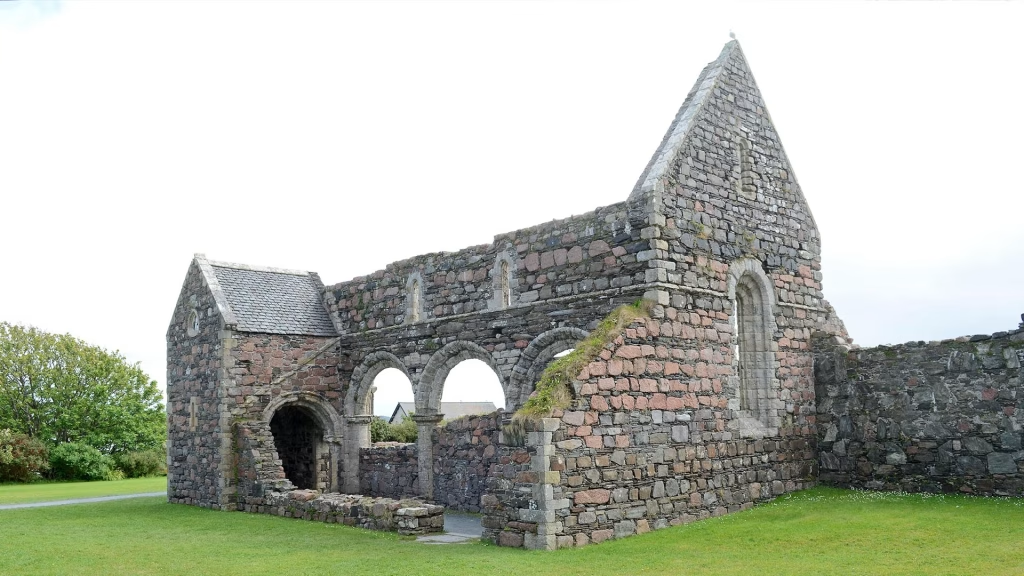
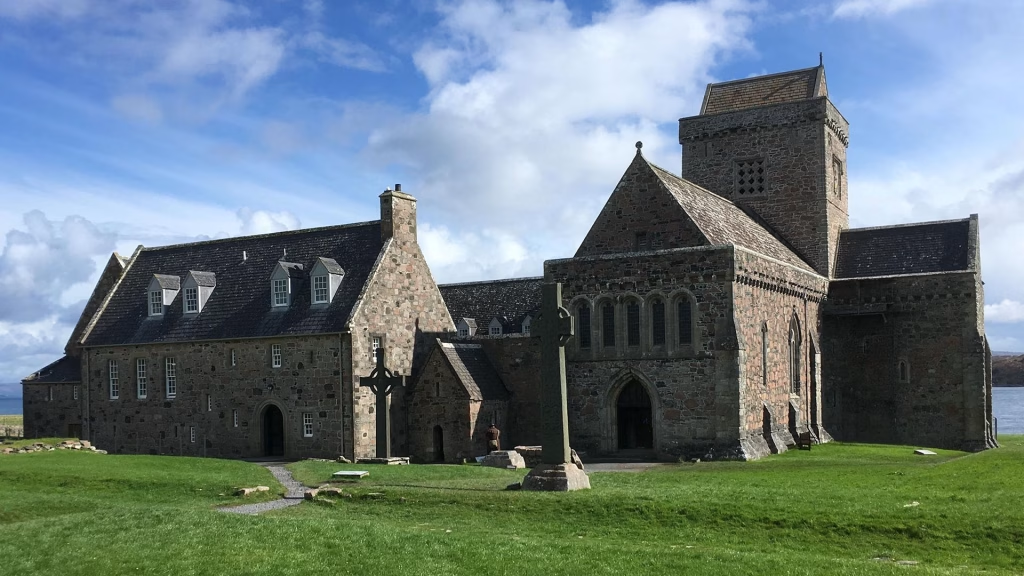
These institutions integrated Iona into the wider structures of the medieval Church and replaced earlier Celtic monastic traditions with those aligned to Rome. Builders constructed the abbey in stone, replacing earlier wooden buildings, and made it the central religious site on the island.
The nunnery, founded with Beatrice, daughter of Somerled, as its first prioress, remains one of the best-preserved medieval nunneries in Britain.
During this period, pilgrims continued to visit Iona, although other centres such as Dunfermline increasingly overshadowed it.
Nevertheless, continuous religious activity ensured that the island’s spiritual heritage persisted into the later Middle Ages.
The Reformation and Destruction of the Abbey
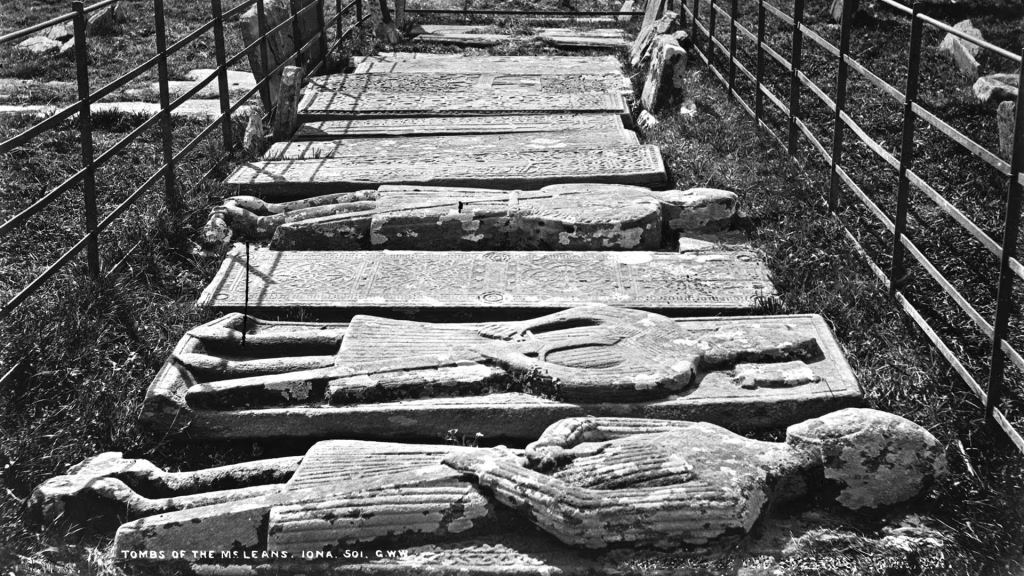
The Scottish Reformation in the sixteenth century brought profound change to Iona. Reformers dissolved religious institutions across Scotland and abandoned Iona’s abbey and nunnery.
Buildings fell into ruin, and iconoclasts destroyed many of the island’s carved stone crosses, leaving only a small number intact.
The loss of institutional religious life marked a significant turning point in the island’s history. Without monastic communities, Iona entered a period of decline, and its centre of learning ceased to function.
Despite this, the island retained its historical and symbolic importance, particularly through its association with early Christianity and royal burials.
Post-Reformation Decline and Eighteenth Century Observations
After the Reformation, Iona became a quiet and isolated community. By the eighteenth century, observers recorded the absence of formal religious and educational institutions.
Residents relied on small-scale agriculture and fishing to sustain the local population, while the island’s remote location reinforced its marginal status within Scotland.
However, its historical significance continued to attract visitors, including writers and scholars who took an interest in its past.
Nineteenth Century Restoration and Industrial Activity
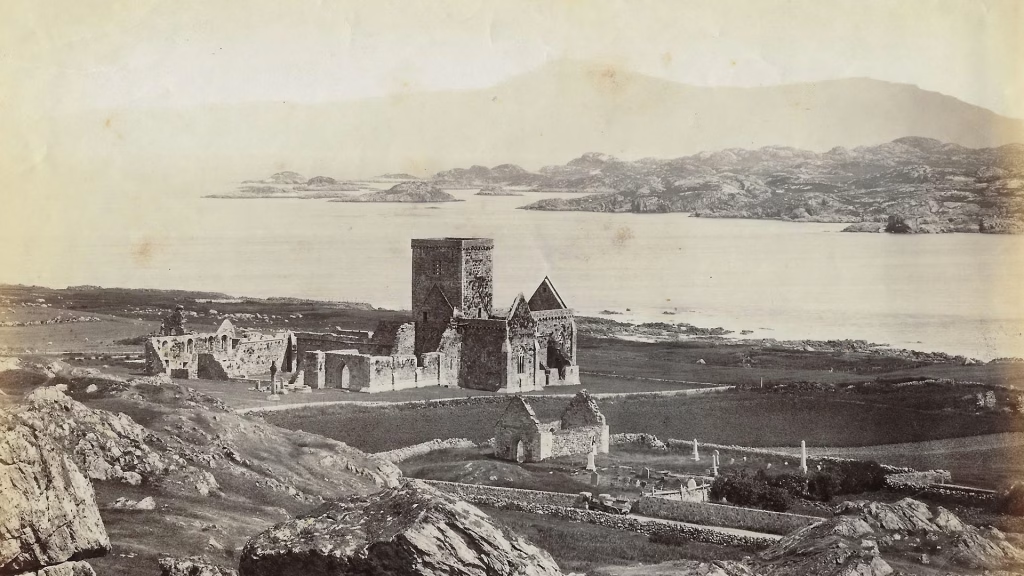
During the nineteenth century, renewed interest in Iona’s historical importance led to efforts to preserve and restore its religious buildings. The Duke of Argyll initiated preservation work on the abbey in the late nineteenth century and began a broader restoration movement.
At the same time, industrial activity developed briefly on the island. Workers began marble quarrying in the late eighteenth century and resumed it in the early twentieth century, although it proved economically unsustainable and eventually ceased.
These developments illustrate a period in which people both explored and preserved Iona’s historical and natural resources.
Twentieth Century Revival and the Iona Community
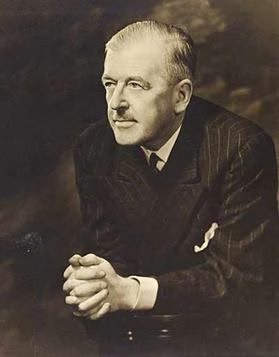
The twentieth century marked a significant revival in Iona’s religious and cultural life. In 1938, the Reverend George MacLeod founded the Iona Community and brought together clergy and workers to rebuild the abbey and restore it as a centre of worship.
Restoration work continued throughout the mid-twentieth century and culminated in the completion of the abbey’s reconstruction in 1965.
This revival restored Iona’s role as an active religious centre and reconnected it with its historical roots as a place of pilgrimage and spiritual reflection.
Organisations such as the National Trust for Scotland took responsibility for preserving the island’s landscape and heritage.
These developments secured Iona’s place as both a historical site and a living community.
Iona in the Present Day

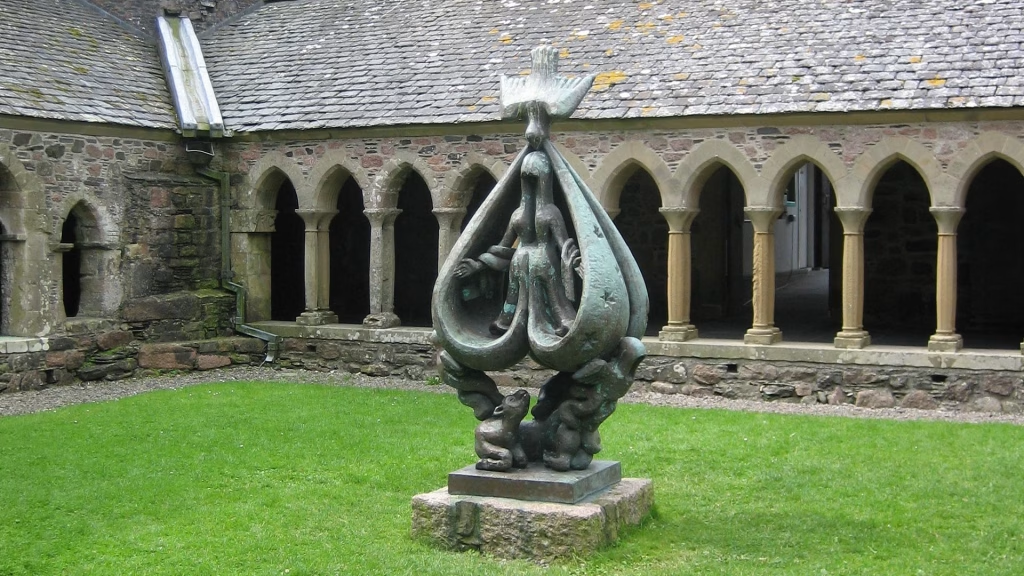
Today, Iona remains a site of international significance, known for its religious heritage, historical monuments, and natural environment. The restored abbey functions as a place of worship and pilgrimage and attracts visitors from around the world.
The island’s historical sites, including the abbey, nunnery, and burial grounds, provide direct links to its early medieval past. At the same time, its landscape and cultural traditions reflect centuries of human activity shaped by religion, politics, and community life.
Iona’s enduring importance lies in the continuity of its historical identity. From its origins within Dál Riata to its role in the spread of Christianity and its later revival as a centre of spiritual life, the island represents a unique convergence of history, faith, and cultural development within the British Isles.
Sources and Citations
Information in this post draws from the following verified and publicly available sources
Historic Environment Scotland
https://www.historicenvironment.scot/visit-a-place/places/iona-abbey-and-nunnery/history/
National Trust for Scotland
https://www.nts.org.uk/visit/places/iona
The Iona Community
https://iona.org.uk/about/our-story/
Scotland.org Official Guide
https://www.scotland.org.uk/guide/places/isle-of-iona-visitor-guide
Isle of Iona Visitor Information
https://www.isle-of-iona.net/things-to-do/history/
Argyll Coast and Islands Heritage
https://argyllcoast.co.uk/islands-of-argyll/iona.html
Encyclopaedia Reference Summary
https://en.wikipedia.org/wiki/Iona
