

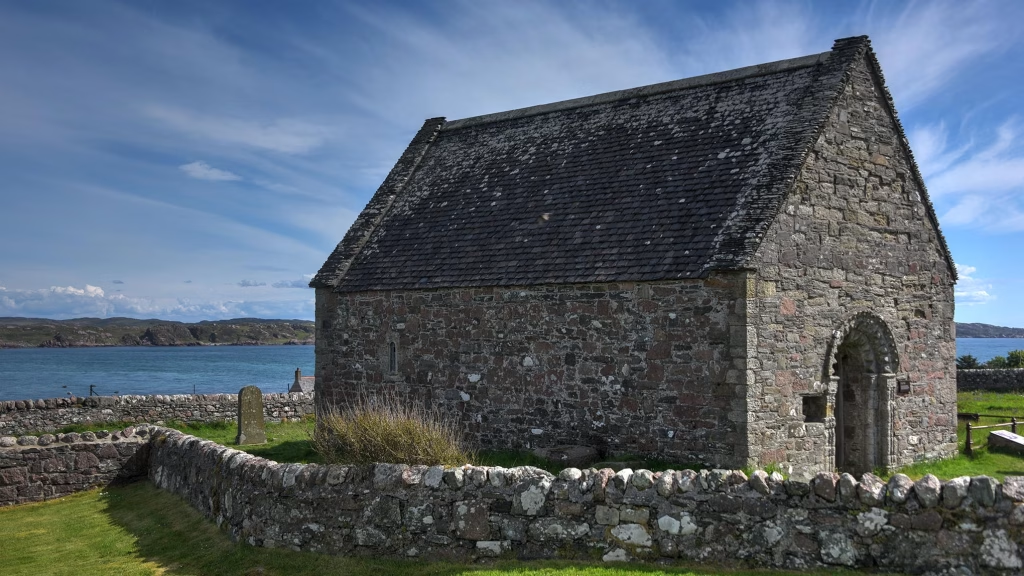
Tucked just a short walk from the great ruins of Iona Abbey on the peaceful Isle of Iona off Scotland’s west coast stands a small, simple stone building that tells a long story in a quiet way. This is St Oran’s Chapel, one of the oldest standing pieces of the island’s medieval past and a place that has captured the imagination of visitors and historians alike.
Iona is famous for its deep history as a Christian centre. In 563 AD the Irish monk St Columba brought his followers to Iona and founded a monastery. Over time this monastery became one of the most important centres of learning, religion and art in early medieval Europe. Within the same landscape that once bustled with monks and pilgrims St Oran’s Chapel quietly endures as a reminder of those far-off days.
What Is St Oran’s Chapel
At first glance St Oran’s Chapel might look like a modest little building. It is a small rectangular stone structure with plain walls, narrow windows, and a quiet presence that fits well with the ancient graveyard in which it sits. Its size and style reflect the simplicity of early medieval sacred buildings where form followed function and devotion mattered more than decoration.
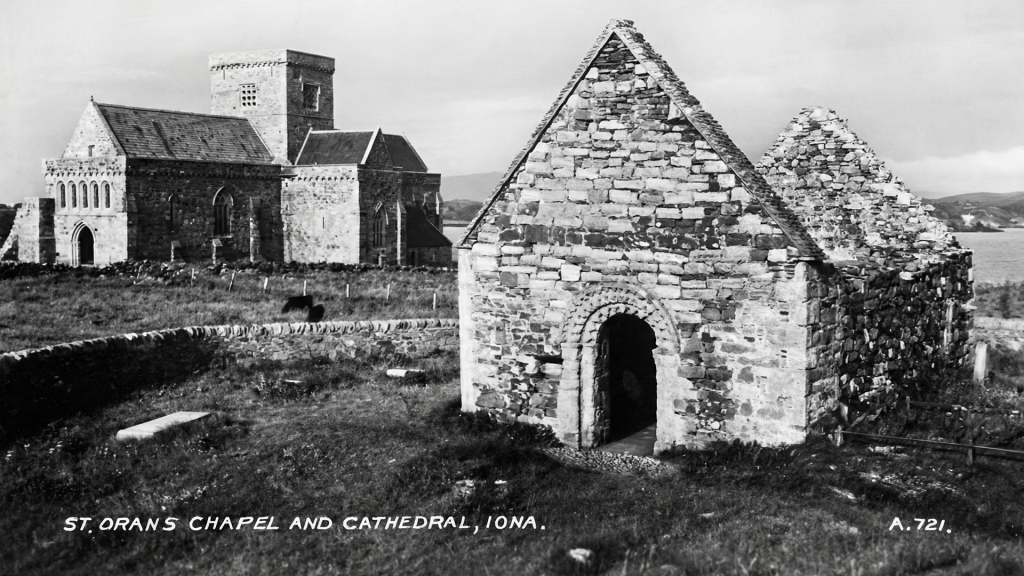
The chapel you see today dates from the 12th century, making it around 800 to 900 years old. It ranks among the oldest surviving medieval buildings on the island, older even than parts of nearby Iona Abbey. The builders dedicated the chapel to St Oran, sometimes spelled Odhrán or Odran, a figure whose name and memory appear in legend and early Christian tradition.
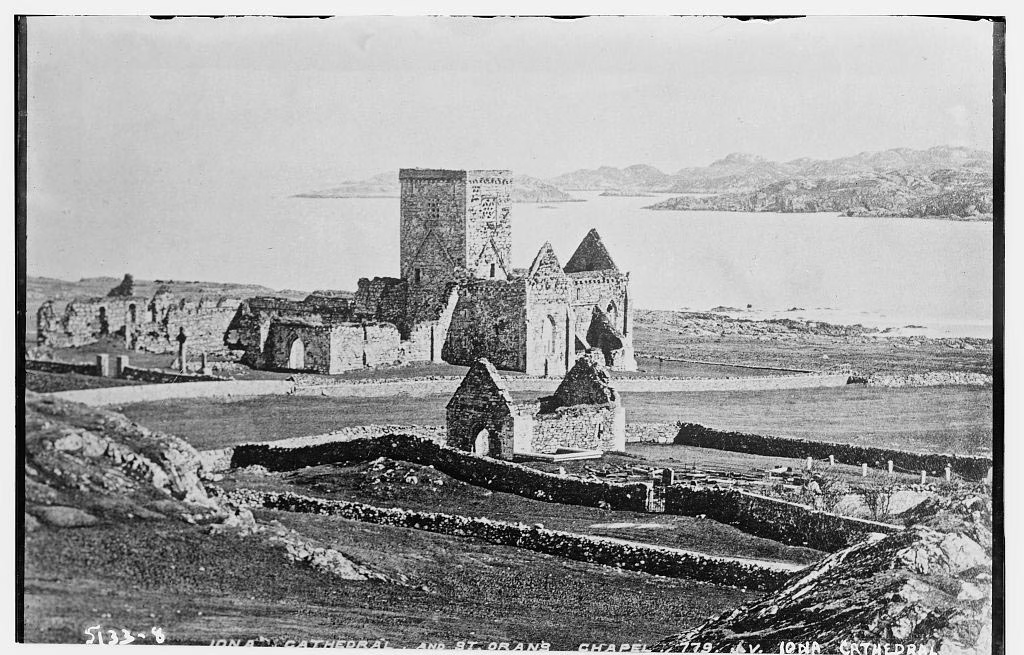
The chapel fell into ruins for a long period. Later, restorers worked on it alongside the Abbey, and today it forms part of the protected historic monastic settlement on Iona.
Who Was St Oran
St Oran’s identity blends history and legend. Some traditions link Oran to the earliest days of Christianity on Iona, and later stories describe him as a follower of St Columba. However, contemporary records do not confirm that he was among Columba’s original companions, and later sources mention him by name. His connection to Columba remains traditional rather than historically proven.
This does not mean he was unimportant. The details about his life reflect the mix of history and storytelling that often grows around figures from deep antiquity.
A Chapel with a Graveyard
One of the things that makes St Oran’s Chapel especially interesting is its setting. It sits within a burial ground known as Reilig Òdhrain, meaning Oran’s burial place. People have used this burial ground for centuries. It served as a resting place for local people, church leaders, and is believed to have included some early Scottish kings.
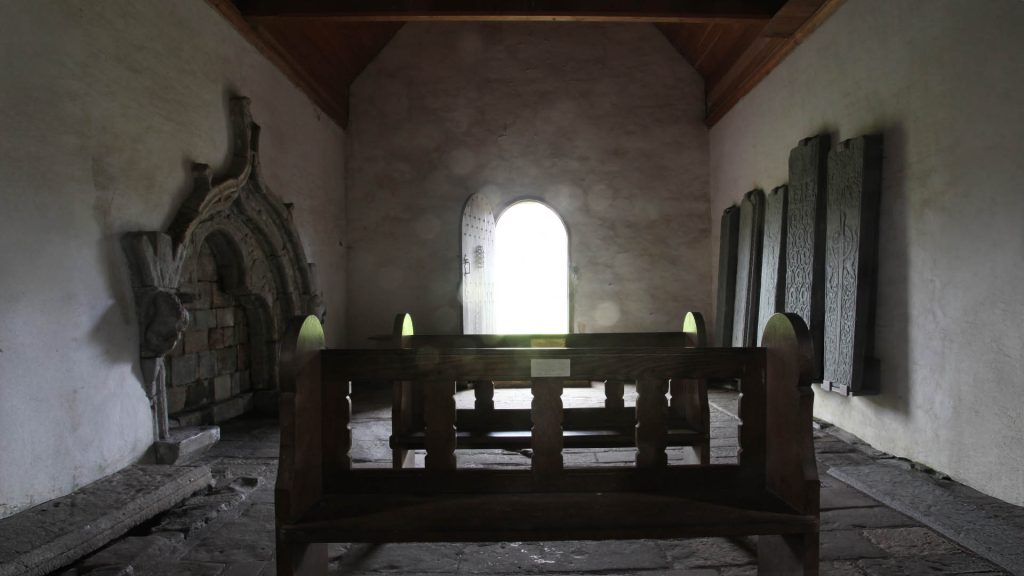
Although no original grave markers from the earliest burials survive today, visitors still see old stones, memorials, and slabs marking later interments. Workers later moved many grave slabs into the nearby Iona Abbey Museum to protect them from the weather, but the designs and age of these stones show the many lives connected to this place.
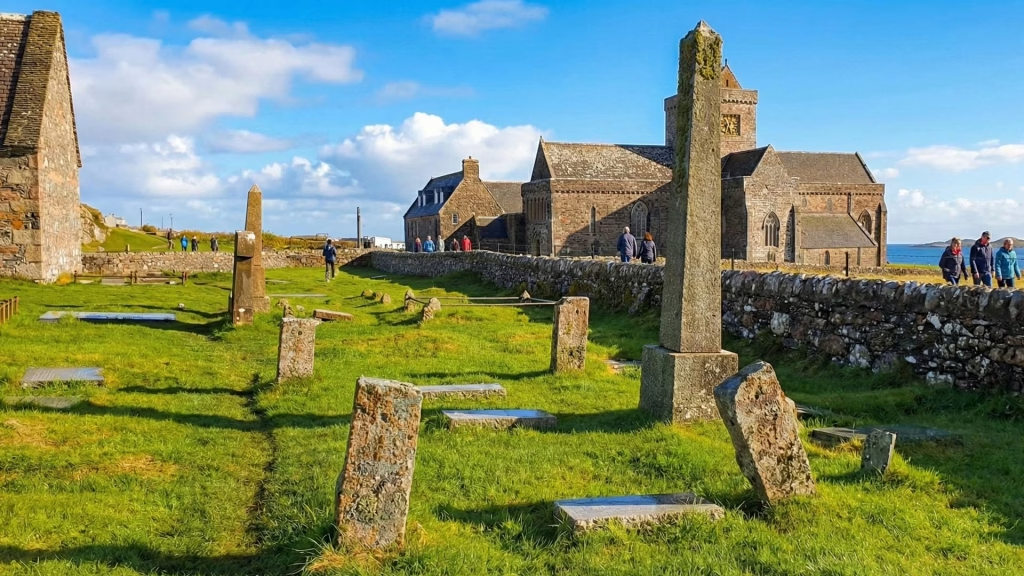
Visitors often comment on how the quiet stone building and ancient burial ground create a strong sense of continuity. People have come here for thousands of years to remember the dead and reflect on life and what comes after.
Architecture Simple but Significant
St Oran’s Chapel contrasts with grand cathedrals with flying buttresses and tall spires. The walls remain plain, and light enters through just a few narrow windows. Builders crafted the doorway in Norman style with patterned mouldings typical of 12th-century work.
The chapel’s size and shape suggest that builders intended it for intimate use, perhaps for family prayers, private devotion, or burial rites. Some experts think it may have served as a mortuary chapel connected to the burial ground beside it.
After centuries of neglect, the roof and building fell into ruin. Later restoration gave the chapel a new slate roof, and today it stands complete.
Legends and Stories
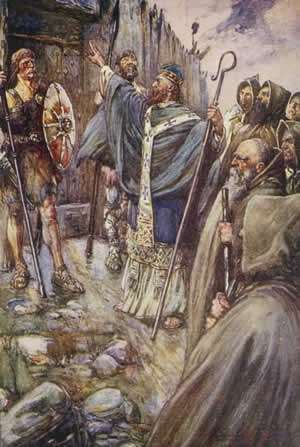
Stories about St Oran and his chapel continue to capture imaginations. One of the most striking tells how the first sacred building on Iona came to stand. According to the tale, when St Columba and his followers first tried to build a Christian place of worship, they made progress each day only to find the walls had collapsed by morning. No matter how hard the monks worked, the building would not stand. A divine message told Columba that one monk must lie buried beneath the chapel’s foundations to make the walls hold.
Oran, described in some versions as Columba’s companion, volunteered for the task. He consented willingly and lay buried under the earth where the chapel was to rise. After this, builders completed the structure without further collapse, and it stood firm.
Oran’s Speech from the Grave
The story does not end there. In several versions, after a few days, Columba returned to the burial spot and saw Oran lift his head and speak. In one version, Oran told him that death held no great wonder and that neither Heaven nor Hell is as people often describe. Columba worried that these words might unsettle the monks’ faith and quickly covered Oran again to prevent his words from spreading.
In some Hebridean versions, after Oran’s initial burial, he tried to climb out, but Columba covered him once more to protect his soul from worldly influences above ground.
These elements, including the repeated collapse of the walls, the living sacrifice, Oran’s miraculous speech, and Columba’s urgent covering of him, make it one of the most enduring pieces of Iona folklore. The tale belongs to tradition and storytelling and does not appear in the earliest records of Columba’s life. Later storytellers expanded the story to emphasize mystery, self-sacrifice, and the blending of old beliefs with new faith.
Visiting St Oran’s Chapel Today
Visitors today can walk from the ruins of Iona Abbey down a quiet grassy path to St Oran’s Chapel and the surrounding burial ground. There is no charge to see the building, and visitors enjoy the deep sense of history and reflection that comes with being in such an ancient place.
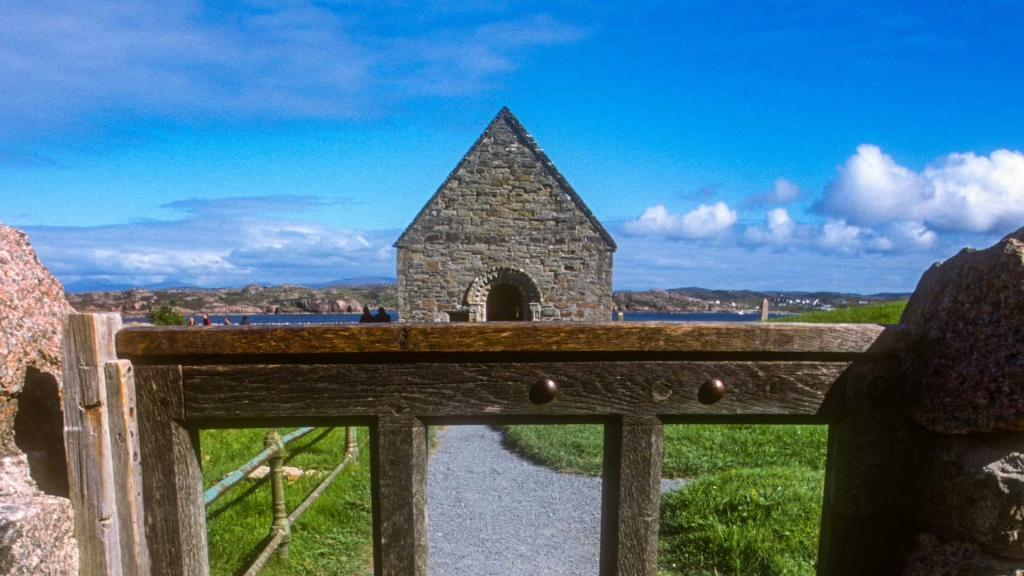
Whether interested in early medieval history, sacred places, or simply the feeling of being somewhere very old and quiet, St Oran’s Chapel offers a moment of calm in a landscape filled with stories spanning more than a thousand years.