



Iona Abbey stands on the Isle of Iona off the coast of Mull and ranks among Scotland’s most historically and spiritually important sites. St Columba founded the monastery in AD 563, establishing a religious centre that shaped early medieval Scotland. Over time, Iona gained a powerful reputation as a burial place for kings, nobles, and church leaders, a reputation built on tradition as well as historical record.
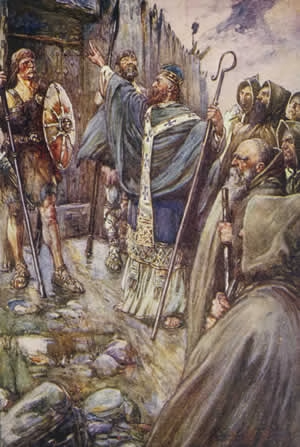
The Arrival of St Columba and the Sacred Island
Tradition records that Columba and twelve companions arrived on Iona after leaving Ireland in voluntary exile. The island soon became the centre of a wide monastic network that influenced Christianity across Scotland and northern England. Many later writers described Iona as a “thin place”, where the spiritual and physical worlds seemed closely connected, strengthening its appeal as a burial place for the powerful and devout.
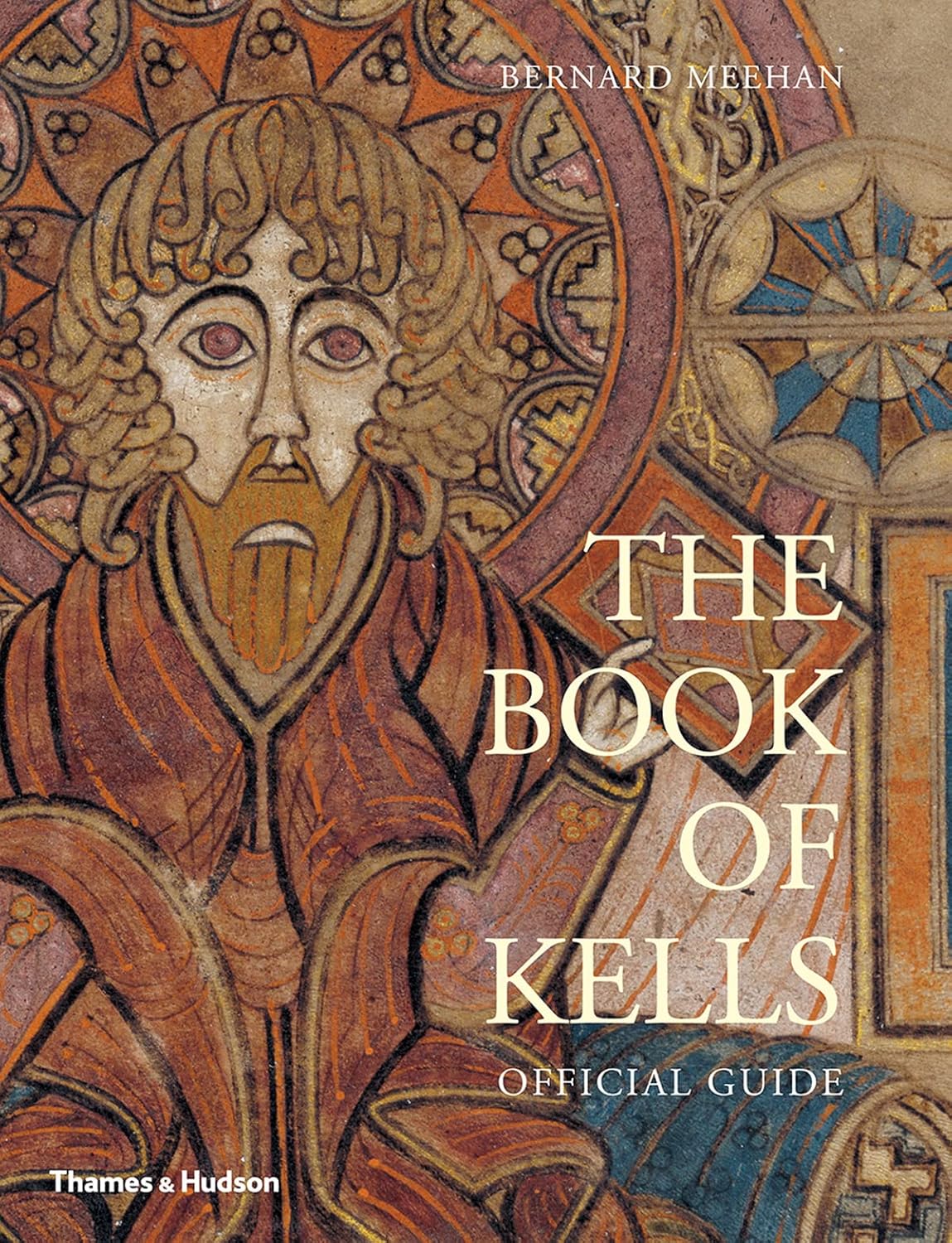
The early monastery relied on simple wooden buildings, yet it developed into a major centre of learning and manuscript production. Monks associated with Iona likely began work on the Book of Kells, which they later transferred to Ireland to protect it during periods of Viking threat.
The Book of Kells, dating from about 800, is a brilliantly decorated manuscript of the four Gospels. This new official guide, by the former Keeper of Manuscripts at Trinity College Library, Dublin, provides fascinating insights into the Book of Kells, revealing the astounding detail and richness of one of the greatest works of medieval art.

Viking Attacks and the Survival of Iona
Iona’s wealth and prominence attracted Viking raiders from the late eighth century onward. In AD 806, Norse attackers killed many monks at a site now known as Martyrs’ Bay. Despite repeated raids, religious life continued on the island, and rulers across the Gaelic world continued to support Iona.
Reilig Odhráin and the Royal Burial Tradition
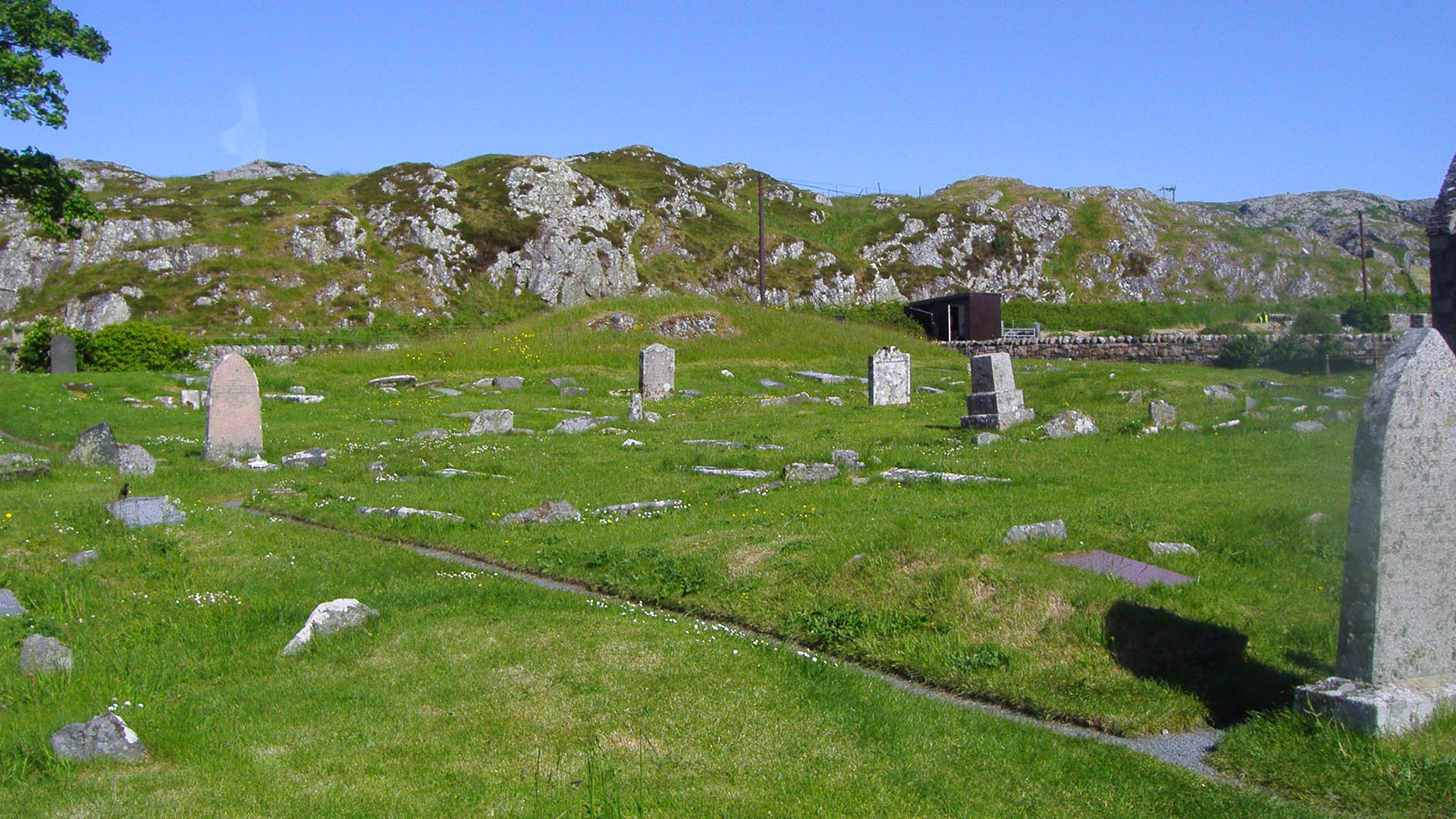
Reilig Odhráin lies beside the abbey and takes its name from St Oran, a companion of Columba. Medieval tradition identified this cemetery as a prestigious burial place for kings and nobles. Later accounts describe a processional route that carried royal bodies from the shore to the cemetery.
Tradition associates several early Scottish kings, including Kenneth MacAlpin and Duncan I, with burial on Iona. However, no surviving grave markers confirm individual royal burials from the ninth or tenth centuries. Later writers preserved these associations rather than contemporary evidence.
Dean Donald Monro provided the earliest written source for the claim that many Scottish kings lay buried on Iona. In his 1549 Description of the Western Isles of Scotland, Monro stated that numerous kings rested there. Later writers repeated his statement and fixed the number at forty eight, although Monro himself did not list names or provide physical evidence.
Modern historians therefore treat the figure of forty eight as traditional rather than factual. The evidence supports the burial of some early kings on Iona, but it does not allow historians to confirm an exact number.
_-_geograph.org.uk_-_1919786.jpg)
St Oran’s Chapel and Later Burials
Builders constructed St Oran’s Chapel mainly in the twelfth century, and it stands within Reilig Odhráin. Visitors often describe it as the oldest surviving stone building on Iona, although builders repaired and altered it over time. The chapel became a major burial focus during the later medieval period.
During the thirteenth century, the Lords of the Isles chose Iona as a principal burial place. Members of Clan Donald and other West Highland elites buried their dead around St Oran’s Chapel and left behind carved grave slabs that survive today. These monuments provide clear physical evidence for elite burial on Iona during the later medieval period.
Archaeology, Tradition, and Uncertainty
Archaeologists confirm long term burial activity on Iona but cannot verify most early royal burials. Reuse of graves, soil movement, and later building work disturbed earlier burial layers. For this reason, historians treat claims about specific early kings, including Macbeth, as unproven.
Iona’s reputation as Scotland’s royal burial ground developed through a combination of early importance, medieval tradition, and later historical writing. The absence of definitive proof does not reduce the island’s significance, but it does require historians to separate tradition from demonstrable fact.
Kings Traditionally Associated with Burial on Iona
Kenneth MacAlpin
Later medieval tradition often names Kenneth MacAlpin, commonly regarded as the first king of a united Scots and Picts, as being buried on Iona. No contemporary source confirms this, but the association reflects Iona’s early royal prestige.
Donald I
Donald I, brother of Kenneth MacAlpin, appears in some later accounts as one of the early kings buried on Iona. Surviving records do not provide direct evidence for his burial location.
Constantine I
Tradition links Constantine I with burial on Iona during a period marked by Viking pressure and political instability. Historians treat this attribution as unproven.
Áed
Áed, son of Kenneth MacAlpin, features in later lists of kings associated with burial on Iona. No archaeological or contemporary written evidence supports this claim.
Constantine II
Some medieval writers associate Constantine II with burial on Iona, although other traditions place his burial elsewhere. His inclusion reflects later attempts to reinforce Iona’s royal status.
Malcolm I
Malcolm I appears in several traditional lists of kings thought to be buried on Iona. As with other early rulers, this rests on later tradition rather than contemporary documentation.
Indulf
Post medieval sources occasionally name Indulf among kings buried on Iona. Historians generally regard this as speculative.
Dub
Dub appears in some traditional burial lists connected to Iona, although surviving historical records do not identify his burial site.
Cuilén
Cuilén is sometimes included in later accounts of kings associated with Iona burial. The claim lacks firm historical support.
Kenneth II
Later writers occasionally place Kenneth II among kings buried on Iona, though this remains uncertain and unverified.
Constantine III
Constantine III frequently appears in traditional lists of kings associated with burial on Iona. His reign coincided with strong Norse Gaelic influence in western Scotland.
Kenneth III
Kenneth III appears in some later traditions linking early Scottish kings to burial on Iona. Historians treat this attribution with caution.
Malcolm II
Some accounts include Malcolm II among kings buried on Iona, although stronger traditions suggest alternative burial locations.
Duncan I
Duncan I is one of the kings most commonly associated with Iona in later medieval writing. Despite this, no contemporary evidence confirms his burial on the island.
Macbeth
Later legend associates Macbeth with burial on Iona, likely influenced by literary tradition rather than historical fact. Modern historians generally reject this claim.
Donald III
Donald III often appears as one of the last early kings traditionally said to be buried on Iona, marking the decline of Iona’s role as a supposed royal cemetery.
Iona Today and Its Enduring Legacy
Historic Environment Scotland now maintains Iona Abbey, while the Iona Community continues to use it as a living place of worship. The island remains a place where history, belief, and memory meet.
Although historians cannot prove that forty eight Scottish kings lie buried at Reilig Odhráin, the tradition reflects Iona’s long standing status as a place of exceptional spiritual and political importance. What evidence does confirm is that generations of religious leaders and medieval elites chose Iona as their final resting place.
