



The Waverley is one of the most famous ships to sail around Britain’s coastline. She represents more than a century of maritime history, spanning the golden age of paddle steamers and their survival into the modern era. Today, PS Waverley holds a unique distinction: she is the last sea-going passenger paddle steamer in the world still operating under her own steam.
The Name Waverley and Its Origins
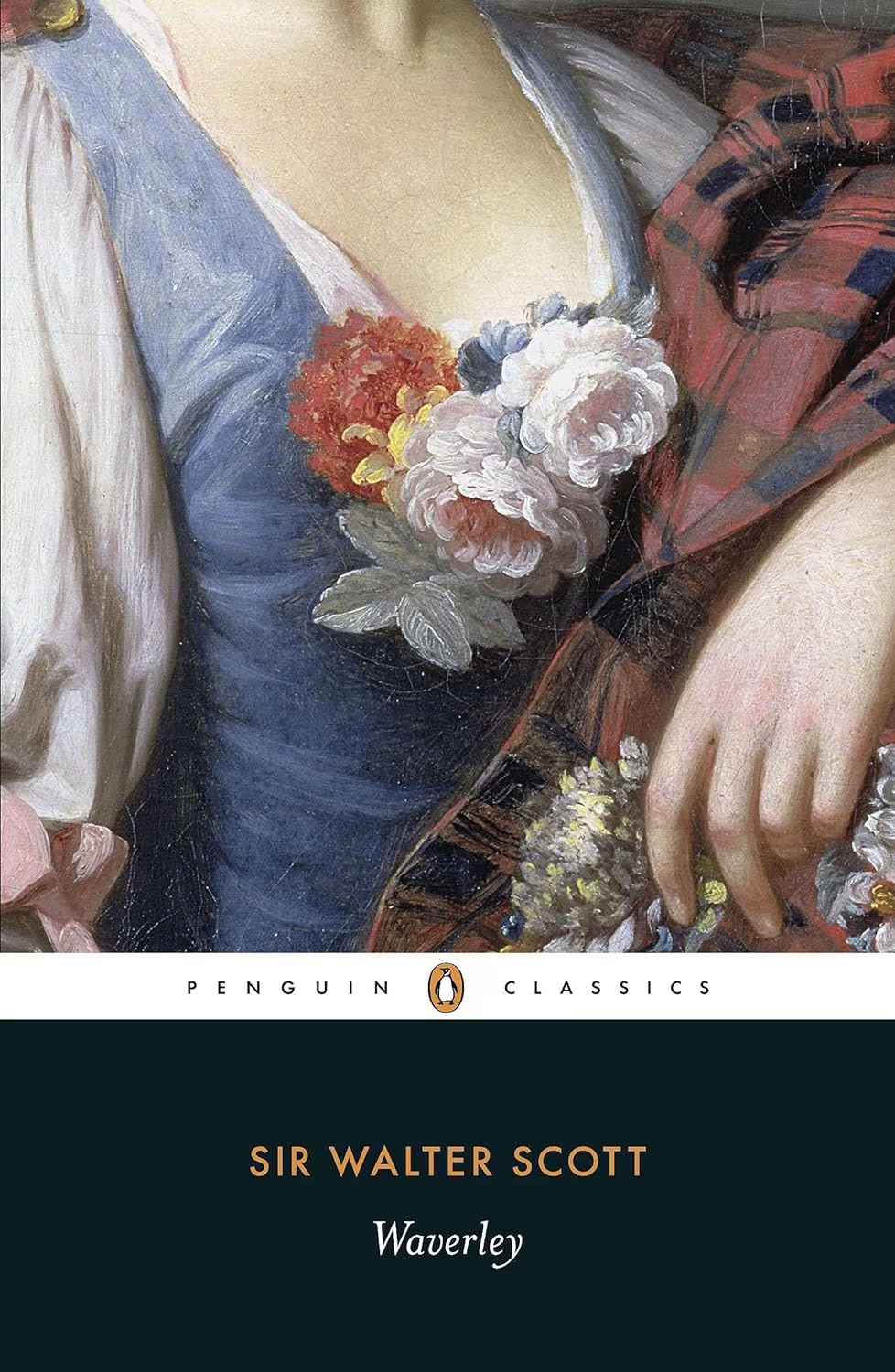
The name Waverley comes from Sir Walter Scott’s novel Waverley, published in 1814. During the Victorian era, shipbuilders and owners adopted the name for several paddle steamers, particularly on the River Clyde, where excursion sailing became an important part of leisure travel.
The first romantic historical novel and international bestseller, Waverley (1814) tells the story of Edward Waverley, a naïve, sensitive young man who is posted to Scotland with his regiment, and becomes caught between the clans of the Jacobite Rising and the forces of the Hanoverian regime. He must decide whether he will follow the civilization he has always known, or be drawn into an older world of honour and loyalty - and must also choose between the quiet, constant Rose, and the passionate, principled Flora.

Several vessels have carried the name Waverley over the years, each adding to its reputation. By the late 19th century, paddle steamers were a familiar sight on Scottish waters, and the name quickly became associated with popular excursion travel.
The Early Waverley Steamers
Shipbuilders completed an early PS Waverley in 1885. She operated first on the Clyde and later in the Bristol Channel. During the First World War, the Royal Navy requisitioned her for minesweeping duties, and owners eventually scrapped her in 1920.
A later and more prominent PS Waverley launched in 1899, built in Glasgow to carry large numbers of holidaymakers on Clyde excursions. During both World Wars, the navy took her into service. In May 1940, German aircraft bombed and sank her while she took part in the evacuation of Allied troops at Dunkirk, a loss that directly led to the construction of a replacement vessel.
Building the Present-Day Waverley
Shipbuilders designed the current PS Waverley as a direct successor to the Dunkirk vessel. Her keel was laid in 1945 at A. & J. Inglis in Glasgow, and she was launched in October 1946. Engineers fitted her with a triple-expansion steam engine and a steel hull capable of operating in both sheltered waters and open sea conditions.
Waverley entered service in June 1947, primarily operating on the Firth of Clyde. In her early years, she formed part of an integrated transport and leisure network, connecting coastal towns and railheads and allowing passengers to combine train travel with scenic sea excursions.
Service on the Clyde
From the late 1940s through the 1960s, Waverley was a familiar sight on the Clyde. She sailed from Glasgow, Greenock and Craigendoran, carrying day trippers to destinations such as Rothesay, Largs and Arrochar. Paddle steamers at this time played an important role in both leisure travel and everyday coastal transport.
By the late 1960s, rising car ownership and changing holiday habits led to falling passenger numbers. Operators withdrew many paddle steamers and sent them for scrap. By around 1970, Waverley had become the last sea-going paddle steamer still operating, although her future soon came into doubt.
Threat of Withdrawal and Preservation
In 1973, Calmac withdrew Waverley from service, placing her at serious risk of being scrapped. The Paddle Steamer Preservation Society stepped in and purchased the vessel in 1974 for a nominal sum, ensuring her survival.
Following restoration work carried out with the help of volunteers, Waverley returned to service in 1975. From this point onward, she no longer operated as a commercial ferry but as a heritage excursion vessel, sailing in traditional railway-era livery and offering nostalgic cruises.
Waverley and the Isle of Mull
Waverley has long featured in sailings to the west coast of Scotland, including routes that visit the Isle of Mull and the Inner Hebrides. These voyages were always excursion sailings rather than scheduled ferry services, offering passengers longer and more adventurous cruises beyond sheltered waters.
In modern seasons, Waverley operates extensively from Oban, making Mull a key destination in her west coast programme. These sailings focus on scenic cruising and heritage experience rather than point-to-point transport, combining maritime history with dramatic coastal landscapes.
Mull Routes and Destinations
Waverley regularly visits several Mull ports, each offering a different experience for passengers.
Tobermory remains one of her most popular destinations. Approaching the colourful harbour under steam is a highlight of many sailings, whether passengers disembark to explore the town or remain on board to enjoy the view.
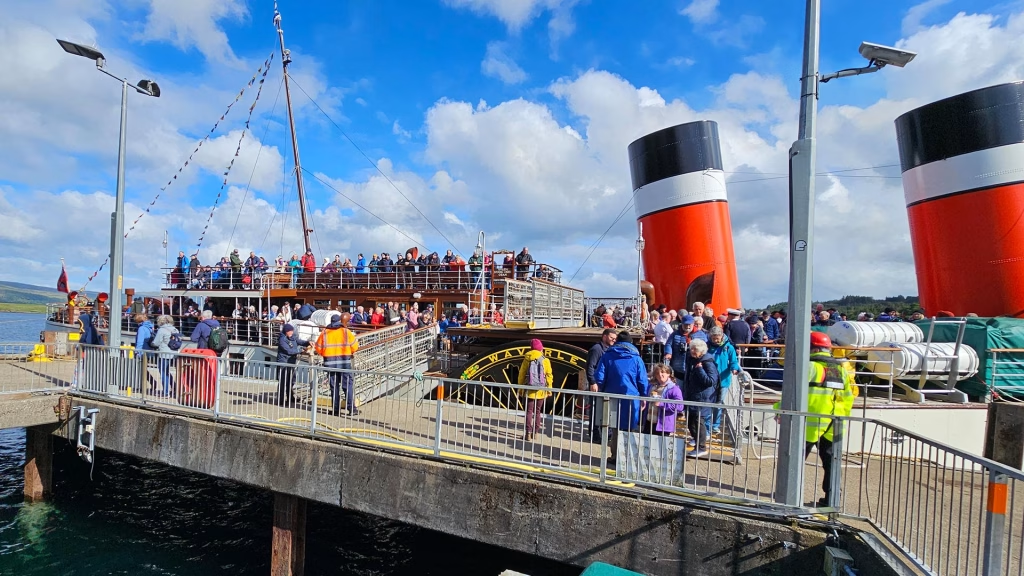
She also calls at Craignure, Mull’s main transport hub, particularly on itineraries exploring the Sound of Mull and nearby west coast waters.
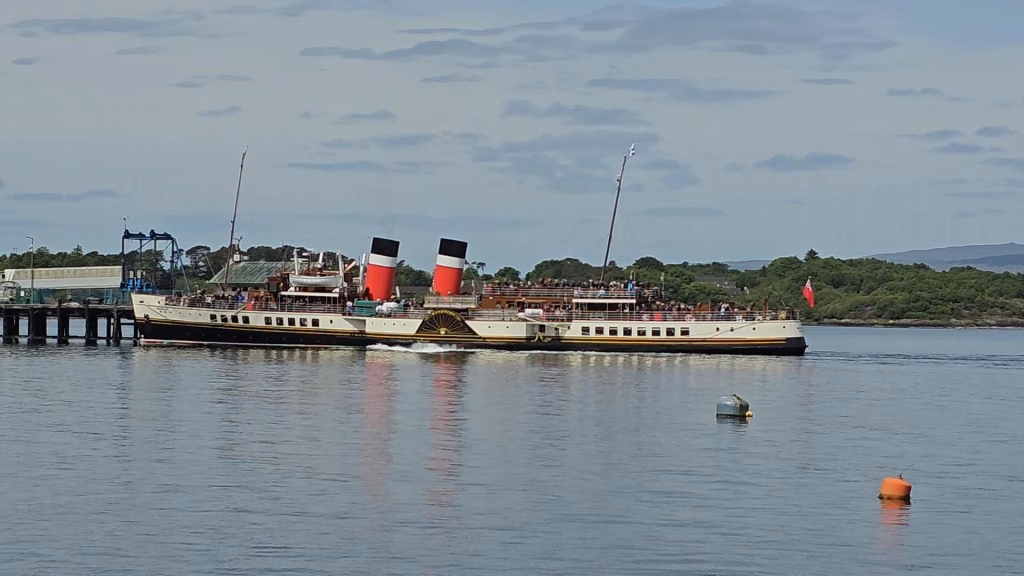
Salen, at the head of the Sound of Mull, features regularly in modern itineraries. Its position allows Waverley to serve central Mull while cruising scenic waters toward Ardnamurchan.
Beyond Mull, Waverley sails past Duart Castle, Ardnamurchan Point, Loch Sunart, and nearby islands including Staffa, Iona, Muck, and waters close to the Gulf of Corryvreckan on longer cruises.
Some sailings allow passengers to go ashore, while others focus entirely on cruising, letting visitors experience the coastline at the traditional pace of a paddle steamer.
Restoration and Continued Operation
Maintaining a historic steamship requires constant attention. Engineers and volunteers have refitted Waverley with new boilers, carried out hull repairs, and upgraded safety systems while preserving her original steam machinery. Public fundraising and heritage grants have supported this work.
Waverley Engine Room 2025, Dave Souza, CC BY-SA 4.0
Despite occasional challenges, Waverley continues to operate seasonal heritage cruises around Scotland, England and Wales, attracting enthusiasts, tourists and local communities alike.
A Living Link to Scotland’s Maritime Heritage
Waverley offers more than a journey at sea. She provides a living connection to Scotland’s maritime past, recalling a time when paddle steamers connected communities, shaped tourism and opened up coastal travel. By sailing around the Isle of Mull and the Inner Hebrides, she allows passengers to experience that heritage firsthand.
As long as steam powers her paddles, Waverley continues to connect generations, landscapes and the enduring appeal of travel by sea.
