



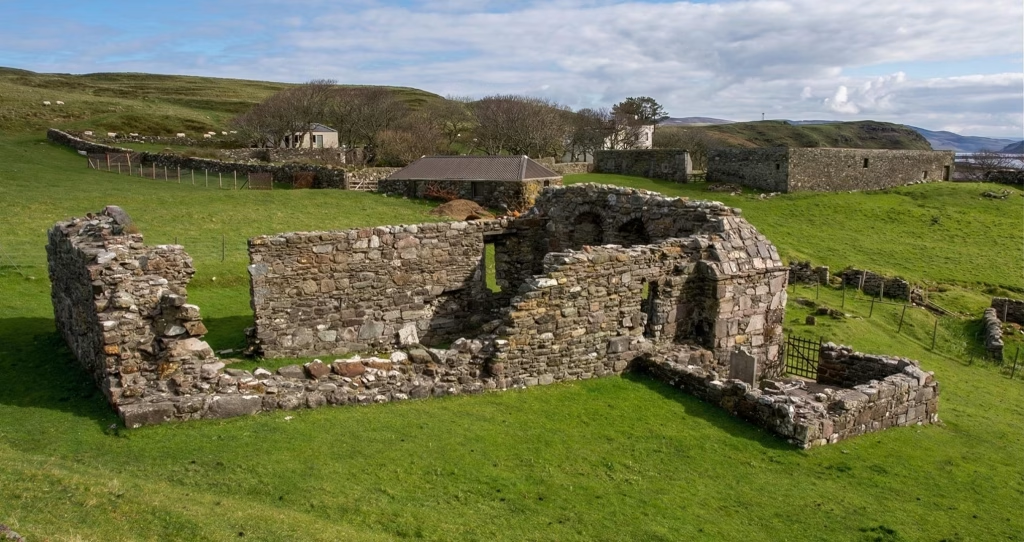
St Kenneth’s Chapel stands as a weathered monument on the small island of Inch Kenneth, tucked away off the western coast of Mull in the Inner Hebrides. Although the island measures barely a mile across, its historical and spiritual importance far exceeds its size. Tradition links the island with the early Christian period of the Hebrides, while in later centuries it became a notable burial ground for prominent families of the Western Isles. Through its long history the site reflects both the missionary traditions associated with early saints and the political authority that later shaped the medieval Lordship of the Isles.
The island takes its name from St Kenneth, or Cainnech of Aghaboe, a prominent Irish missionary who lived during the sixth century and maintained a close friendship with St Columba. Known in Irish tradition as one of the Twelve Apostles of Ireland, Kenneth travelled widely across Ireland and western Scotland spreading Christian teaching. Local tradition holds that he established a small religious retreat on this island in search of solitude for prayer. Although firm archaeological evidence for an early monastery remains limited, the long association with the saint explains how the island acquired its enduring religious reputation.
The Geographical and Monastic Setting
The location of Inch Kenneth made it well suited for a small religious settlement. Situated within the sheltered waters at the mouth of Loch na Keal, the island remains protected from the harshest Atlantic weather by the surrounding landmass of Mull and the nearby island of Gometra. Fertile soil and reliable grazing allowed inhabitants to maintain cattle and grow crops such as oats, while the surrounding waters provided abundant fish and shellfish. These conditions would have supported a small community living a largely self sufficient existence on Scotland’s western coast.
Daily Life of the Monks
Early Christian communities in the Hebrides followed a disciplined pattern of prayer, study, and manual labour. On islands such as Inch Kenneth, daily life would have revolved around tending livestock, cultivating crops, copying religious texts, and maintaining regular worship. Despite the island’s isolation, the sea connected these communities with other religious centres. Small skin covered boats known as curraghs travelled regularly between islands, carrying people, manuscripts, and supplies across the Hebridean waters.
The Architecture of the Medieval Chapel
The stone ruins visible today belong to a later phase of the island’s religious history. The present chapel likely dates from the twelfth or thirteenth century, when a more substantial structure replaced earlier buildings. Builders used locally gathered stone set in lime mortar to create thick, durable walls capable of resisting salt laden winds and winter storms. Measuring roughly forty feet in length and twenty feet in width, the building reflects the modest scale typical of rural churches throughout the western Highlands during the medieval period.

Design and Symbolism
The architectural focus of the chapel centred on its east facing window, which once illuminated the altar during religious services. Medieval Christian tradition associated the east with resurrection and renewal, making it the symbolic direction for worship. Although the roof has long since disappeared, the surviving gables reveal the original height and steep pitch that once protected the interior from Atlantic weather. The design reflects the restrained style typical of small medieval chapels in the western Highlands.
The Sculpted Stones and Highland Nobility
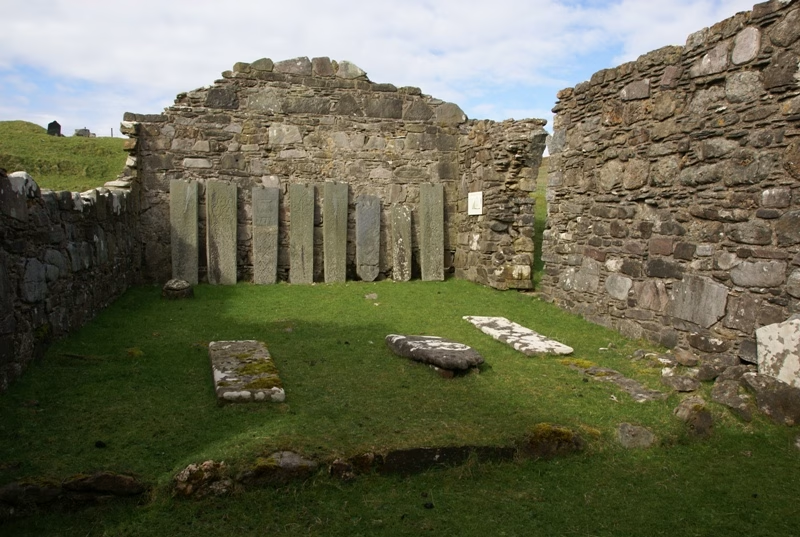
The most remarkable historical features of the site lie scattered across the chapel floor and throughout the surrounding burial ground. Inch Kenneth preserves an important collection of carved grave slabs dating mainly from the fourteenth to the sixteenth centuries. These stones demonstrate the island’s importance as a burial ground during the later medieval period, when prominent families of the Western Isles chose to bury their dead there.
Warrior Imagery and Clan Legacy
The carvings provide valuable insight into medieval Highland society. Many slabs depict warriors dressed in mail armour and pointed helmets while holding large two handed swords commonly known as claymores. Others feature the birlinn, the distinctive West Highland galley associated with maritime power in the region. Decorative knotwork and foliage patterns surround these figures, blending older Celtic artistic traditions with later medieval styles. Historical evidence links several of the burials with families connected to the Clan MacLean of Duart and members of the Clan MacDonald.
The presence of these grave markers shows how the island became associated with the identity and memory of the western clans. Burial here placed individuals within a landscape connected to both early Christian tradition and the later history of the Hebridean lordships.
The Reformation and the Transition to Ruin
The active religious life of the chapel ended during the upheaval of the Scottish Reformation in the sixteenth century. As the authority of the Catholic Church declined, many smaller religious sites lost clerical support and regular maintenance. Over time the building fell into disrepair, and the roof eventually collapsed, leaving the roofless stone structure that survives today.
Despite the loss of regular worship, the burial ground continued to be used by local families for generations. This continued use helped preserve the island’s reputation as a place of remembrance and historical significance.
The Visit of Samuel Johnson and James Boswell
In 1773 the island gained wider literary attention when Sir Allan MacLean, chief of Clan MacLean, hosted Dr Samuel Johnson and James Boswell during their well known tour of the Hebrides. At the time Sir Allan lived on Inch Kenneth with his daughters in a modest residence near the historic chapel. Johnson later recorded the visit in his published account of the journey.

The travellers explored the island and its chapel ruins while staying with their hosts. Boswell later described the hospitality they received, and the visit became one small episode within their broader journey through the Scottish Highlands and islands.
Modern Ownership and Preservation Efforts
The island entered a new chapter during the twentieth century when the Mitford family acquired it as a private retreat. Their ownership helped maintain the quiet character of the island and ensured that the historic ruins remained largely undisturbed.
Today the chapel and its burial ground are protected as a Scheduled Monument. This designation provides legal protection for the site and its historic grave slabs so that the remains of the chapel and its carvings continue to survive as part of Scotland’s archaeological heritage.
The Experience of Visiting the Island Today
Reaching St Kenneth’s Chapel still requires careful planning. Because Inch Kenneth remains privately owned, visitors usually approach by boat from Mull and must depend on favourable weather and tides within Loch na Keal. The effort required to reach the island helps preserve the remarkable quiet that defines the landscape.
Standing inside the roofless chapel today offers a strong sense of connection with the past. Across the water the mountains of Mull rise beyond the chapel walls while seabirds circle overhead. The ruins remain a reminder of the long religious, cultural, and clan history that shaped this small island in the Inner Hebrides.
