
The Silent Stones of Shiaba
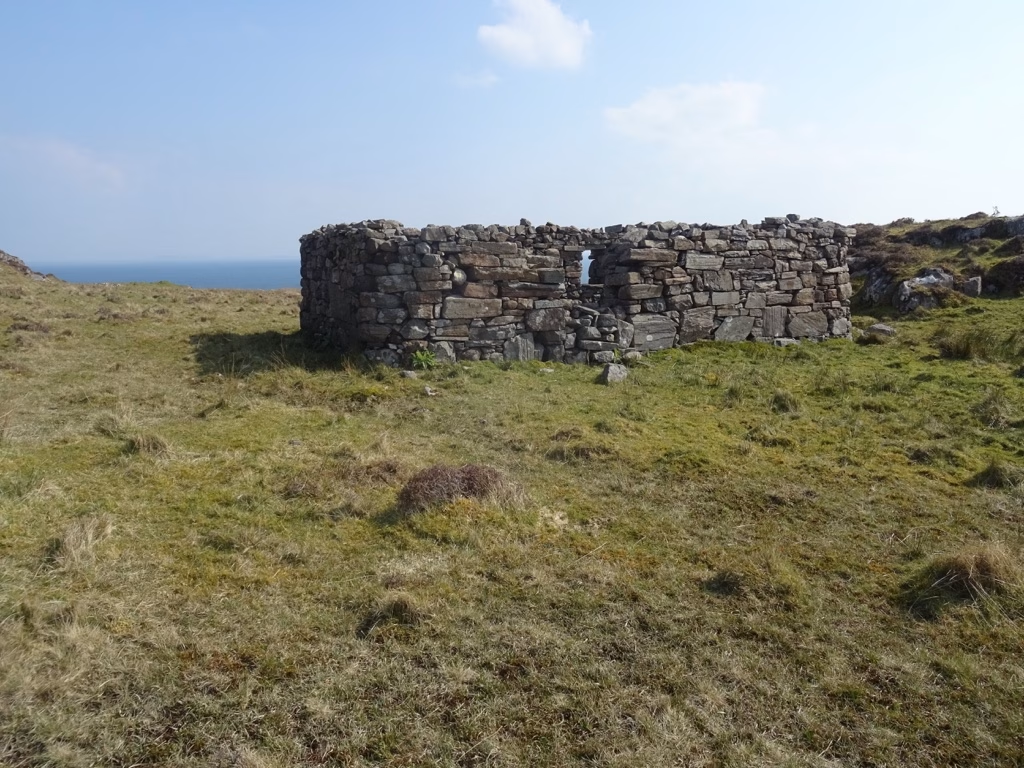
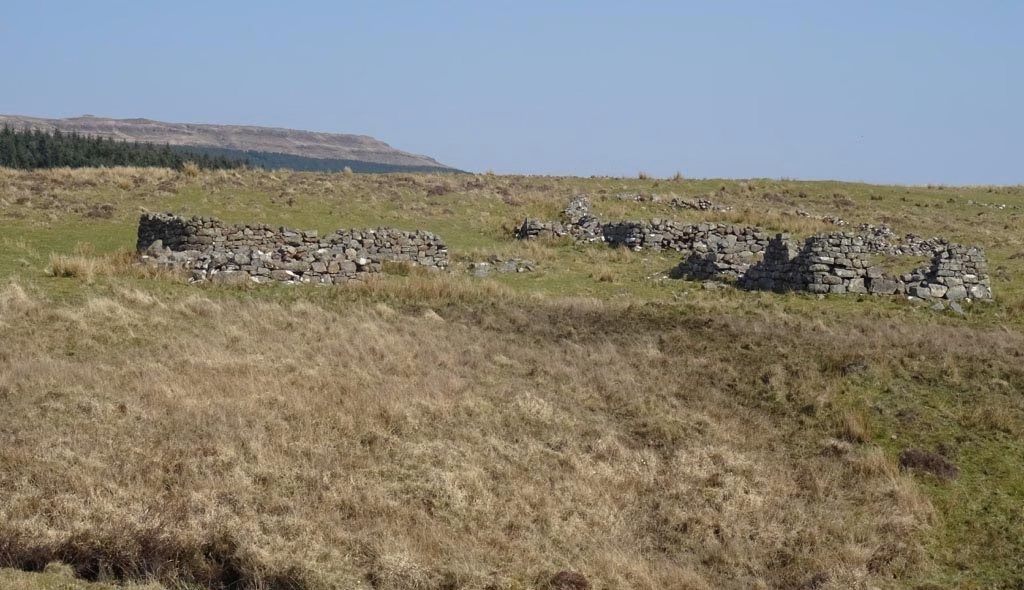
The ruins of Shiaba stand on the Ross of Mull, a windswept peninsula on the south-west of the Isle of Mull. For centuries, families lived and farmed here in a thriving rural township. Today, Shiaba is a Scheduled Monument, recognised for its importance in understanding Highland settlement and land use before the mid-19th century. Visitors now encounter the remains of stone-built houses, boundary walls and the gable end of a former schoolhouse. These ruins mark the site of a community that estate policy dismantled during the Highland Clearances, part of a wider transformation of land ownership and agriculture across the Highlands and Islands.

The Township on the Ross of Mull
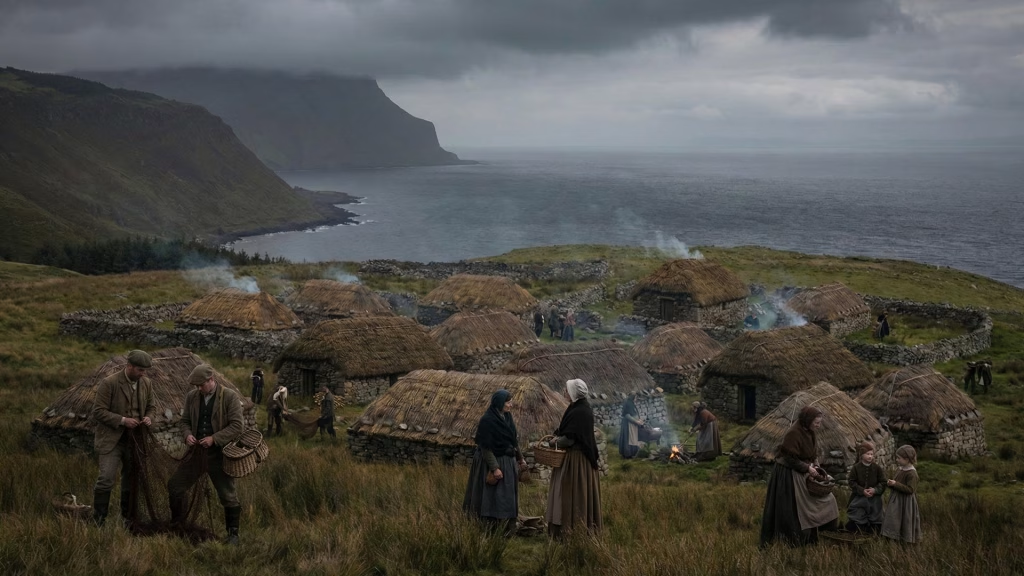
Before clearance, Shiaba ranked among the more fertile settlements on the Ross of Mull. The name Shiaba derives from the Gaelic Sia Ba, meaning “six cows”, a reference to the relative richness of the pasture. The township developed along a track, with stone houses, cultivation rigs and associated agricultural features arranged around it. By the early 19th century, the land supported a substantial population for a rural Mull township, sustained largely by mixed farming and the cultivation of potatoes. It was also a place of culture; the Gaelic poet Mary MacDonald, whose hymn Child in a Manger later became the tune for Morning Has Broken, was born here.
Estate Records and Historical Evidence
Estate papers, contemporary accounts and later historical research document the history of Shiaba. These sources include correspondence between estate management and tenants, along with petitions that the people of Shiaba submitted in an effort to resist removal. Together, these records reveal how estate authorities carried out clearance at a local level and how the community responded to it.
The Famine and Estate Policy
Conditions in Shiaba worsened sharply in the mid-1840s. When the potato crop failed from 1846 onwards, hunger spread rapidly across the western Highlands, where tenant communities depended heavily on potatoes for survival. In Shiaba, crop failure left many families facing starvation.
At the same time, estate policy on Mull shifted towards agricultural “improvement”. Landowners increasingly viewed large-scale sheep farming as more profitable and easier to manage than a densely populated township. Rising famine-relief costs strengthened the perception that maintaining a large tenant population on the land no longer made economic sense.
The Petitions of the Tenants
The people of Shiaba did not leave quietly or willingly. Tenants submitted petitions to the estate, appealing for permission to remain on their land. These documents show the depth of attachment to the township and the desperation of families who faced removal.
One petition, written on behalf of a man described as close to one hundred years old, argued that eviction at such an age was unprecedented and inhumane. The letter asked the estate to allow him to die in his own home rather than force him from the land he had occupied all his life. Despite these appeals, estate authorities chose to proceed with clearance.
Before eviction notices were hammered to croft doors and families forced from their ancestral glens, the Isle of Mull thrived on tradition, language, and community. The Mull Clearances: 1846–1856 is a deeply researched, emotionally resonant visual history of the decade that dismantled centuries of Gaelic life.

The Clearance of the 1840s
Estate officials issued formal eviction notices in 1845. Over the next two years, they removed the population of Shiaba from their homes and land. By 1847, the township stood largely empty, bringing centuries of continuous settlement to an abrupt end. The township was home to over twenty families, all of whom were removed during the clearance of the 1840s.
The estate reorganised the cleared land for sheep farming, in line with wider policies adopted across the Highlands. This decision permanently fractured the community that had once sustained the township.
Displacement and Emigration
Some former residents of Shiaba remained on the Isle of Mull and relocated to poorer land, where they attempted to survive on the margins of the estate. Many others left Scotland altogether, joining the wider movement of Highland emigration during the mid-19th century.
Former residents travelled to destinations that included mainland Britain, North America and Australia. Like many emigrants from the Highlands, they faced uncertain futures marked by poverty, unfamiliar environments and the lasting trauma of forced removal.
The End of the Settlement
After the clearance, Shiaba no longer functioned as a township. One building remained in use: a shepherd’s cottage occupied by workers who managed the estate’s sheep. This cottage, later known as Shiaba Cottage, continued to house residents into the 20th century.
The final occupants, the McKinlay family, left in 1937 after a severe storm destroyed the roof of the building. Their departure ended permanent habitation at Shiaba.

The Legacy
Today, Shiaba stands as one of the most complete and evocative cleared townships on Mull. Its ruins provide tangible evidence of the Highland Clearances and of a specific community displaced by economic and agricultural change.
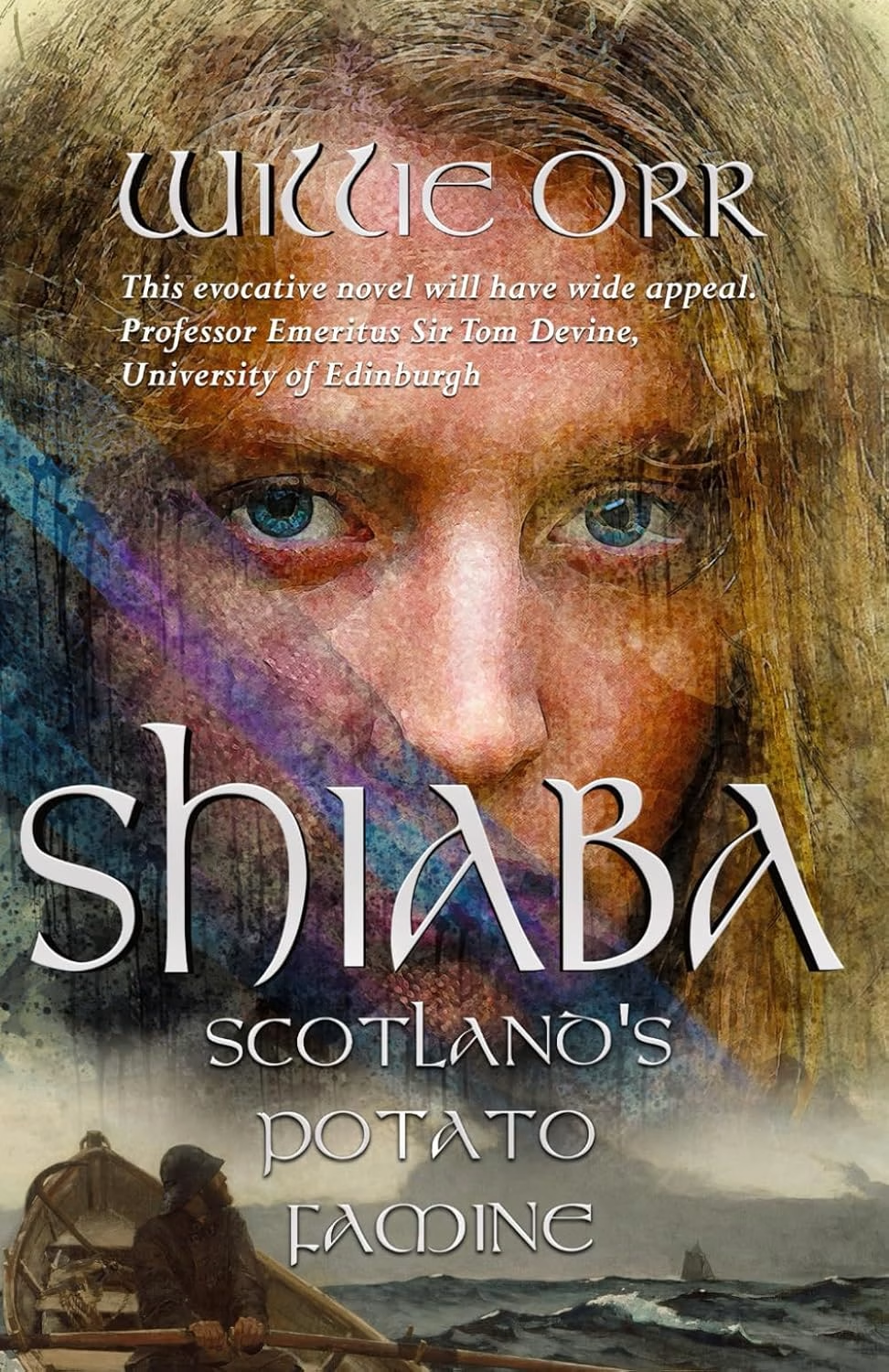
Calum MacGillivray is a man on the brink of ruin, his harvest failed and his prospects gone. The temptation of a new life in Canda beckons, but Calum is a stubborn man. He won’t be driven off the land of his fathers and is willing to pay the price to protect his family.
But Catherine, his wife, watches her children dying of starvation and knows that practical steps must be taken to save them.
Can their love survive the political forces determined to tear them apart?
The low walls of the houses and the gable of the schoolhouse serve as a memorial to the people who once lived and worked there. Estate records and historical research preserve their voices and record the circumstances of their removal. The silence of the glen now contrasts sharply with the busy township that existed before sheep replaced people on the land.