

Travelers visit the Isle of Mull specifically to witness the spectacle of dolphins and porpoises thriving in the wild. The nutrient rich currents surrounding this Hebridean island host these cetaceans in impressive numbers, making it a world class destination for marine observation. For those gazing out at the Sound of Mull or the open Atlantic, the ultimate prize consists of a close encounter with these intelligent creatures as they hunt, play, and travel through the waves.

Unlike warmer destinations where wildlife watching might serve as a passive activity, searching for marine life in the Hebrides constitutes an adventure. It involves understanding the tides, reading the weather, and immersing yourself in a landscape that stands as rugged as it is beautiful. Whether you travel as a dedicated photographer hauling a telephoto lens or a family hoping for a magical moment on the ferry, this guide covers the essential knowledge you need to find the fins in the water.
What Species Inhabit Mull?
To successfully spot marine life, you first need to know exactly what you seek. The waters around Mull do not function as a generic aquarium; they host specific species with distinct behaviors and physical characteristics. Identifying these differences holds the key to spotting them from a distance.
The Shy Resident: Harbour Porpoise
The most numerous resident remains the Harbour Porpoise (Phocoena phocoena). These rank as the smallest cetaceans in European waters, measuring just under two meters in length. If you expect Flipper style acrobatics, the porpoise will surprise you with its subtlety. These shy creatures possess a small, triangular dorsal fin that looks somewhat like a shark’s fin but moves differently. Instead of jumping, they utilize a rolling swimming style, breaking the surface briefly to breathe before disappearing again. You will rarely see them splash or bow ride boats. In calm weather, you will likely hear them before you see them; their sharp exhalation sounds like a sneeze, which earned them the local nickname “puffing pigs.”

The Crowd Pleasers: Common and Bottlenose Dolphins
In stark contrast to the shy porpoise, the Short Beaked Common Dolphin (Delphinus delphis) commands attention. Usually arriving in late spring and staying through autumn, they act in a highly social, energetic, and inquisitive manner. If a pod swims nearby, they will often race toward a boat to play in the pressure wave the bow creates. You can easily identify them by the creamy yellow “hourglass” pattern on their flanks and their slender, curved dorsal fins. When they feed or travel, they create a commotion of white water that observers can see from miles away.

Less common but equally impressive, the Bottlenose Dolphins (Tursiops truncatus) also patrol these waters. These appear significantly larger and chunkier than the Common Dolphin, with a uniform grey color. The diverse geography of the Hebrides supports a small, resident population of Bottlenose dolphins that range between Skye, Mull, and the Outer Hebrides. Because they grow larger and carry a thicker layer of blubber, they handle the colder winter waters better than their smaller cousins.
Identifying Behavior
Distinguishing between these species often comes down to energy levels. Porpoises act in a businesslike manner and focus on feeding, rarely deviating from their course to investigate humans. Dolphins, conversely, display visible curiosity and will often breach, tail slap, or spy hop (lift their heads out of the water) to look at you. Recognizing these behavioral patterns will help you identify what you see long before you get a clear look at their markings.

When to Visit
The Atlantic Ocean remains a dynamic environment, and timing your visit correctly significantly increases your odds of a sighting. While Harbour Porpoises reside here year round, the prime wildlife watching season on Mull runs from May through September.
During these warmer months, the water temperature rises slightly, triggering a bloom of plankton. This plankton feeds the baitfish, specifically sand eels, herring, and mackerel, which in turn attract the dolphins. Locals often consider August the peak month for Common Dolphins, as the mackerel shoals reach their largest size and the pods gather in significant numbers to hunt.
However, the most critical factor involves not just the month, but the weather conditions on the day. To spot a dorsal fin, you need contrast. On a windy day with “whitecaps” (white foaming waves), spotting a porpoise feels like finding a needle in a haystack because the splashing waves camouflage the animals. You want to hope for high pressure and light winds.
The “Golden Hours” of early morning and late evening prove particularly fruitful. Not only does the light improve photography, but the wind often drops at the start and end of the day, creating “glassy” water conditions. On a flat sea, a naked eye can spot a dorsal fin breaking the surface from a mile away.
Land Based Watching
One of the great myths of marine wildlife watching suggests that you must board a boat to see anything. On Mull, the geography works in your favor. Deep sea lochs etch the island, and channels surround it where strong tidal currents force fish into concentrated areas. If you know where to sit, the dolphins will come to you.
Ferry Crossings and Northern Viewpoints
The journey to the island itself provides your first opportunity. The ferry crossing from Oban on the mainland to Craignure on Mull takes about forty five minutes and crosses prime porpoise territory. Instead of sitting in the cafeteria, experienced watchers dress warmly and stand on the outer observation decks. The wake of the ferry often attracts dolphins, and the high vantage point allows you to scan a vast area of the Sound of Mull.
Once on the island, Glengorm Castle on the northern tip offers one of the finest vantage points. The headland here juts out into the Atlantic, offering a panoramic view toward the islands of Coll and Rum. It remains a rugged, exposed spot, but the deep water close to the shore makes it a highway for passing pods traveling between the inner and outer islands.
Sheltered Waters and Bays
Another excellent location lies along the coastal path between Tobermory and Aros Park. This path runs along the edge of the Sound of Mull. Porpoises frequently feed in this channel, and because the hills shelter the water, it often stays calm enough to spot them easily. Observers frequently see porpoises hunting right inside Tobermory Bay, with the colorful houses of the town providing a surreal backdrop.

For those staying in the south, the area around Grasspoint and Loch Don offers views across the narrowest part of the firth towards the mainland. The tidal exchange here flows powerfully, churning up nutrients that attract fish and, subsequently, the dolphins that hunt them.
Boat Tours and Operators
While land sightings offer rewards, nothing substitutes for time on the water. A boat allows you to travel to the feeding grounds and drift silently among the animals. However, you must choose the right operator. The WiSe Scheme (Wildlife Safe) accredits the best operators on Mull, training skippers on how to approach animals without causing distress or disturbance.
Dedicated Dolphin Specialists
If your primary goal involves finding dolphins and porpoises, Sea Life Mull stands as the premier recommendation. Based in Tobermory, they run a dedicated wildlife operation rather than a general scenic tour. They built their vessel specifically for observation, and their crew collects scientific data during the trips. They possess an intimate knowledge of the resident populations and will often travel further offshore to find the larger pods of Common Dolphins.
Scenic Tours with Wildlife Bonuses
For a mix of geology and biology, Staffa Tours operates as the largest company on the island. Departing from both Tobermory and Fionnphort, their main destination remains the geological wonder of Fingal’s Cave on the island of Staffa, and the puffin colonies on Lunga. However, the journey to these islands crosses the open ocean, and dolphin sightings act as a very common bonus on these trips.
On the west coast, departing from Ulva Ferry, Turus Mara and Mull Charters offer a different experience. This side of the island faces the open Atlantic and feels wilder and more rugged. Mull Charters gained fame for their White Tailed Eagle encounters, where the birds pluck fish from the water near the boat, but their skippers prove equally adept at spotting dorsal fins. Turus Mara focuses on the Treshnish Isles, providing a great opportunity to see marine life en route to the bird sanctuaries.
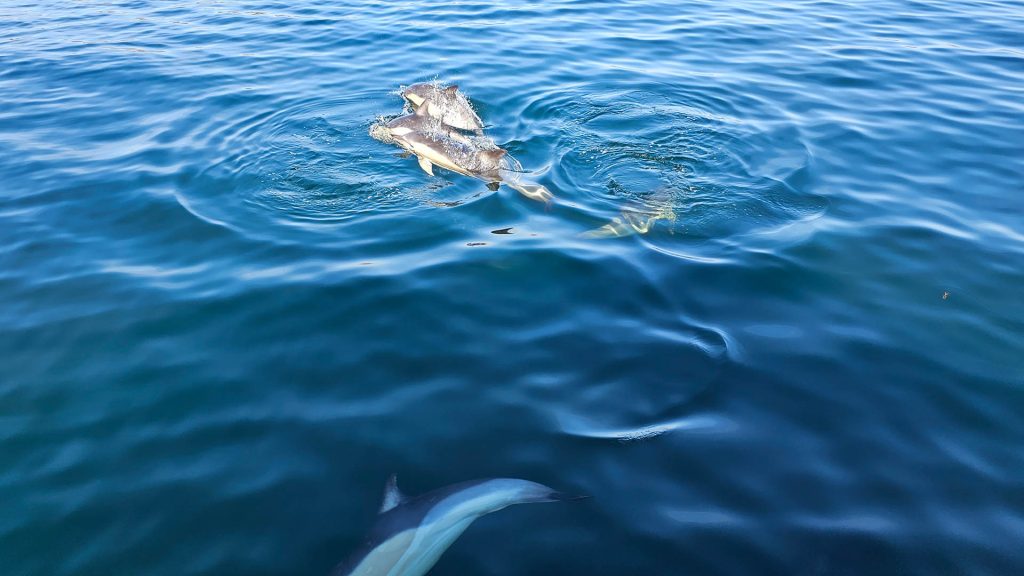
Booking these tours requires foresight. During the peak summer weeks, seats often sell out weeks in advance. We advise you to book your boat trip for the beginning of your holiday; if bad weather cancels the trip (which happens frequently in the Hebrides), you will have later dates available to reschedule.
Equipment and Preparation
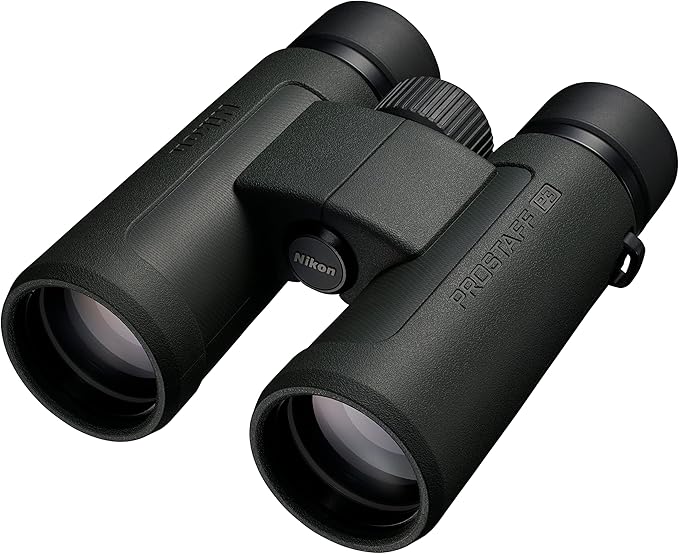
You do not need to work as a professional biologist to enjoy the dolphins, but the right gear can make the difference between a blurry shape and a lifelong memory. Optical equipment plays an essential role. The naked eye works fine for close encounters, but scanning the horizon requires binoculars. A magnification of 7x or 8x works best for marine use; anything powerful (like 10x or 12x) often proves difficult to stabilize on a moving boat or in a windy breeze.
Extremely wide 62.9 degree apparent field of view
Waterproofing up to 1m for up to 10 minutes and a fog-free design keep the view clear no matter what the weather does.
Lenses are multilayer coated for brighter images, and a high-reflective silver-alloy coat is applied to the mirror surfaces of the prisms
Rubber armouring protects binoculars from knocks and bumps
Photography at sea presents a challenge. The boat moves, the subject moves, and the light constantly changes. If you bring a camera, a high shutter speed becomes your best friend. Dolphins move deceptively fast. Set your camera to a shutter speed of at least 1/1000th of a second to freeze the water droplets and the animal. A polarizing filter can also help cut through the glare on the water’s surface, allowing you to see the animal’s body underwater before it breaches.
Clothing serves as the final, and perhaps most important, consideration. Locals follow a rule of thumb in the Hebrides: it is always winter on the water. Even if the sun shines and the land temperature hits 20°C, the wind chill on a boat traveling at 15 knots feels freezing. Wear layers, bring a waterproof windbreaker, and wear a hat. You cannot enjoy the majesty of a super pod of dolphins if you shiver uncontrollably.
A Note on Conservation and Respect
The Isle of Mull stands as a special place because the animals here live wild and free. This means the ocean never guarantees sightings. You might spend six hours on a boat and see nothing but seagulls, or you might find yourself surrounded by two hundred dolphins. This unpredictability creates part of the thrill.

When you do encounter them, remember that we act as visitors in their world. The thrill of the chase must never overtake the welfare of the animal. If you rent your own small boat or kayak, never drive directly at a pod or split a group apart. Maintain a steady, slow course and let them decide if they want to interact.
The waters of Mull offer a window into a wilder world. Whether you spot the soft puff of a porpoise in the morning mist or the chaotic splash of common dolphins racing the sunset, the experience stays with you long after you return to the mainland. By watching the weather, choosing responsible operators, and keeping your eyes on the horizon, you give yourself the very best chance of witnessing the magic of the Hebridean seas.