



The Origins of Bunessan Pier
Bunessan Pier is located on the sheltered shores of Loch na Làthaich on the south-west coast of the Isle of Mull in western Scotland. The village lies on the Ross of Mull, with “Ross” derived from the Gaelic term meaning a peninsula, accurately describing this rugged south-western projection of the island. Its history reflects a combination of estate improvement, maritime economy, famine relief, and local community life. The pier’s story begins with the development of Bunessan as a planned fishing village and continues through patterns of coastal trade, transport, and local industry.
The village of Bunessan occupies a naturally protected bay on the Ross of Mull, a peninsula characterised by rugged hills and deeply indented sea lochs. Bunessan developed in the late eighteenth century under the direction of John Campbell, 5th Duke of Argyll, whose estates extended across much of western Scotland. Estate landlords of the time sought to stabilise rural populations following social disruptions in the Highlands. Planned settlements were established to encourage a mixed economy of crofting and fishing. Bunessan was one such settlement, with its layout and small crofts designed to support a productive local economy that complemented agricultural tenancies on the surrounding hillsides. Access to the sea formed a central element in this vision, as maritime trade offered both subsistence and commercial opportunity.

Construction and Early Years
In 1846, local workers constructed the pier from granite quarried nearby on the north side of the bay, creating a substantial and durable structure capable of withstanding Atlantic conditions. Prior to its construction, vessels anchored offshore in the sheltered bay and transferred cargo and passengers to land by small boats. This method depended heavily on favourable weather and tide and limited both the volume and safety of goods handled. The new granite pier provided a firm, level platform where larger boats could tie up directly and unload more quickly and securely, marking a significant development for the community and improving Bunessan’s connection to regional maritime networks.

The Origin of the Name “Maize Pier”
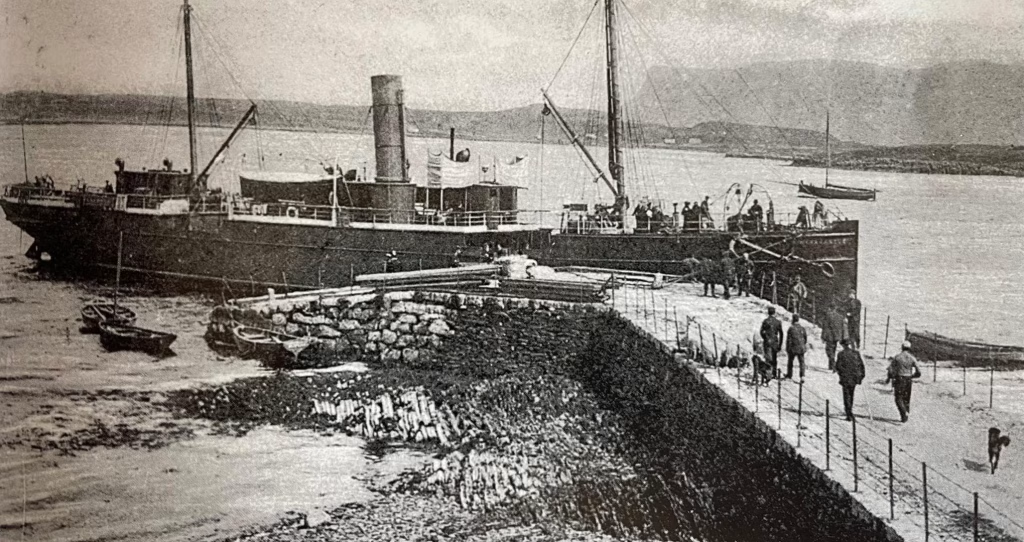
The construction of the pier coincided with the period of agricultural distress that followed the potato crop failures beginning in 1846. In Bunessan and neighbouring communities, estate managers organised relief works to employ local men on essential infrastructure projects, including harbour and road building. Much of the work on the pier was carried out by local labourers who received Indian corn, commonly known as maize, as payment in return for their labour. Because workers were sustained through these emergency food supplies, the structure became known locally as “The Maize Pier.” This name appears in photographic captions and oral histories of the village, preserving the memory of the hardship that shaped its construction. Those unable or unwilling to undertake such labour were among the many islanders who joined the emigrants leaving Mull during and after the famine years, reflecting the wider demographic changes experienced across the Highlands and Islands.

The Pier’s Role in Coastal Trade
Once completed, Bunessan Pier became the focal point of maritime activity for the settlement and surrounding area. During the nineteenth century, the Hebridean coastline was served by a network of coastal vessels, often steam-powered from the 1850s onwards, linking smaller ports and villages to larger towns such as Tobermory, Oban, and Glasgow. While Bunessan did not operate on the scale of larger ports like Tobermory or Craignure, it functioned as a minor call along seasonal schedules when weather and sea conditions allowed safe access to the bay.
Throughout the late nineteenth and early twentieth centuries, the pier supported both commercial fishing and coastal trade. Fishing in the waters around the Ross increasingly focused on shellfish, notably lobster and crab, which were landed at Bunessan and collected by merchants for shipment to mainland markets. The pier also served as the point of arrival for essential imports including coal for domestic and agricultural use, flour and meal for local consumption, and timber and ironwork for building and repairs. In the era before modern roads reached deeply into the Ross of Mull, the sea remained the principal route for these heavy and bulky goods.

In the early twentieth century, Clyde steamers called at Bunessan when conditions permitted. Local accounts record that the Dunara Castle, a well-known west coast passenger steamer of the period, visited the pier and unloaded substantial quantities of cargo, said to have reached twenty tons per week at its height. These visits illustrate the capacity of the improved harbour facilities compared with the earlier practice of offshore anchorage and small boat transfer.
Twentieth-Century Changes
The First World War and the decades that followed brought change to coastal shipping patterns. Passenger steamers saw fluctuating service levels, and the expansion of road transport and the widespread adoption of motor vehicles altered transportation along the west coast. Access to the pier had originally been along a shoreline track connecting it with the village. This remained the principal route until 1939, when the completion of a new road improved overland access and reflected broader infrastructure development on the Ross of Mull. By the 1930s and certainly after the Second World War, reliance on regular coastal steamer calls had diminished significantly, with commercial road haulage taking an increasing share of freight movement where roads were feasible. Despite these changes, the fishing fleet continued to use Bunessan Pier, and visiting yachts and small pleasure craft became part of the harbour’s traffic as leisure boating grew in the mid twentieth century.
Administration and Modern Upgrades
In the post-war period, the administration of marine facilities in Scotland increasingly passed to county and later unitary authority structures. Bunessan Pier, unlike larger commercial harbours with statutory port status, remained a maintained local harbour under the responsibility of regional authorities and subsequently Argyll and Bute Council. Periodic maintenance and repair were necessary to counter constant exposure to tidal and storm forces typical of the Atlantic coast, yet the core granite structure remained fundamentally unchanged from its original nineteenth-century form.

Beginning in the late twentieth century and continuing into the twenty-first, significant rounds of refurbishment have ensured the pier’s continued safe use by both the local commercial fishing fleet and visiting leisure craft. Upgrades included modern lighting, the provision of fresh water and electrical connections at the berth, improved parking areas for vehicles and trailers, and resurfacing to enhance pedestrian safety. These improvements introduced contemporary utilities while preserving the historic character and fabric of the structure.
Bunessan Pier Today
Today, Bunessan Pier remains the principal marine facility for the village. Local fishing boats continue to berth and unload catches of shellfish and crab throughout the year, and visiting yachts and pleasure craft use the pier as a sheltered landing place during the sailing season. Although the era of regular coastal steamers has long passed, the pier’s enduring presence links the present community to generations of islanders who depended on it for livelihood and connection to the wider world.

Throughout its existence, Bunessan Pier has served as both practical infrastructure and a repository of community memory. The official name on maps and in administrative records coexists with the local vernacular title “The Maize Pier,” which captures the social and economic circumstances of its construction during a period of hardship. Its survival for nearly two centuries stands as testament to the maritime heritage of the Ross of Mull and to the continuing role of small harbours in sustaining island communities where land and sea meet.
