



Calve Island is a small island located just off the coast of Tobermory on the Isle of Mull in western Scotland. Although it is uninhabited today, the island has a fascinating history that reflects the wider story of life in the Hebrides. From farming communities and maritime activity to shipwrecks and wildlife, Calve Island offers a glimpse into a way of life that has largely disappeared from many of Scotland’s smaller islands.
Visible from Tobermory’s colourful waterfront, Calve Island forms a natural barrier between the town and the open waters of the Sound of Mull. Its strategic location has shaped both the history of the island and the development of Tobermory itself. While many visitors admire the island from a distance, few realise the important role it has played in protecting one of Scotland’s finest natural harbours.
Today, Calve Island remains privately owned and largely untouched. Its quiet landscape, abandoned agricultural past and rich marine environment continue to attract historians, walkers, photographers and divers interested in exploring one of the hidden gems of the Inner Hebrides.
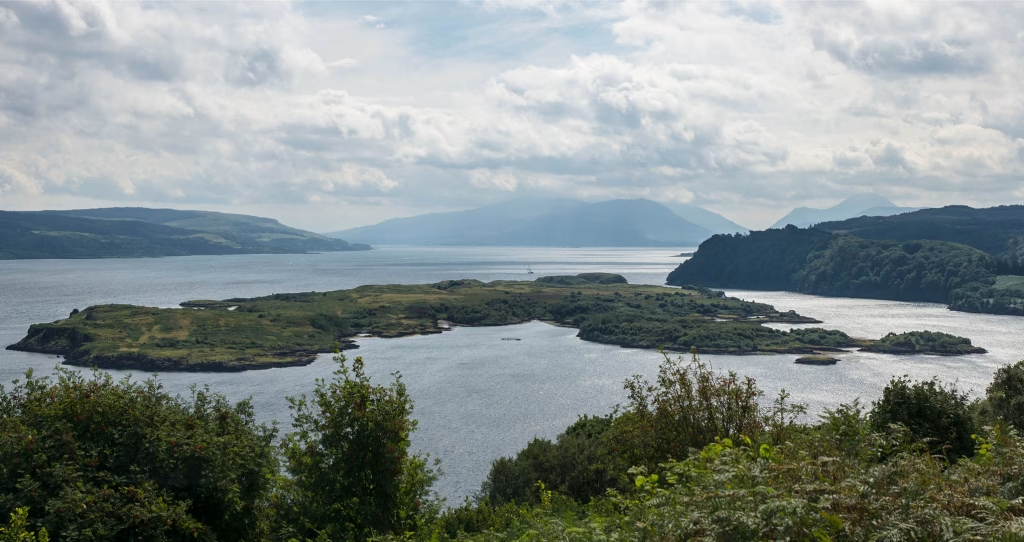
The Location of Calve Island
Calve Island lies immediately east of Tobermory, the main town on the Isle of Mull. The island stretches for nearly two kilometres and sits across a narrow channel from the Mull coastline. This position makes it one of the most recognisable landmarks visible from the harbour.
The island helps create the sheltered waters of Tobermory Bay. Without Calve Island acting as a protective barrier, the harbour would be far more exposed to weather coming from the Sound of Mull. This natural protection has allowed Tobermory to develop into an important fishing, trading and tourist centre over the centuries.
Visitors walking around Tobermory can enjoy excellent views of Calve Island from the waterfront, the harbour area and nearby Aros Park. Its green hills and rocky shoreline provide a striking backdrop to the town and contribute greatly to the character of the bay.
Early Use of the Island
Like many small Hebridean islands, Calve Island was traditionally used for agriculture and grazing. The fertile land supported livestock, while the surrounding waters provided opportunities for fishing and collecting shellfish.
Although the island never supported a large population, families lived and worked there for generations. Farming on a small island was often challenging, requiring hard work and self-sufficiency. Residents depended on the land, the sea and close connections with nearby communities on Mull.
Historical records suggest that the island remained inhabited into the twentieth century. Even as many Scottish islands experienced population decline, Calve Island continued to support a small farming community. The island’s fertile ground helped sustain agricultural activity long after many comparable settlements had begun to decline, reflecting a traditional Hebridean way of life.
Life on Calve Island
Living on Calve Island required resilience and adaptability. Residents faced difficult weather conditions, isolation and the constant challenge of transporting goods across the water to and from Mull.
The island’s farmers raised livestock and cultivated the land while maintaining buildings and managing daily household tasks. Supplies that could not be produced locally had to be brought across by boat, creating a strong sense of independence among the island’s small community.
A valuable insight into life on Calve Island comes from 1934, when Alastair Dunnett and Seamus Adam visited during their pioneering kayak expedition around the Inner Hebrides. They found the island being farmed by a single extended family and stayed to help with the harvest. Among those they met were sisters Margaret and Janet McDonald, who were locally renowned as competitive rowers. Dunnett later described Calve as a productive and fertile place, challenging the common perception of Scottish islands as little more than beautiful but barren landscapes.
Eventually, however, the pressures of modern life, population decline and wider economic changes made permanent settlement increasingly difficult. Like many small islands across Scotland, Calve Island gradually lost its resident population, and today it stands uninhabited despite signs of revival elsewhere in parts of the Hebrides.
The End of Permanent Settlement
During the twentieth century, many Scottish islands experienced depopulation as people moved to larger towns and cities in search of employment, education and improved services. Calve Island was part of this broader trend.
As opportunities in traditional farming declined, younger generations often chose to leave rural communities. Improved transport links elsewhere made mainland life more attractive, while maintaining small island farms became increasingly challenging.
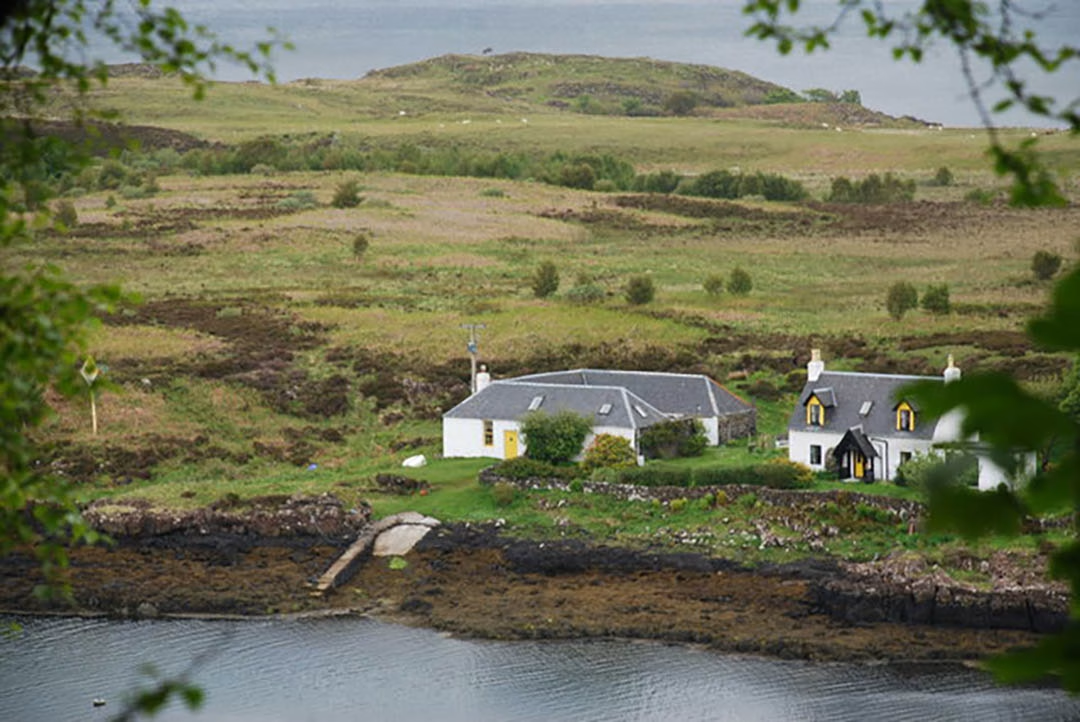
Over time, permanent residents left Calve Island, and the island became uninhabited. Although some buildings remain, including the old farmhouse, they are no longer used as full-time homes.
Today, the island stands as a reminder of the many small communities that once existed throughout the Hebrides. Its abandoned agricultural landscape provides valuable insight into Scotland’s changing rural history.
Geography and Landscape
Calve Island may be small, but it contains a varied and attractive landscape. The island consists of low hills, rocky coastlines, grassland and areas of rough grazing. Its elevated ground provides impressive views across the Sound of Mull and towards the Scottish mainland.
The geology of the island is closely linked to the volcanic origins of Mull. Millions of years ago, powerful volcanic activity shaped much of the surrounding region, creating the dramatic landscapes that visitors admire today.
The coastline is particularly attractive, with numerous rocky outcrops, small bays and sheltered inlets. These features create excellent habitats for marine life and seabirds while adding to the island’s scenic appeal.
The changing light across the water and surrounding mountains makes Calve Island a favourite subject for photographers visiting Tobermory.
Maritime Importance
One of the most significant aspects of Calve Island’s history is its relationship with the sea. The island’s position at the entrance to Tobermory Bay has made it important for navigation and maritime activity for centuries.
Ships entering the harbour pass close to Calve Island, benefiting from the shelter it provides. The protected anchorage created by the island has long been valued by fishing vessels, merchant ships and recreational sailors.
However, the waters surrounding the island have also witnessed several maritime accidents. Strong winds, storms and rocky coastlines have occasionally proved dangerous for vessels operating in the area.
These incidents have left an important legacy beneath the water, where several historic wrecks remain preserved on the seabed.
The Famous Wreck of the Pelican
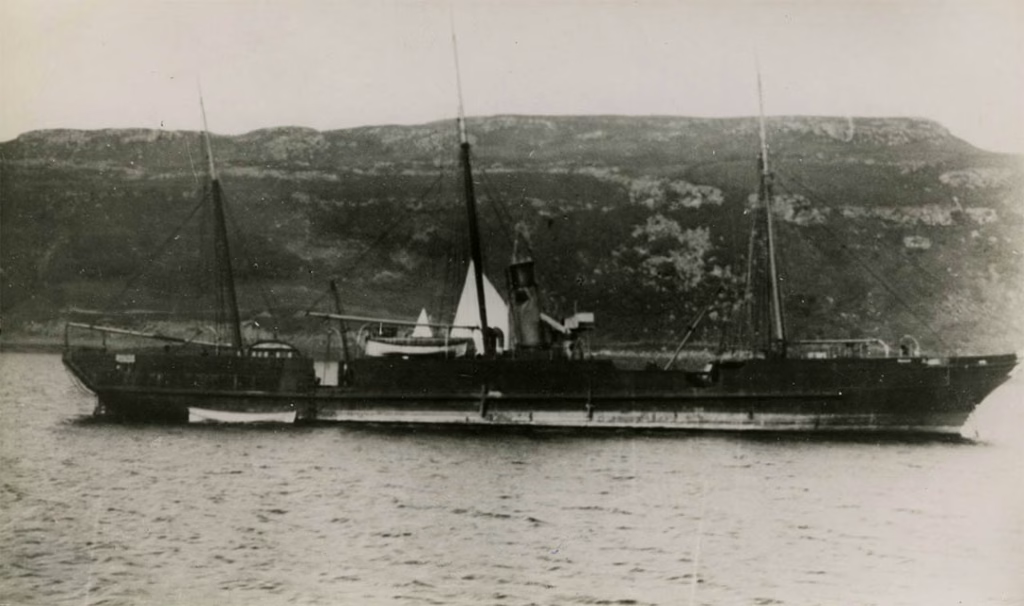
The most well-known shipwreck associated with Calve Island is the Pelican, a paddle steamer built in Cork in 1850.
Originally used as a passenger vessel, the ship later served as a coal hulk in Tobermory Bay. During a severe storm in December 1895, the vessel broke free from its moorings and drifted towards Calve Island.
The ship struck rocks and eventually sank in relatively deep water. Although the vessel disappeared beneath the surface, much of the wreck remains intact today.
The Pelican has become one of the most popular dive sites in the area. Divers visit from across Britain and beyond to explore the remains of this historic vessel and learn more about its story.
Wildlife Around the Island
Despite its lack of permanent human residents, Calve Island supports a rich variety of wildlife. The island’s grasslands, rocky shores and surrounding waters provide important habitats for numerous species.
Seals are regularly seen resting along the coastline or swimming in nearby waters. The area also attracts a wide range of seabirds, including gulls, cormorants and other coastal species.
The waters around the island contain an abundance of marine life. Divers frequently encounter colourful underwater ecosystems featuring fish, sea anemones, starfish and other marine creatures.
Because human activity is limited, much of the island’s natural environment remains relatively undisturbed. This makes Calve Island an important location for both wildlife observation and conservation.
A Popular Destination for Divers
The waters surrounding Calve Island are regarded as some of the best diving locations around Mull. Divers are attracted by the combination of historic shipwrecks, dramatic underwater scenery and abundant marine life.
Steep underwater rock walls descend into deeper waters, creating exciting opportunities for exploration. Clear conditions often allow divers to appreciate the remarkable diversity of life beneath the surface.
The wreck of the Pelican remains the area’s most famous attraction, but numerous other dive sites can also be found around the island. Together, these locations have helped establish Mull as one of Scotland’s leading diving destinations.
Diving tourism contributes to the local economy while helping raise awareness of the island’s maritime heritage.
Calve Island Today
Today, Calve Island remains a peaceful and largely untouched part of the Inner Hebrides. Although no permanent community survives there, the island continues to play an important role in the landscape and identity of Tobermory.
Visitors admire its scenery from the waterfront, photographers capture its changing appearance throughout the seasons, and divers explore the waters that surround it. Historians and researchers also value the island as an example of the social and economic changes that transformed many Scottish island communities during the twentieth century.
The island’s combination of natural beauty, historical significance and maritime heritage makes it far more interesting than its modest size might suggest.
A Lasting Symbol of Hebridean History
Calve Island tells a story that is repeated across many parts of Scotland’s west coast. It is a story of settlement, farming, resilience, change and eventual depopulation. Although the island no longer supports a permanent population, its landscape preserves the memory of those who once lived and worked there.
Standing quietly across the water from Tobermory, Calve Island remains a visible link to the past. Its fields, coastline and historic buildings continue to reflect centuries of human activity while its surrounding waters preserve reminders of the area’s maritime history.
For anyone interested in Scottish islands, maritime heritage or the history of the Hebrides, Calve Island offers a fascinating example of how geography, community and the sea have shaped life in this remarkable part of the world.
