



Early Life
Mary MacDougal MacDonald was born in 1789 in the Brolas district on the Ross of Mull. Her parents, Duncan MacDougall, a farmer and Baptist minister, and Anne Morrison, raised her in a Gaelic-speaking household. She grew up speaking only Gaelic and never learned English. Daily life for Mary involved working the land, tending animals, and participating in the close-knit community of Shiaba. From an early age, Mary experienced the rhythm of rural Hebridean life, which combined hard work with strong cultural and religious traditions.
Family and Marriage
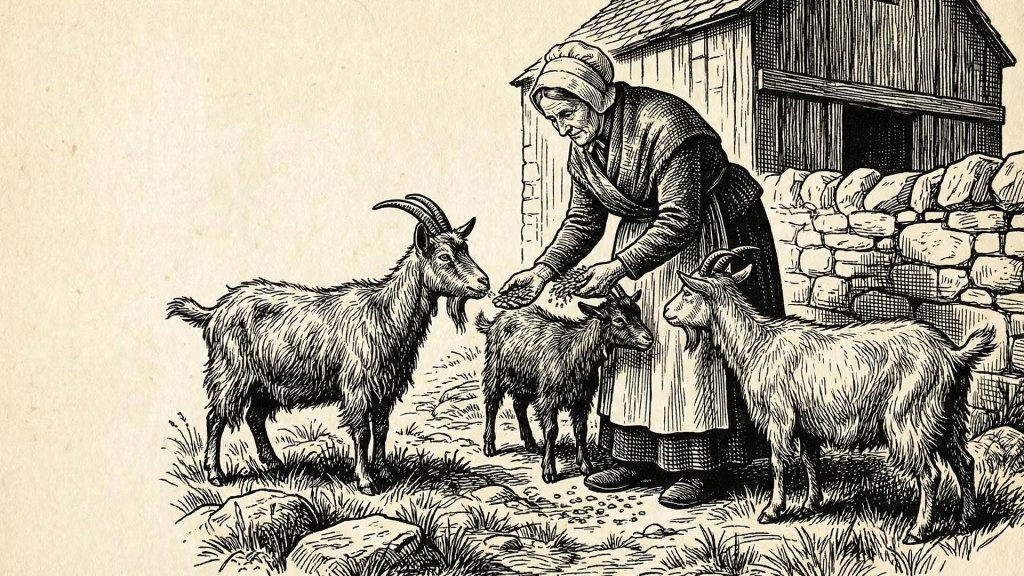
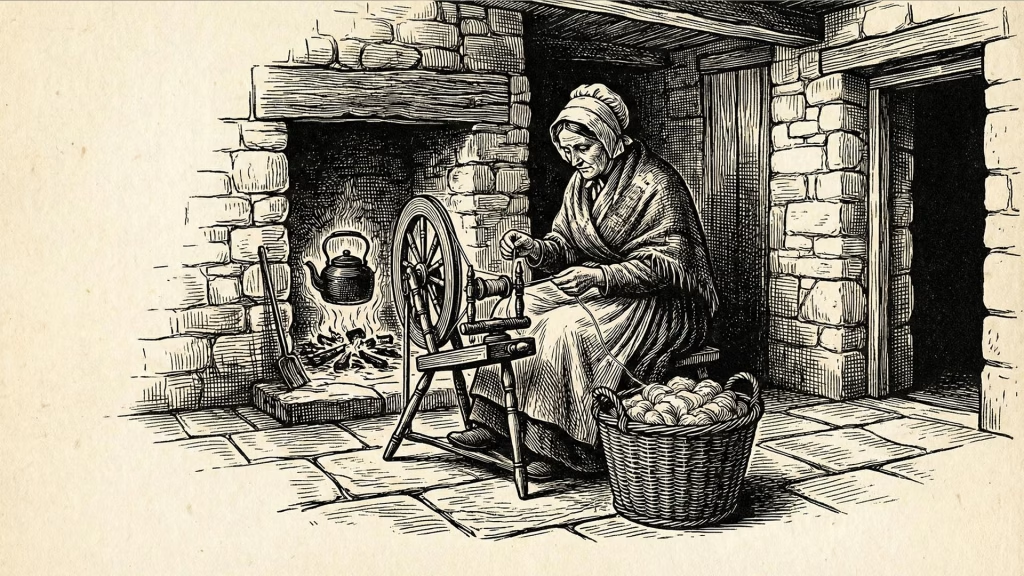
Mary married Neil MacDonald, a local crofter, and together they managed a small croft in Ardtun. She spent her days raising a family, caring for animals, and growing food. The work required long hours and constant effort, and she handled it alongside her household responsibilities. Mary devoted herself to her Baptist faith, which guided her daily routines and creative endeavors. She often sang hymns and composed poems while performing chores such as spinning or preparing meals.
Gaelic Culture and Language
Mary lived entirely within the Gaelic-speaking world of Mull. People in her community used Gaelic in every part of life, from conversation to religious practice. She absorbed the oral traditions that carried songs and poems across generations. This environment influenced her ability to write hymns and poetry. Her works reflected the fusion of spiritual devotion and cultural identity that defined life in rural Hebridean communities.
Hymn Writing
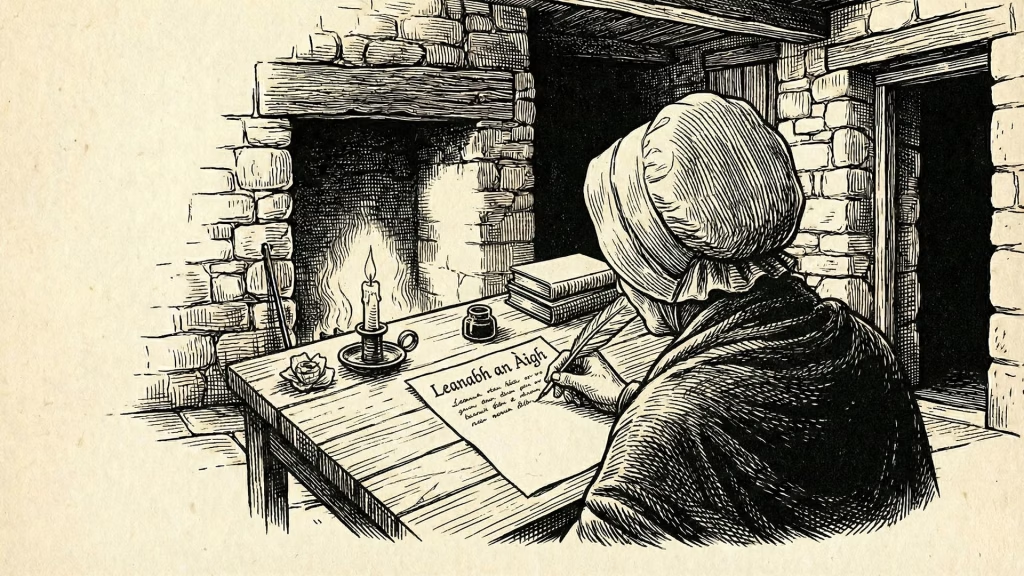
Mary MacDonald became best known for her hymn Leanabh an Àigh (literally “Child of Joy” in Gaelic), which was later translated into English as Child in the Manger. She wrote the hymn in Gaelic and paired it with a traditional melody that local people had sung for years. She carefully matched her words to the tune, creating a hymn that expressed her Christian faith through familiar cultural music. Mary often composed and sang her hymns during household work, making the creative process part of her everyday life.
Legacy of Leanabh an Àigh
After her death in 1872, her hymn remained familiar only within her community. In 1888, Lachlan Macbean included it in his collection Songs and Hymns of the Scottish Highlands. He translated it into English as Child in the Manger and published the melody under the name Bunessan, after a nearby village. Over time, the melody gained wider recognition when Eleanor Farjeon wrote new English words in 1931 for the hymn Morning Has Broken. Cat Stevens later recorded this version in 1971, bringing the tune to audiences around the world. Mary’s work helped preserve the melody and introduced it to new generations.
Religious and Cultural Context
Mary lived during a period when crofting and small-scale farming shaped daily life on the Hebrides. Families depended on the land and shared resources within tight-knit communities. Churches provided spiritual guidance and social structure, while hymn-singing reinforced cultural identity. Mary wrote her hymns within this context, blending Gaelic oral traditions with religious themes. Her contributions highlight the important role women played in sustaining Gaelic culture and faith practices during the 19th century.
Later Life and Death
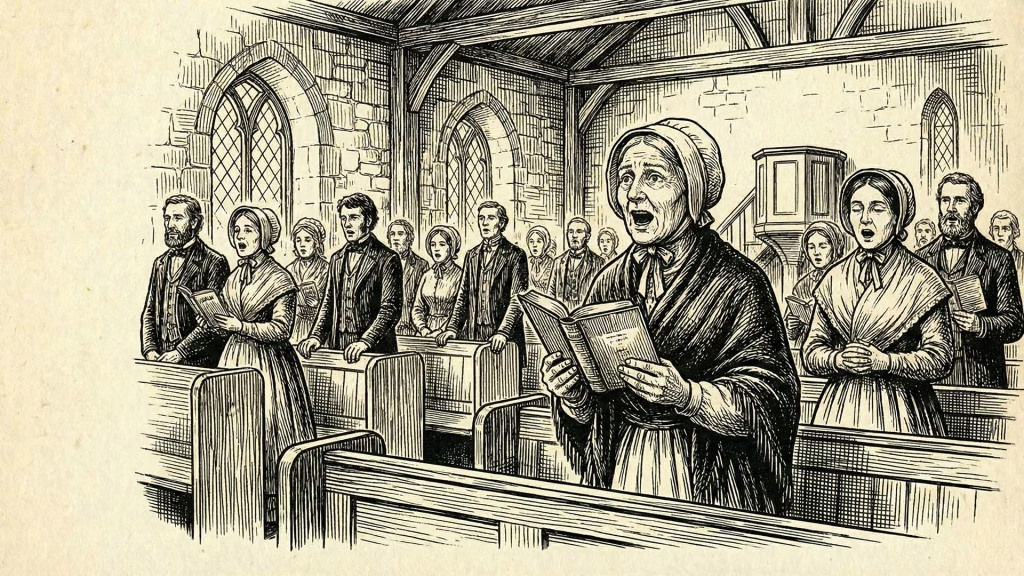
Mary MacDonald remained in Ardtun for her entire life. She managed her household, worked on the croft, and participated in community worship. She died in 1872 at the age of 83, leaving behind a body of work that reflected her faith, her culture, and her community. The people of Mull remembered her for her hymns and poetry, and her legacy continued through the melody and words of Leanabh an Àigh.
Commemoration
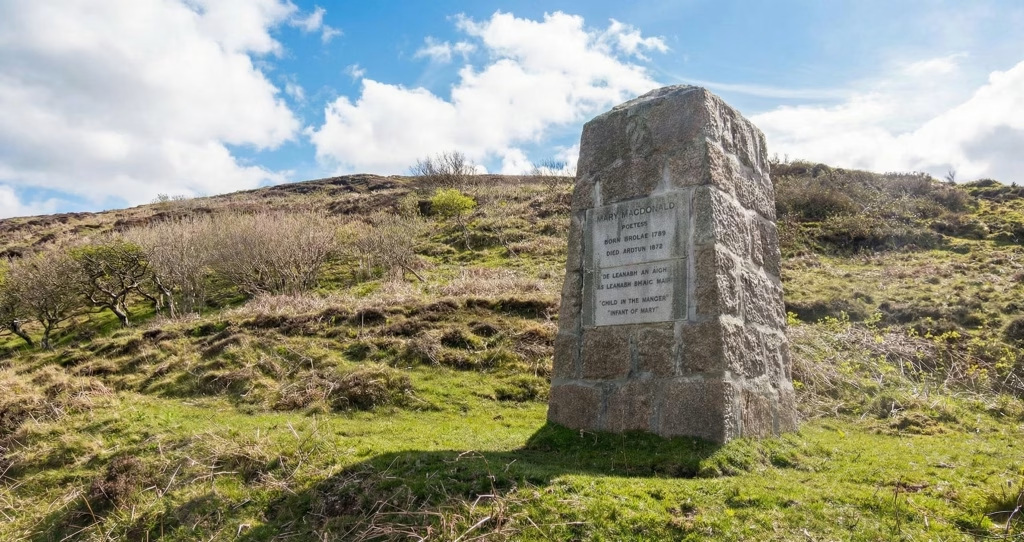
Today, a roadside monument near Ardtun marks Mary MacDonald’s life and achievements. The memorial stands close to the ruins of the croft where she lived and worked. Visitors can see the inscription that includes lines from her hymn, connecting her name to the local musical tradition. People continue to sing her hymn in Gaelic churches and communities, and recordings preserve both the words and the tune.
Influence
Mary MacDonald’s life exemplifies 19th-century Gaelic Hebridean culture. She lived through a time of hard work, religious devotion, and strong oral traditions. Her hymn-writing demonstrates how local music and language conveyed faith and preserved culture. Although she spent her life in a remote community, her work has had a lasting impact. The melody Bunessan, paired with her words, reached global audiences through adaptations like Morning Has Broken. Mary’s story shows how individual creativity can preserve cultural heritage across generations.
