



Skerryvore Lighthouse stands on a remote and dangerous reef in the Atlantic Ocean, southwest of Tiree. The reef, known in Gaelic as An Sgeir Mhòr, forms a low and often submerged hazard that long threatened vessels navigating Scotland’s western seaways. As maritime traffic increased during the late eighteenth and early nineteenth centuries, the number of shipwrecks in the area rose, drawing urgent attention to the need for a permanent light.
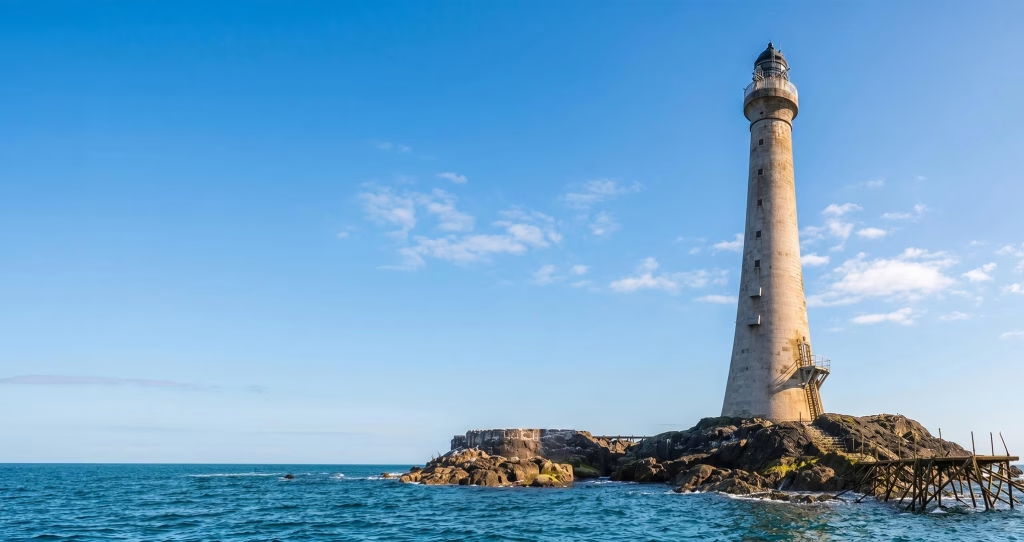
The responsibility for such works lay with the Northern Lighthouse Board. In 1804, the engineer Robert Stevenson surveyed the reef and recognised the necessity of a lighthouse. The difficulty lay not in the decision, but in the conditions. The reef offered only a small area of exposed rock at low tide and lay directly in the path of powerful Atlantic swells, making construction exceptionally challenging.
Alan Stevenson and the decision to build
The project moved forward in the 1830s under the direction of Alan Stevenson. He undertook the design and organisation of the lighthouse and established a shore base at Hynish on the Isle of Tiree. This station became the centre of operations, with workshops, storage areas, and accommodation for the workforce.
Construction began on the reef in 1838 with the erection of a temporary barrack supported on iron legs fixed into the rock. Workers lived in this exposed structure during the building season, facing constant disruption from weather and sea conditions. Progress depended entirely on calm periods, and the isolation of the site added to the strain of the work.
The granite from Camas Tuath Quarry
The stone used to build the lighthouse was quarried at Camas Tuath Quarry near Bunessan on the Ross of Mull. This coastal quarry supplied the granite for the tower, forming a direct connection between Mull and the Skerryvore reef.
The granite came from the Ross of Mull formation and stands out for its strength, coarse texture, and distinctive pink colouring. Workers could cut it with precision while it retained durability in harsh marine conditions. Teams extracted each block at Camas Tuath, transported it by sea to Hynish for dressing, and then carried it onward to the reef for final placement.
The quarry’s position allowed workers to load large stones directly onto vessels, which ensured a steady and practical supply throughout the construction period. This coastal access made the entire operation possible on the scale required.
Construction on the reef
The building of the lighthouse required sustained effort over several seasons. Work could only proceed during favourable weather, and even then access to the rock was often limited. Granite blocks prepared at Hynish were shipped out and hoisted into place with cranes. Each stone was shaped to interlock precisely with those around it, creating a unified and resilient structure.
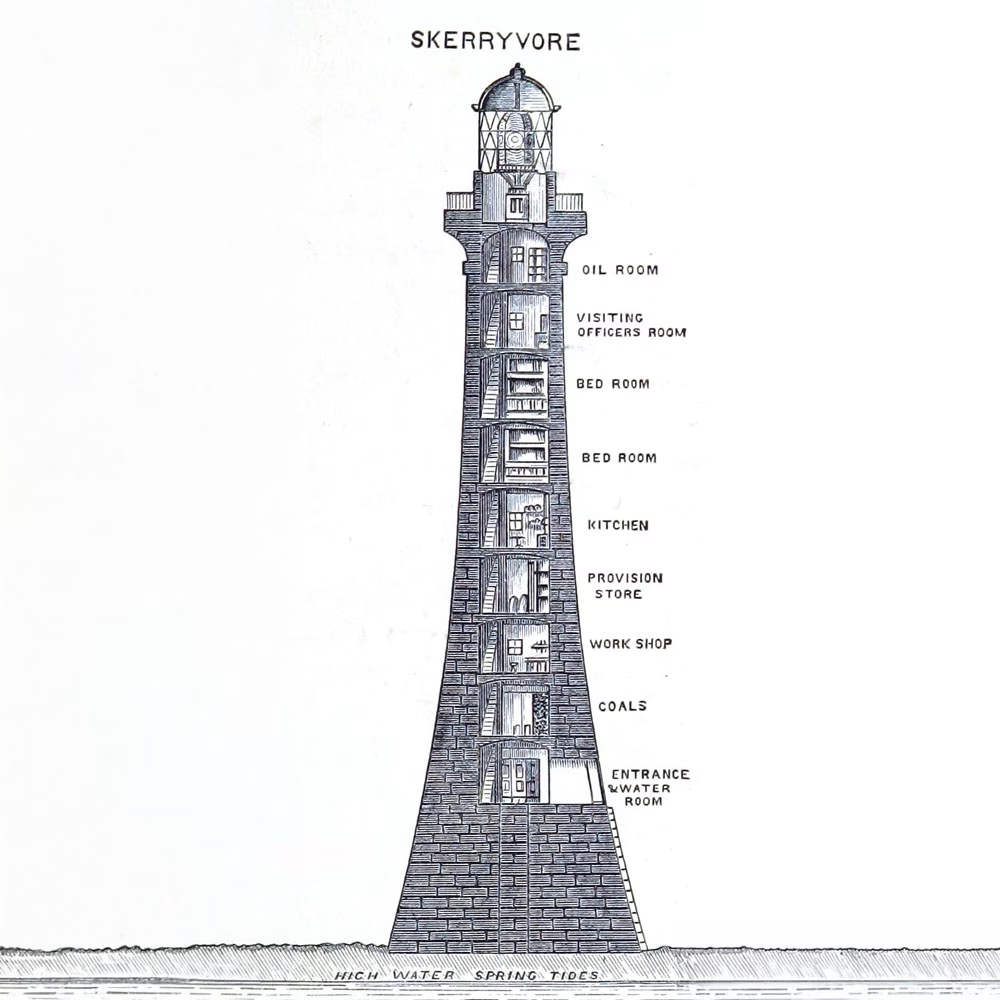
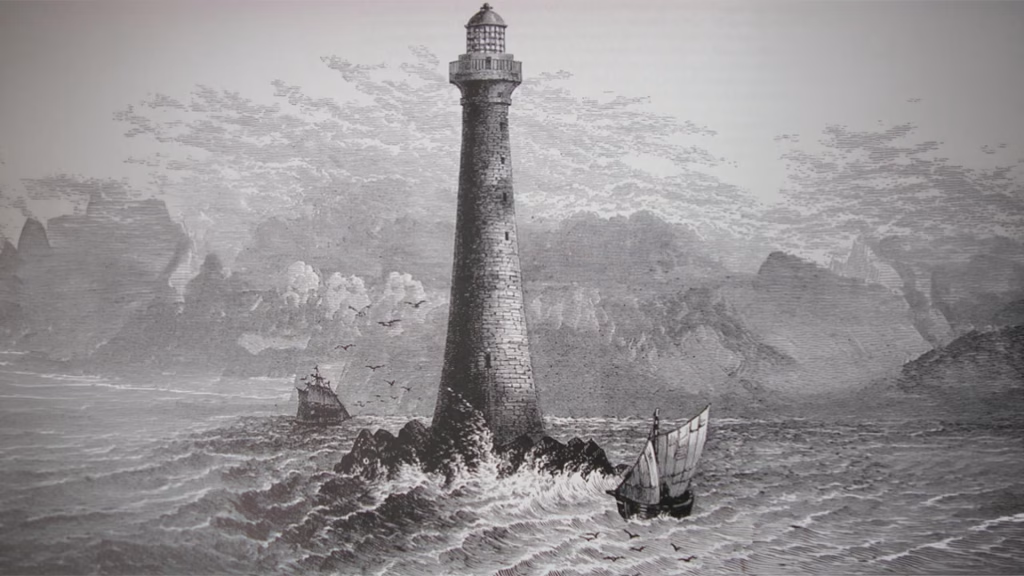
The tower was designed with a hyperbolic curve, wide at the base and narrowing towards the top. This form allowed it to resist and deflect the force of the sea effectively. Despite frequent interruptions, construction advanced steadily, and by 1842, the tower reached its full height of 156 feet, making it the tallest lighthouse in Scotland.
First light and early operation
Skerryvore Lighthouse was first illuminated in 1844, providing a powerful beacon for ships navigating the western approaches to Scotland. Its presence greatly reduced the number of wrecks in the surrounding waters and established it as one of the most important lights in the region.
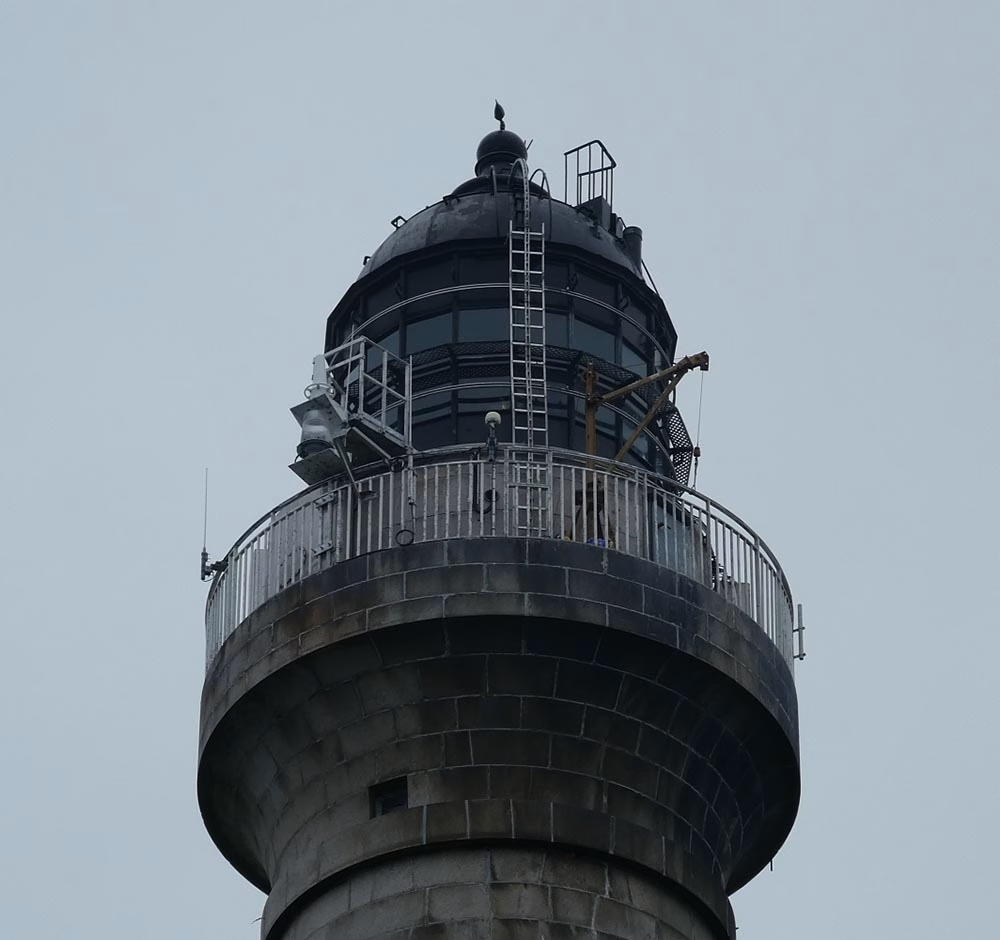
The lighthouse also gained recognition for its architectural quality. Robert Louis Stevenson later described it as the finest of all deep sea lights. His words reflected both its elegance and the achievement it represented.
Life for the keepers was demanding. They worked in rotation, spending extended periods on the isolated tower while their families remained ashore. Supplies arrived by boat, and communication was limited, reinforcing the sense of remoteness that defined service at Skerryvore.
Fire and survival on the rocks
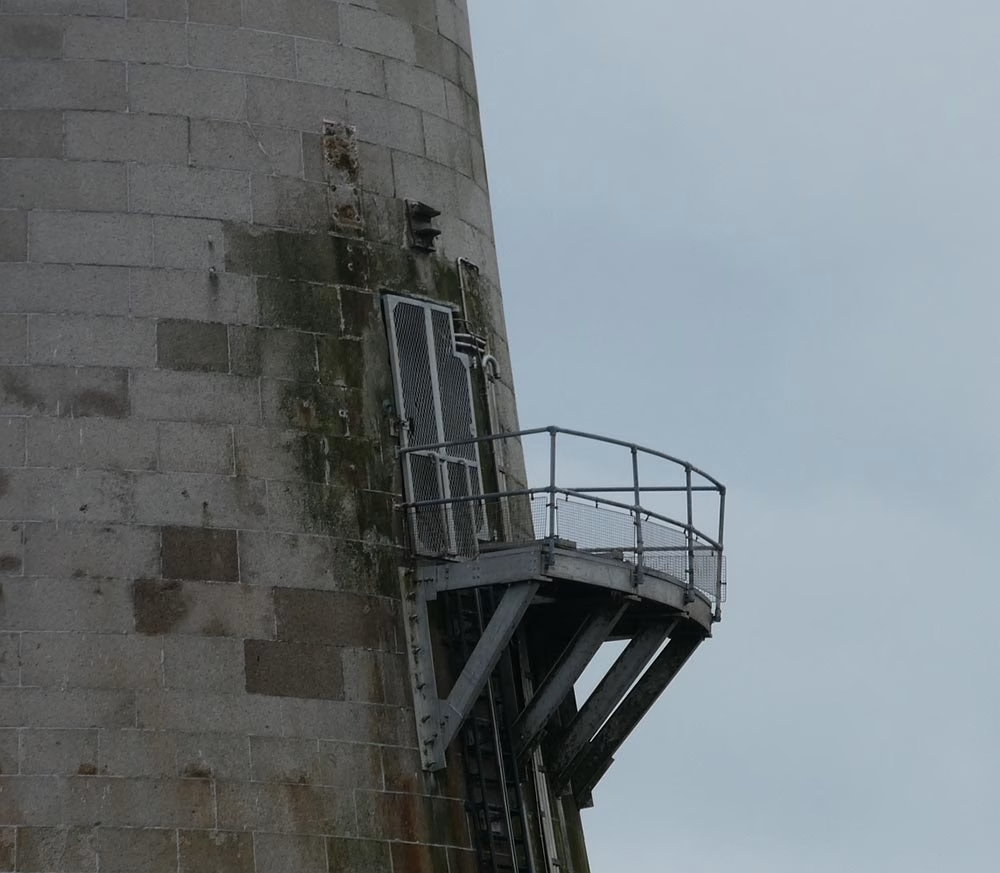
In 1954, a fire broke out within the lighthouse, forcing the keepers to abandon the tower under dangerous conditions. Three men escaped the burning structure and made their way onto the exposed rocks below, where they remained through the night awaiting rescue.
Fortune favoured them, as the relief vessel was already due the following day. As they endured the darkness and uncertainty, a guillemot came up onto the rocks and settled beside them. The bird remained there throughout the night, close to the men as they waited for daylight and rescue.
In later retellings, this moment took on a deeper meaning. Some believed the guillemot represented the spirit of a former keeper, watching over the men in their time of danger. Whether taken as coincidence or something more, the story became part of the enduring folklore surrounding Skerryvore.
Later history and automation
Following the fire, the lighthouse underwent repair, and a temporary lightship maintained navigation in the area until the tower returned to service. Skerryvore continued to operate as a manned lighthouse for several more decades.
In 1994, the light was automated, bringing an end to the era of resident keepers. Modern systems now ensure its continuous operation without the need for a permanent human presence, reflecting wider changes across lighthouse services.
Architectural importance and legacy
Skerryvore Lighthouse remains one of the most remarkable achievements in lighthouse engineering. Its elegant proportions and enduring strength reflect the skill of Alan Stevenson and the craftsmanship of those who built it. The granite from Camas Tuath gives the structure its distinctive appearance and has enabled it to withstand the Atlantic for more than a century and a half.
The lighthouse continues to guide vessels safely past the reef, fulfilling the purpose for which it was built. It stands as a lasting example of nineteenth century engineering, linking the rugged coastline of Mull with one of the most exposed maritime environments in Britain.
