

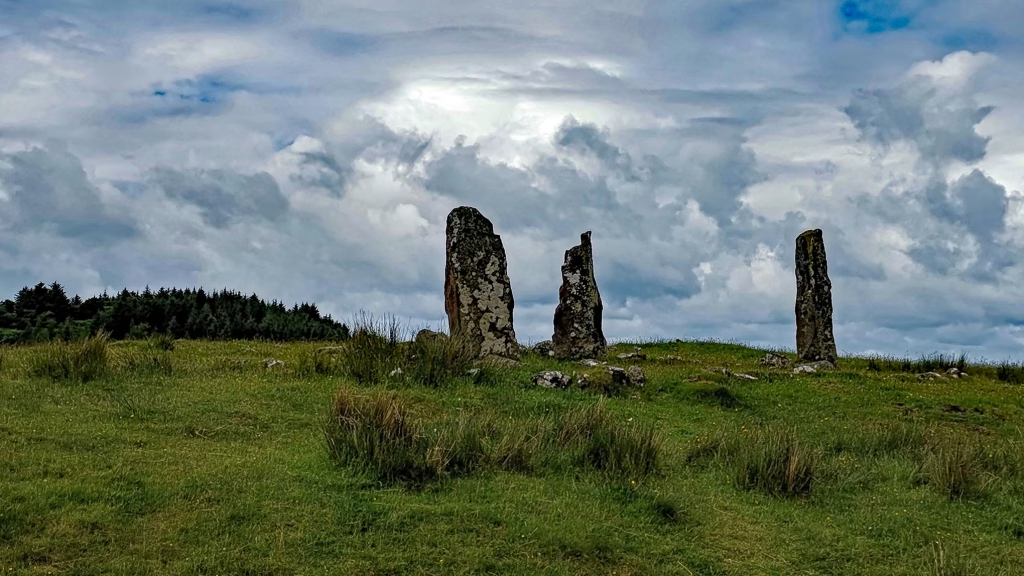
On a low ridge overlooking the northern landscape of the Isle of Mull, the Glengorm Standing Stones rise west of Glengorm Castle. Though the monument consists of only three stones, it forms part of a wider tradition of building prehistoric monuments on Mull and across western Scotland. Its history spans prehistory, agricultural change, antiquarian interest, and modern conservation, reflecting interest in preserving ancient monuments, as evidenced by the 20th‑century re‑erection of the fallen stones.
Prehistoric Origins
Archaeologists generally place the Glengorm Standing Stones in the late Neolithic or early Bronze Age, an approximate period spanning 3000–1500 BCE. During this time, people across Scotland erected standing stones, stone rows, circles, and burial monuments. Although archaeologists have not found direct dating evidence at Glengorm, the stones closely resemble other monuments of the era in form, scale, and landscape position, suggesting a similar prehistoric origin.
Each stone rises just over two metres and appears to have been shaped from local material. Placing them on a ridge likely served to make them highly visible in the surrounding landscape. Many prehistoric builders deliberately positioned monuments to command views of land routes, coastlines, or natural features, and Glengorm fits this pattern perfectly.
We do not know the precise function of the stones. Like most standing stones, they predate written records, and surviving archaeological evidence is limited. Across Scotland, such monuments often hosted ceremonies, social gatherings, territorial markers, or expressions of belief tied to ancestry and nature. Glengorm probably participated in this symbolic landscape, even if its specific role remains a mystery.
A Wider Prehistoric Landscape
Early records show that the standing stones did not stand alone. Nineteenth-century observers reported a substantial heap of stones nearby, which has since disappeared. Historians have not excavated this feature, so its nature remains unclear. It may have been a prehistoric cairn, though its nature is uncertain, and it could also be the result of later agricultural clearance.
Glengorm’s potential connection to a larger prehistoric complex mirrors patterns seen elsewhere on the island, where standing stones, cairns, and other monuments often cluster together. Even if much of the site has been lost, the surviving stones indicate that this ridge held significance long before recorded history.
Survival into the Historic Period
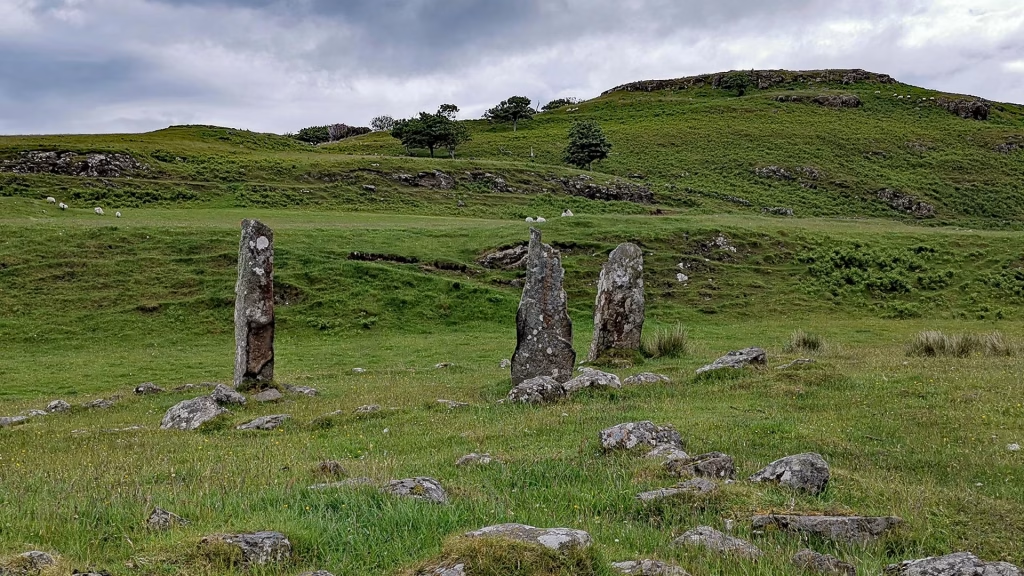
By the medieval period, the original meaning of the Glengorm Standing Stones was likely forgotten, although no records survive to confirm this. Christianity had become established on Mull, and people no longer built prehistoric monuments, though many old stones persisted in the landscape. Unlike other Scottish standing stones, Glengorm lacks strong surviving folklore and seems to have endured simply as an ancient landmark.
Their survival suggests that locals respected or tolerated the stones, as people often repurposed or destroyed prehistoric stones for building materials. The stones remained upright on land that later became part of the Glengorm Castle estate, enduring centuries of farming and estate management.
Nineteenth-Century Decline and Record
By the early nineteenth century, the monument had deteriorated. Contemporary accounts describe only one stone standing upright, while the other two had fallen. The cause remains undocumented, but the cause of the stones’ collapse is unknown, though agricultural changes in the Highlands may have played a role.
Despite the damage, antiquarians and early surveyors visited the site and recorded its condition. Their notes provide the earliest written descriptions and preserve information that might otherwise have been lost.
Twentieth-Century Re-erection
Restoration in the early twentieth century shaped the monument’s current appearance. By 1942, workers had re-erected the two fallen stones, restoring the site to a form closer to its original state. This effort reflected growing interest in preserving ancient monuments, even if modern archaeological standards were not yet in place.
Workers added stabilising stones around the bases and formed a low surrounding bank. Today, experts recognise these features as modern additions, not prehistoric elements. As with many restored monuments, we cannot know the exact original positions of the stones.
Archaeological Observations
Limited surveys and minor excavations at Glengorm recorded features such as small pits containing charcoal and traces of later activity. Archaeologists also found fragments of clay pipes, indicating that visitors continued to engage with the site long after prehistoric times.
Investigations show no evidence that the stones ever formed a stone circle. Early speculation suggested this possibility, but surveys confirm the stones form a small group, perhaps a short row or deliberately spaced alignment.
The Stones Today
Today, the Glengorm Standing Stones stand as an important prehistoric monument on Mull. Their modest scale belies their significance within the island’s rich archaeological landscape and provides a tangible link to its earliest inhabitants. The northern countryside and coastline enhance the monument’s quiet presence and sense of antiquity.
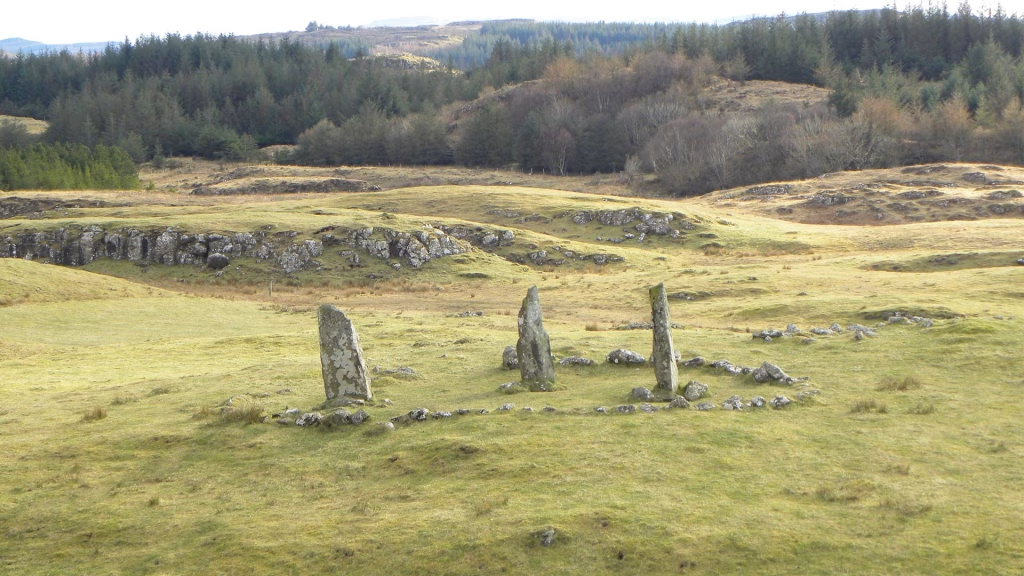
The stones remind us that people once shaped the landscape not only for survival but also to express belief, memory, and communal identity. Many details of their story remain unknowable, yet the Glengorm Standing Stones continue to hold meaning through their endurance, connecting modern visitors with a deep and largely unwritten past.