
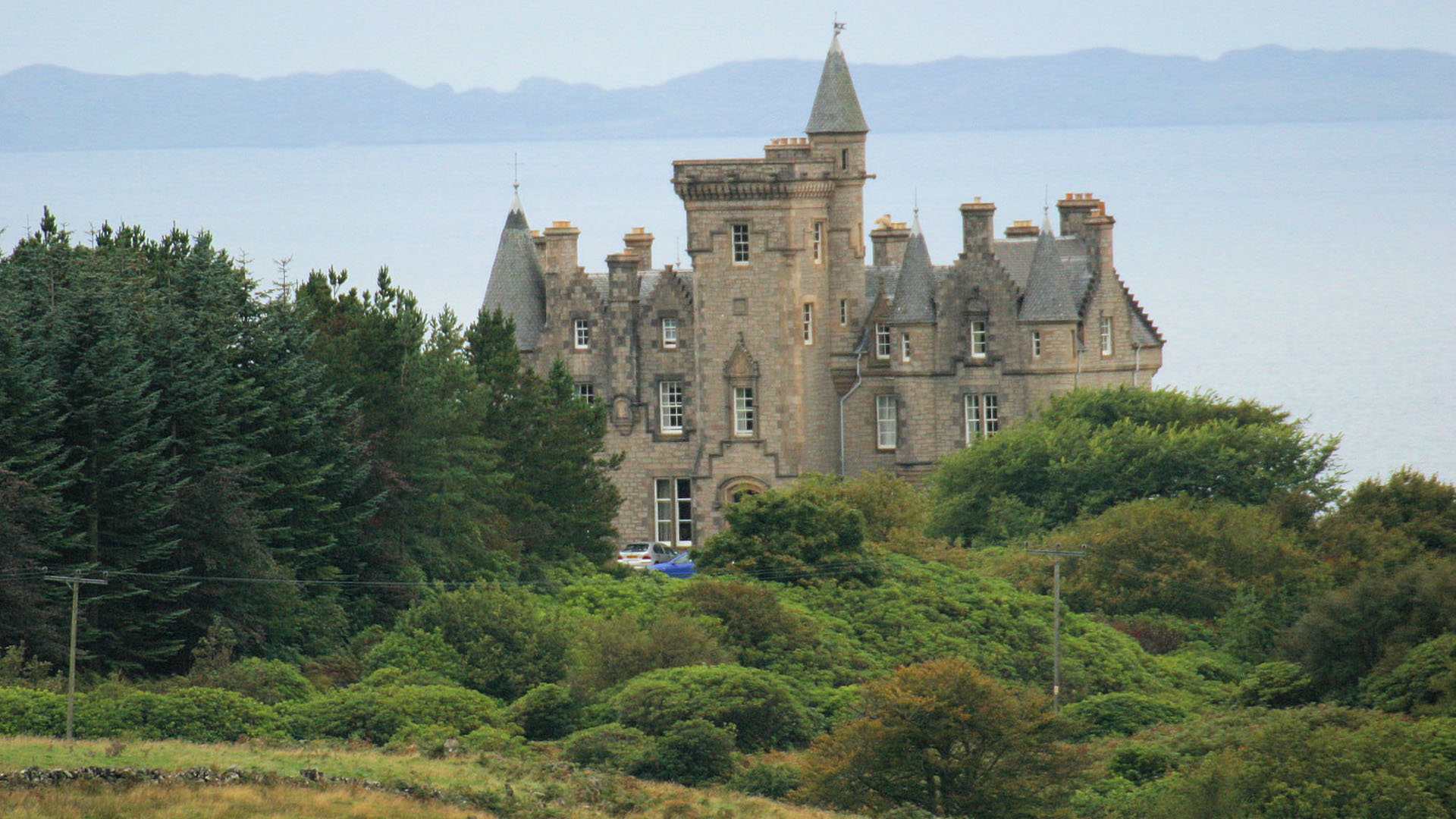
Perched dramatically on the northern tip of the Isle of Mull, Glengorm Castle dominates the landscape, offering sweeping views of the Atlantic Ocean and the distant Outer Hebrides. Unlike Scotland’s ancient fortresses, Glengorm is a relatively modern structure. This 19th century country house, despite its castellated appearance, tells a unique story deeply intertwined with a transformative and often painful era in Scottish history.
The Controversial Birth of a Castle (1856 to 1863)
James Forsyth and the Clearance of Sorne
The foundations of Glengorm Castle reflect stark social divisions of the 19th century. The castle’s origins link directly to the Highland Clearances, a period of forced evictions that dramatically reshaped Scottish society and the Highland landscape.
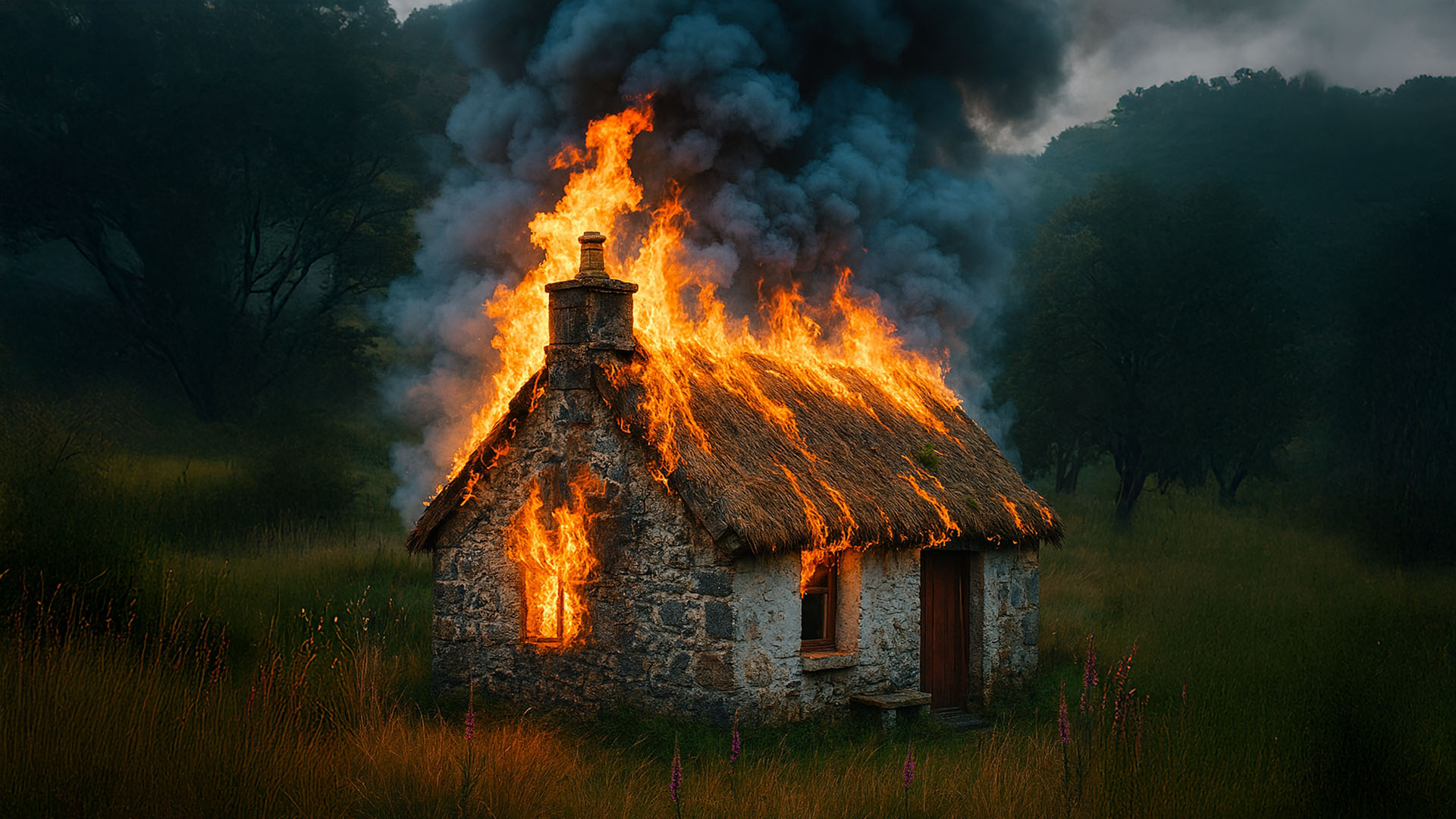
James Forsyth acquired the expansive Mishnish estate in 1856. Contemporary accounts describe Forsyth as a man of considerable wealth, determined to reshape the land entirely. Locals regarded him as an “unkind man” and a “hated figure.” To create an estate suited to stalking, hunting, and fishing and to accommodate his grand new residence Forsyth systematically cleared the township of Sorne. He evicted tenant farmers and crofters through coercion and concerted pressure, and his agents burned their homes. Many displaced families sought work in Tobermory.
The Origin and Irony of the Name “Glengorm”
The name “Glengorm,” meaning “blue valley” or “blue glen” in Gaelic, carries deep irony. An evicted tenant or local woman suggested the name, with “blue” referring directly to the smoky, bluish haze produced by the burning homes. Forsyth reportedly liked the name but failed to grasp its meaning. Today, the name endures as a subtle yet powerful memorial to the human cost of the Clearances.
Architecture, Religion, and a Local Curse
Builders began work on Glengorm Castle in 1860. Edinburgh architects Kinnear and Peddie designed the building in the fashionable Scots Baronial style as a deliberate statement of wealth and authority. Biblical quotations decorate the outer walls, while the entrance displays a knotted rope symbol alongside Psalm 127: “Except the Lord build the house, they labour in vain that build it.” These words sit uneasily alongside the destructive methods used to consolidate the estate.
Local tradition tells of an evicted tenant who cursed Forsyth, predicting that he would never see the castle completed or spend a night inside it. Events appeared to confirm the prophecy. In 1863, shortly before construction ended, a riding accident killed James Forsyth. His 18 year old son, James Noel Müller Forsyth, inherited the estate and completed the building.
A Century of Changing Hands (1863 to 1969)
After its controversial beginnings, Glengorm Castle entered a century marked by frequent ownership changes and uneven stewardship.
James Noel Müller Forsyth inherited Glengorm in 1863. He continued developing the estate, building steadings at Quinish and enlarging Quinish House. He later worked with Frederick Morgan to improve fishing by creating Loch Torr. In 1874, he sold Glengorm to William Lang, a Clyde shipyard owner who held the estate until his death in 1887. James Cowan, a paper manufacturer, owned the property for the next eight years.
Frederick Morgan purchased Glengorm in 1895 and lived there until his death in 1910. The Lithgow shipbuilding family later acquired the castle, and Margaret Lithgow made it her home until she died in 1938.
After 1938, neglect took hold. The castle stood empty for long periods, changed hands twice, and steadily deteriorated. Economic pressures and changing social conditions exposed the vulnerability of large privately owned historic houses.
In 1962, John Brockbank Carr bought Glengorm and reversed its decline. He carried out essential renovations, including installing mains electricity, and prevented further deterioration.
The Nelson Era: Modern Stewardship and Adaptation (1969 to Present)
From Family Home to Working Estate
The Nelson family ushered in a transformative period, redefining Glengorm as a working estate that balances heritage preservation with economic sustainability.
The Nelsons purchased Glengorm in 1970. Raymond Nelson left a successful army career to farm on Mull, committing fully to agricultural life. Tom and Marjorie Nelson grew up on the estate and maintain a strong generational connection to the land. Janet Nelson, Tom’s mother, established the castle’s bed and breakfast, setting the foundation for its future as a hospitality venue.
Diversification, Tourism, and Estate Businesses
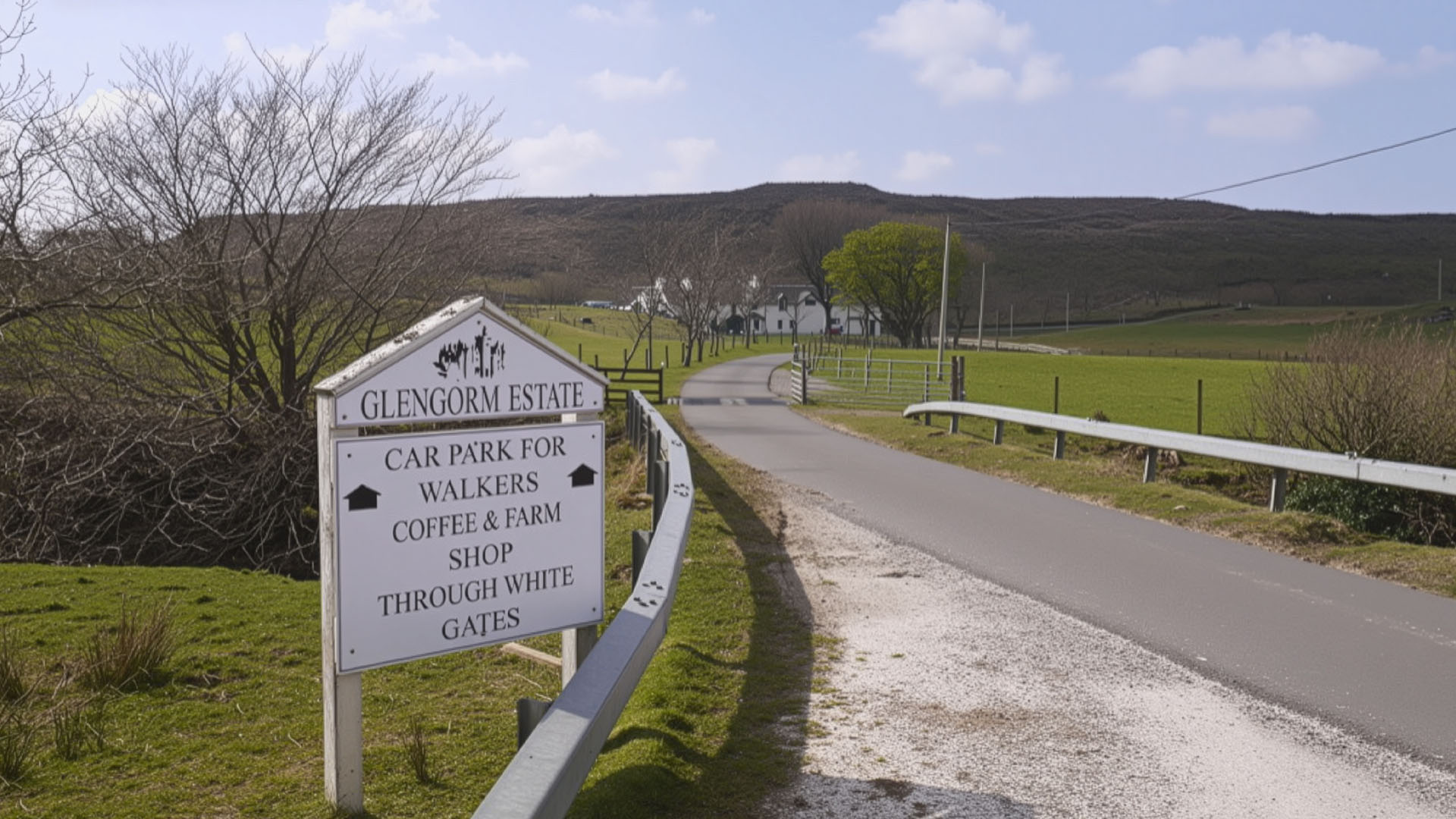
Under the Nelsons’ leadership, Glengorm developed into a diverse enterprise. The estate continues to operate as a working farm with sheep, Highland cattle, and Border Collies. The castle evolved from a private home into a guest house, wedding venue, and self catering destination. The estate now offers cottages, a Terrace flat, Tower rooms, and the West Wing. A seasonal coffee shop and farm shop sell produce from the estate gardens alongside local products such as venison pie.
Renovation Projects and Post Pandemic Changes
The estate continues to adapt. During the COVID 19 pandemic, the Nelsons reassessed operations and closed the castle’s bed and breakfast in November 2022, focusing instead on self catering accommodation. The family also restored historic buildings across the estate. They transformed the Shepherd’s Bothy once a shepherd’s house and later a gas works into holiday accommodation. Builders stabilised walls, excavated surrounding banks to prevent damp, and redesigned the interior to create a compact cottage with an open plan living area and mezzanine bedroom.
Architectural Grandeur and Historic Landscape
Scots Baronial Design and Listed Status
Glengorm Castle’s architecture defines its presence, while the surrounding estate reveals layers of human history embedded in the landscape.
The castle exemplifies the Scots Baronial style, drawing inspiration from earlier Scottish towers and fortified houses. Its design includes turrets, ornate stonework, corbie step gables, and a prominent square tower. Builders constructed the two storey and garret structure from coursed stone and topped it with slate roofs. Biblical inscriptions and the knotted rope symbol remain defining features. Historic Scotland recognises Glengorm as a Category B listed building.
Ancient Sites and Traces of Displaced Communities
The estate spans coastline, woodland, lochs, and hills and contains numerous historic features:
- Dun Ara: Walkers reach this ancient hill fort via a coastal path. Its commanding position reflects much earlier settlement.
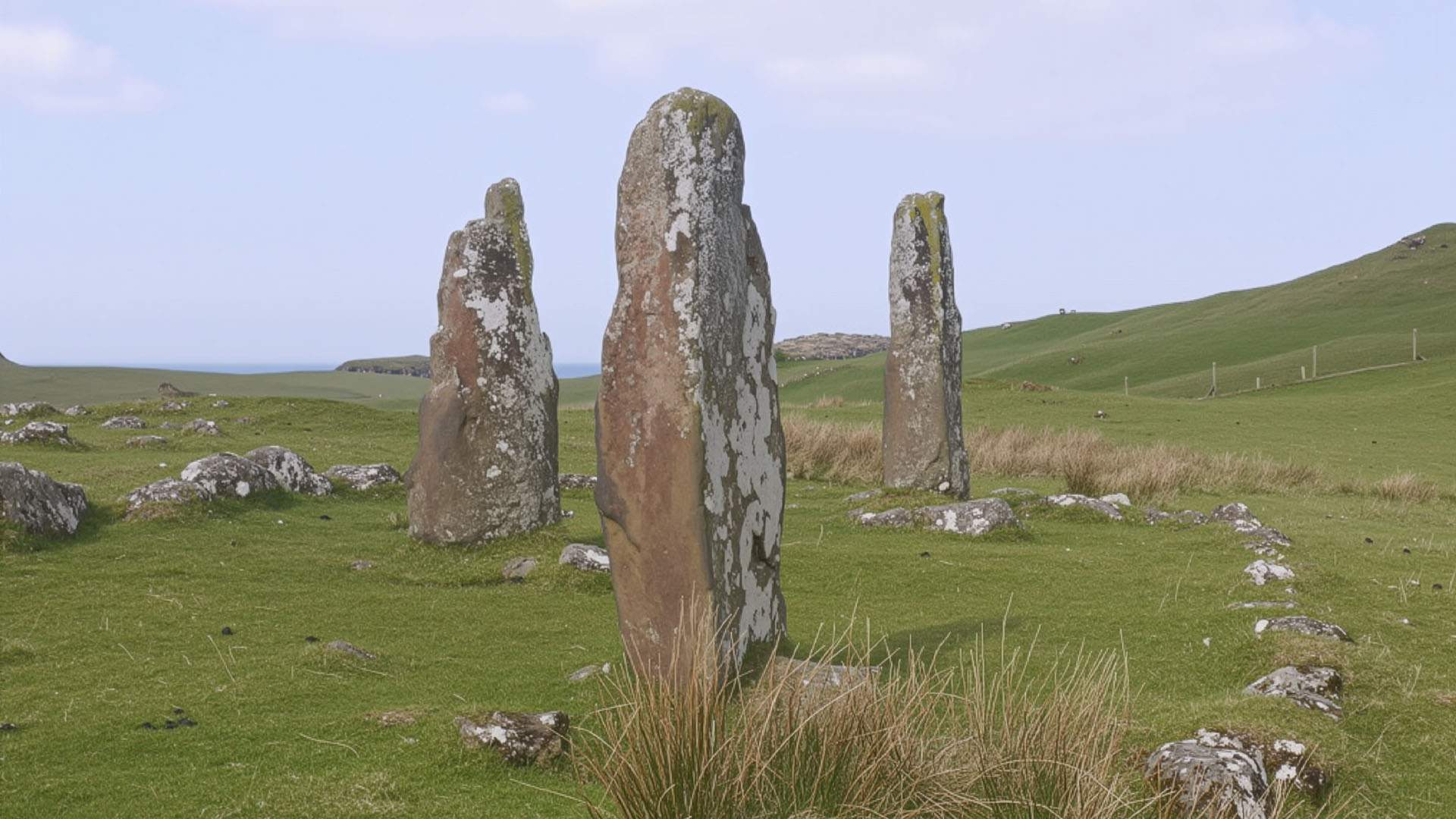
- Standing Stones: Prehistoric standing stones lie west of the castle along the Dun Ara route.
- Tenant Cottage Ruins: Ruins within Sorne Forest mark the homes of tenants displaced during the Clearances.
Wildlife, Conservation, and Ongoing Restoration
The estate supports a wide range of wildlife, including eagles, red deer, curlews, and hen harriers. Estate management actively protects habitats and supports red listed species such as the Song Thrush.
Ongoing restoration work preserves Glengorm’s buildings. John Brockbank Carr installed mains electricity in 1962, marking a key early upgrade. More recently, the Nelson family has carried out extensive repairs and conversions, including repainting 96 windows in 2020 and developing new residential projects across the estate.
Glengorm Castle’s Enduring Legacy
Glengorm Castle stands as a powerful record of land ownership, social change, and adaptation in Scotland.
James Forsyth began the castle’s story in 1860, during the Highland Clearances, embedding irony and loss into its foundations. A century of ownership changes followed, before the Nelson family established long term stewardship in 1970 and reshaped Glengorm into a sustainable working estate.
Although Glengorm is not a medieval fortress, it holds deep historical importance. The castle preserves the memory of the Clearances, local legend, and the lives disrupted by its creation.

Today, Glengorm Castle operates as a living estate that supports the local economy, protects wildlife, and welcomes visitors. By combining history, landscape, and modern enterprise, Glengorm demonstrates how Scotland’s historic estates continue to evolve.
Before eviction notices were hammered to croft doors and families forced from their ancestral glens, the Isle of Mull thrived on tradition, language, and community. The Mull Clearances: 1846–1856 is a deeply researched, emotionally resonant visual history of the decade that dismantled centuries of Gaelic life.