



A Tale of Two Kingdoms
The story of the Spanish Princess stands as one of the most enduring legends of the Scottish Highlands. This tale bridges the warm royal courts of Spain and the rugged, misty coastline of the Isle of Mull. It begins in 1588, a time when imperial ambition dominated the seas. King Philip II of Spain had launched his Great Enterprise against England, sending a massive fleet known as the Spanish Armada to conquer the north. History tells us, however, that the Armada faced terrible storms and fierce resistance. Gales scattered the great ships across the ocean, driving many far off course and forcing them to sail around the wild northern tips of Scotland to escape destruction.
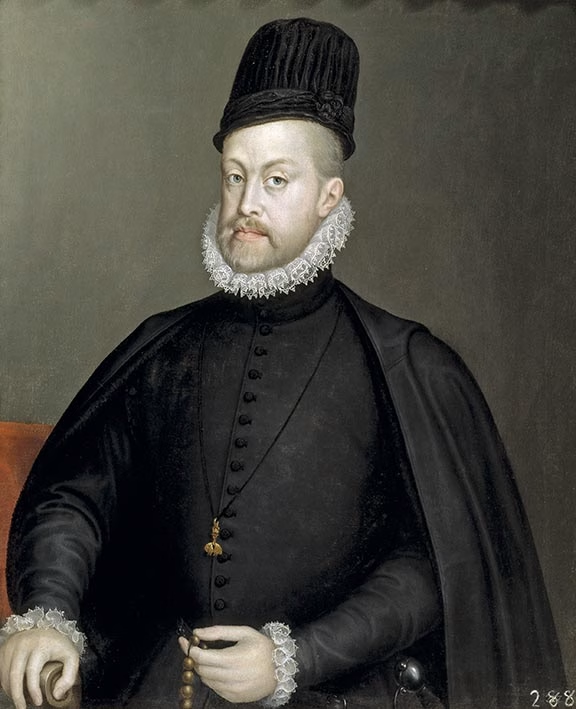
One of these ships found its way into the Sound of Mull. While history identifies this vessel as the San Juan de Sicilia, a warship carrying troops, gold, and Spanish pride, local oral tradition remembers it differently. Storytellers passed down through generations often call the ship the Florida. Its most important passenger was not a soldier or a captain, but a woman named Clara Viola. A princess of royal blood, she had come to the Hebrides in search of a dream. Her arrival would spark a chain of events involving love, jealousy, gunpowder, and magic.
The Dream of Clara Viola
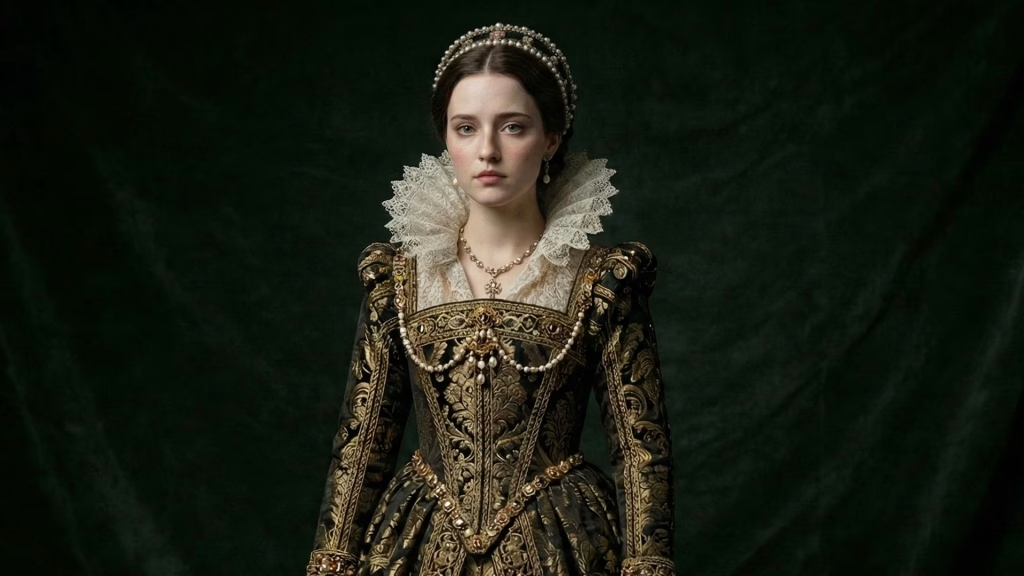
Legends describe Clara Viola as a woman of exceptional beauty and grace. Despite living a life of luxury in the palaces of Spain, happiness eluded her. A recurring dream haunted her sleep for many months. In this vision, she saw a man she had never met in waking life. He was not a courtier or a prince of Europe, but a warrior with a commanding presence and a face that etched itself into her memory. Although she did not know his name or his country, she knew she loved him.
This powerful vision drove her to action. Restless, she vowed to find the man from her dream. She commissioned a magnificent ship for a long voyage, outfitting it with the finest luxuries and staffing it with a loyal crew. Joining the Spanish Armada not to fight a war but to search the world, she visited ports in France and sailed along the coasts of England. She scanned the faces of thousands of men, yet none matched the vision in her heart. Only when her ship sought shelter in Tobermory Bay did her journey come to its fateful end.
The Laird of Duart Castle
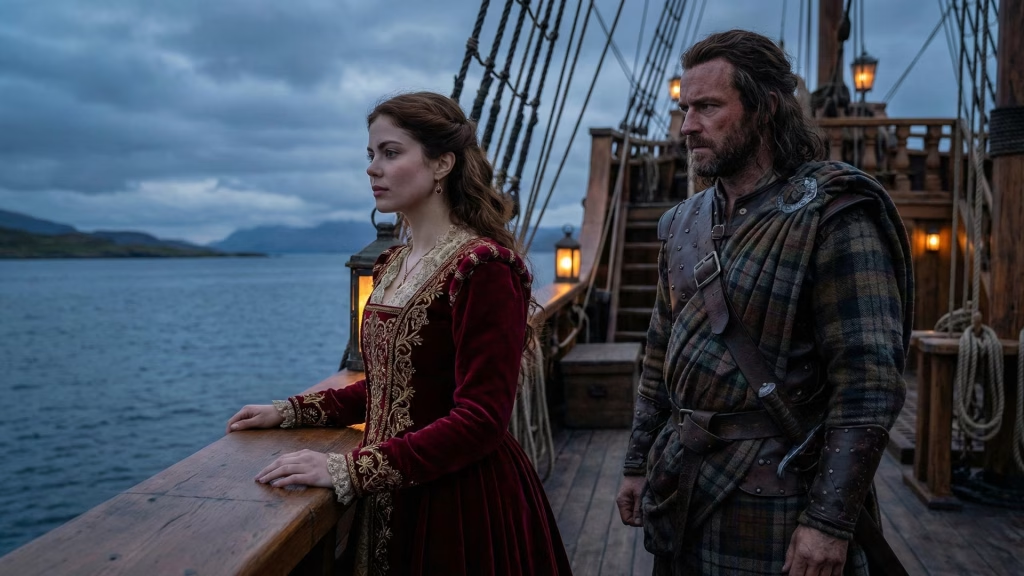
The man Clara Viola had dreamed of was real. His name was Lachlan Mor Maclean, the Chief of Clan Maclean and the Laird of Duart. A historical figure of great power and fearsome reputation, he ruled his clan from Duart Castle, which stands on a rocky cliff guarding the entrance to the Sound of Mull. People knew him as “Big Lachlan” because of his physical size and commanding nature. He engaged in constant feuds with neighboring clans, always looking for an advantage in his wars.
The Spanish ship anchoring in Tobermory Bay marked a significant event for the islanders. Needing water and supplies, the vessel offered the Maclean chief an opportunity to gain powerful allies. He entered into negotiations with the Spanish captain, agreeing to provide supplies in exchange for Spanish soldiers to aid his battles against the MacDonalds. However, the legend focuses on a more personal meeting. Upon seeing the Highland chief, Clara Viola recognized him instantly as the man she had traveled across the ocean to find. The connection between them proved immediate and undeniable.
A Forbidden Love
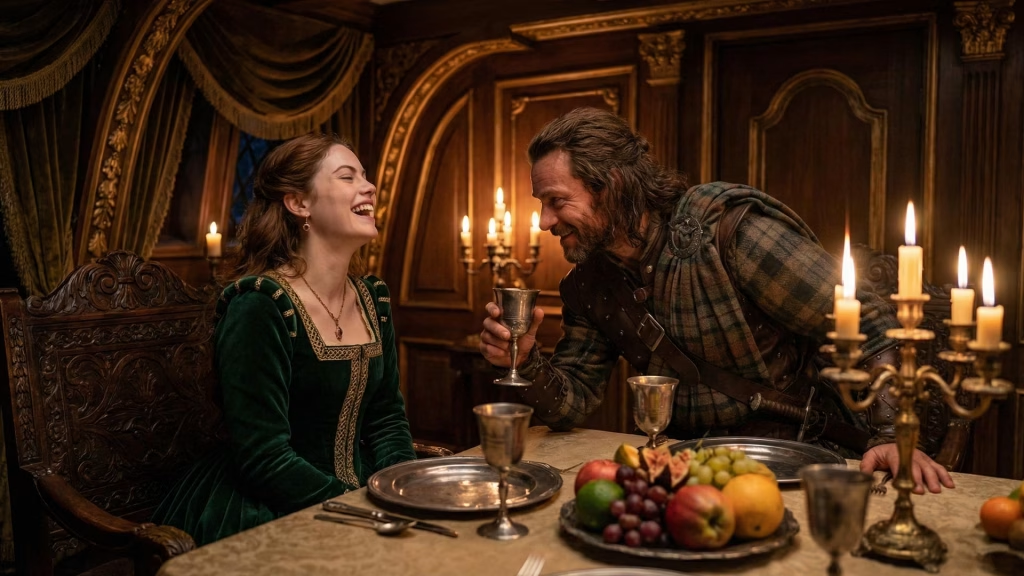
he Spanish Princess captivated the Laird of Duart. He had never seen a woman like her in the Hebrides, for she brought with her the sophistication and glamour of a foreign court. Spending his days and nights aboard her ship, he feasted, listened to music, and ignored the world outside the bay. This passionate affair seemed destined by the stars, but it carried great danger. Lachlan Mor Maclean was not a free man, for he had already married the Lady of Duart.
A proud woman from a powerful family, Lady Margaret Cunningham, the daughter of the Earl of Glencairn, did not accept humiliation quietly. She sat in the cold halls of Duart Castle while her husband entertained a foreign princess in the harbor of Tobermory. Servants whispered, and rumors spread across the island. Feeling her honor crumble, the Lady of Duart turned to the Highland code of the sixteenth century, where vengeance often served as the only way to restore lost pride. She began plotting to remove her rival and bring her husband back to his senses.

The Plot and the Explosion
Knowing she could not fight the Spanish ship with force, the Lady of Duart used cunning. She sent messages to her husband to lure him away from the vessel, using the excuse of urgent clan business or a family crisis. With Lachlan Mor safely back on shore, she put her plan into motion. She dispatched loyal servants who would do anything she asked. These men boarded the ship under the guise of delivering supplies, carrying with them the means of destruction.
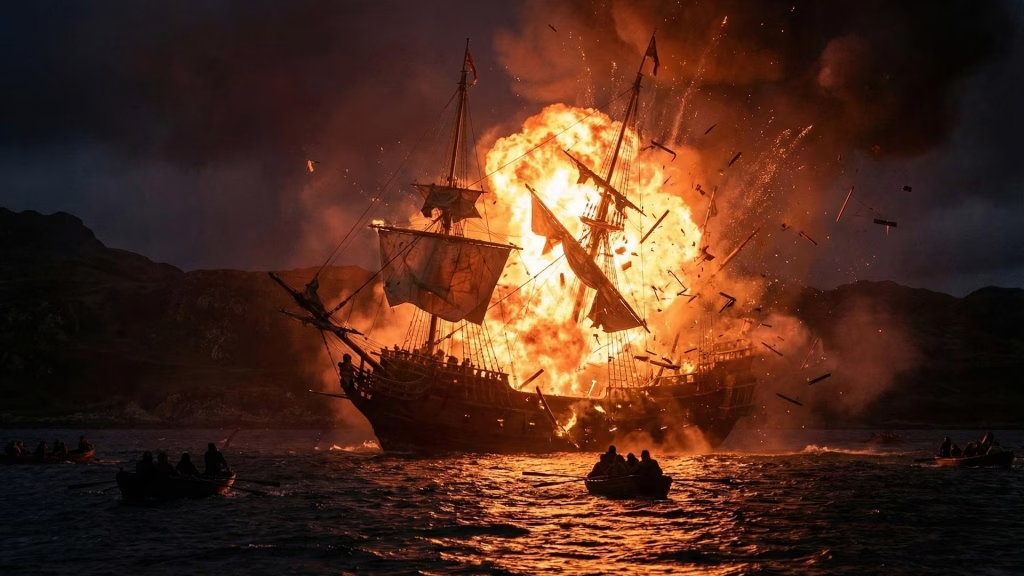
The exact method of sabotage varies in the telling. Some say a saboteur placed a smoldering piece of lint near the gunpowder magazine, while others claim a servant bored a hole in the hull and set a fire. The result remains a matter of historical fact. In November 1588, a massive explosion tore through the San Juan de Sicilia. The blast shook the houses in Tobermory with such force that it shattered the great ship, sinking it almost immediately into the deep mud of the bay. Hundreds lost their lives in an instant.
The Grave of the Princess
Locals found Clara Viola’s body washed up on the shore of Morven in the days following the disaster. Recognizing her high status by her clothing and jewelry, they treated her remains with great respect. They did not bury her in a common pit with the sailors; instead, they gave her a stone coffin and laid her to rest in the consecrated ground of the ancient churchyard of Cill Choluimchille (Keil). Her grave became a landmark in the community, a tangible reminder of the tragedy that had visited their shores.
The story did not end with her burial, however. People of Morven began reporting strange sightings near the ancient churchyard. A young man named Evan of the Glen passed the cemetery one night and heard a woman weeping. Standing among the tombstones, he saw a spectral figure, the ghost of Clara Viola. She spoke to him in a voice filled with anguish, explaining that she could not find peace because she had died far from home without the rites of her church. Describing the torment of her soul, she begged him to help her..

The Journey to Spain
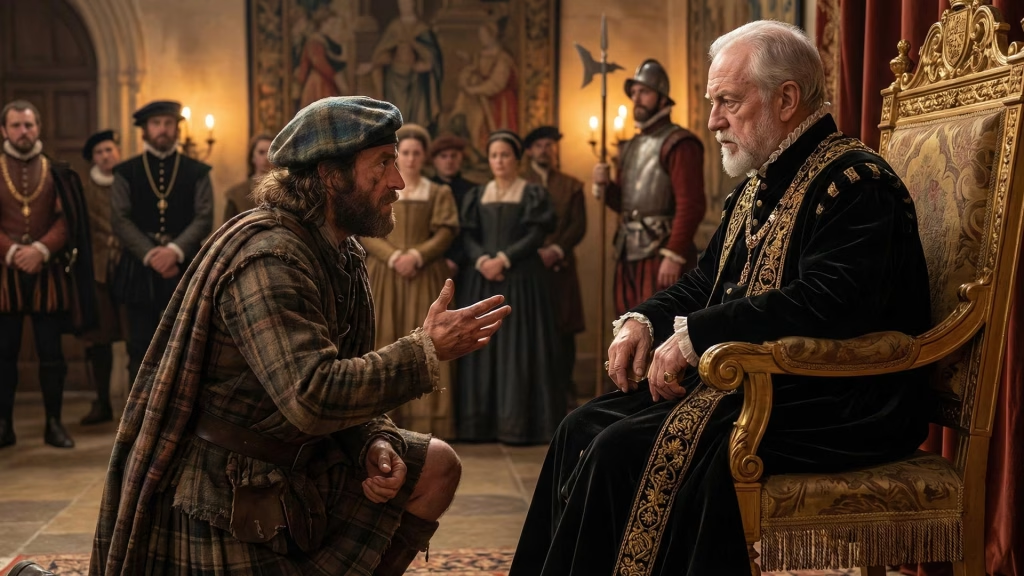
The ghost’s plea moved Evan, a man of honor. He promised to do what he could to set her spirit to rest. Legend says he undertook a long and perilous journey to Spain, traveling across the sea and over mountains to reach the royal court. Managing to gain an audience with the King of Spain himself, he told the monarch the true story of what had happened to his daughter in Scotland. He described her love for the Maclean chief and her tragic death in the explosion.
The King listened to the Highlander’s tale. His grief was immense, but it quickly turned to anger. Blaming the people of Mull rather than an accident of war, he viewed his daughter’s death as murder demanding retribution. He ordered the preparation of a new warship and chose his most ruthless commander to lead the expedition. Stories describe Captain Forrest not just as a mariner, but as a sorcerer who had studied the dark arts.
The Return of the Spanish
Captain Forrest sailed his ship to Scottish waters with a singular purpose: to destroy the Isle of Mull. He vowed to kill every man, woman, and child on the island, planning to fill his ship with their severed limbs as a trophy for the King. When his ship appeared on the horizon, terror seized the people of Mull. They knew they could not defeat a warship protected by foreign magic. Realizing his swords were useless against such an enemy, the Maclean chief sought a different solution.
Deciding to fight magic with magic, he rode to the home of the Doideag. The most famous witch in Mull folklore, she guarded the island and held power over the winds and sea. The Chief explained the threat to her, recounting Captain Forrest’s vow of destruction. The Doideag listened carefully and asked a single question: did the Spanish captain say the words “with God” when he made his threat? The Chief replied that he had not, confirming the captain had relied only on his own power.
The Witches of the North
The Doideag knew this omission created a fatal weakness. By failing to invoke God, the captain had left himself open to her ancient magic. She agreed to save the island but knew Captain Forrest was a powerful adversary she could not defeat alone. Consequently, she sent a call to the other witches of the Highlands. They gathered at a high point overlooking the sea to perform a ritual, using a simple household object to summon the storm.
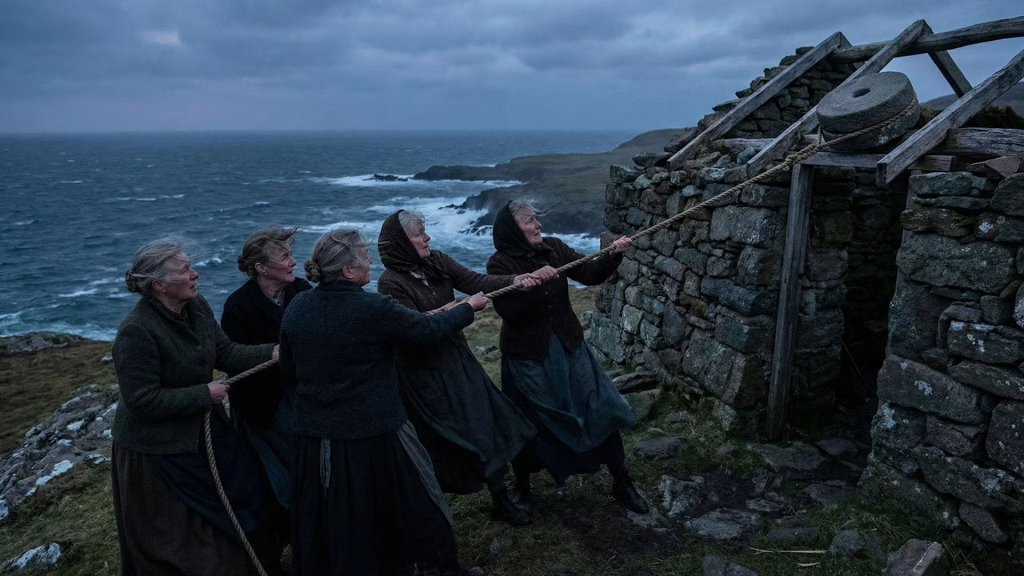
Taking a quern stone, a hand mill used for grinding grain, they passed a rope through its eye and threw it over the rafters of a house. The witches began pulling on the rope to hoist the stone into the air. This act of sympathetic magic meant that as the stone rose, so did the wind. They intended to flip the stone over, which would cause the ship to capsize in the bay. Captain Forrest, however, felt the magic working against him and used his own spells to counter the attack.
The Battle of Wills
The contest between the witches and the captain proved fierce. As the storm raged, Captain Forrest stood on the deck of his ship. Stamping his foot, he used his dark knowledge to keep the vessel stable. Although the witches pulled with all their might, they could not turn the stone. The ship remained afloat despite the crashing waves. Realizing their combined strength was insufficient, the Doideag called for the help of the most powerful witch in all of Scotland.
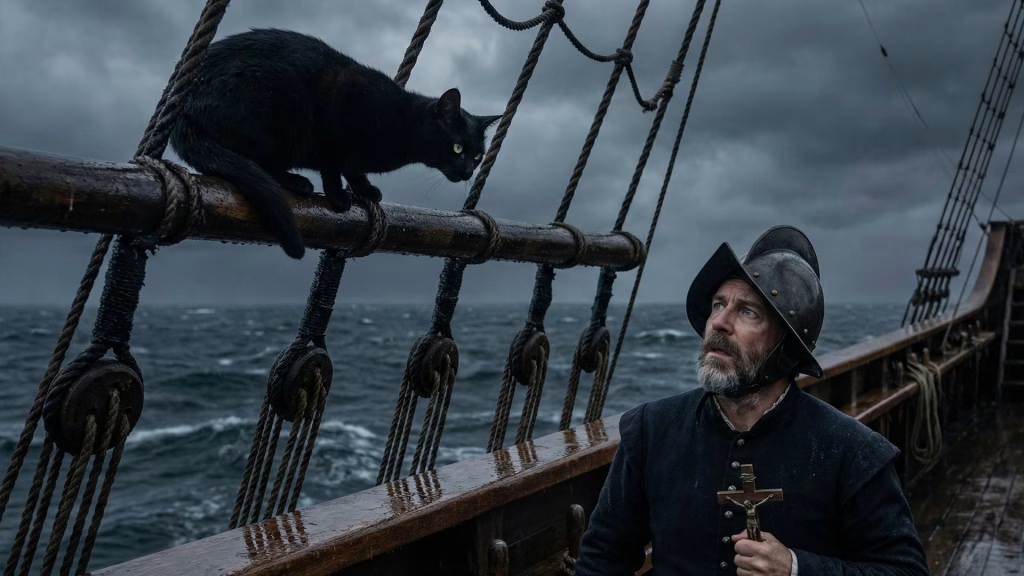
The Great Gormal of Moy, a witch from the mainland district of Lochaber, arrived to assist. Possessing powers that exceeded those of the island witches, she did not join the line on the rope. Instead, she transformed herself into a black cat, ran down to the shore, and swam out to the Spanish ship. Climbing up the side of the hull, she perched on the rigging to look down at Captain Forrest.
The Final Storm
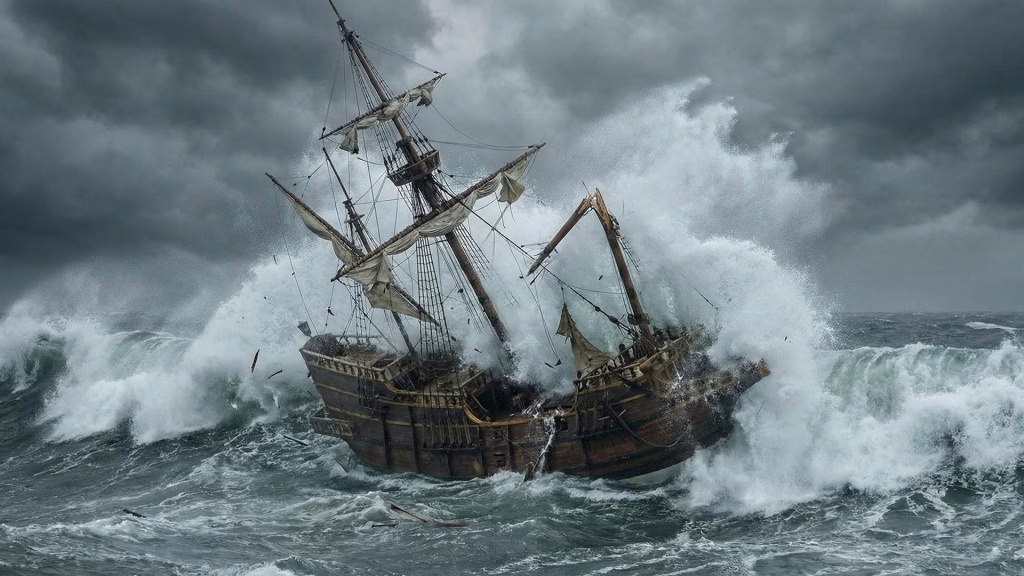
The presence of the Great Gormal broke the captain’s concentration. Taunting him for his arrogance, she declared that his magic was nothing compared to the power of the land itself. On the shore, the Doideag and her sisters gave one final heave on the rope, flipping the quern stone in the air. At that moment, a giant wave struck the Spanish ship. The force of the ocean snapped the masts like twigs and crushed the hull.
The ship sank with all hands, drowning Captain Forrest and his crew. This ended the threat to the Isle of Mull. Finally, the ghost of Clara Viola found peace. Native Highland power had defeated the foreign magic, restoring the balance of the world. The story of the second ship became as famous as the story of the first, cementing the reputation of the Mull witches as the protectors of their people.
The Legacy of the Legend
Today, the story of Clara Viola remains a vital part of Mull’s heritage. While the waters of Tobermory Bay hide the final resting place of the San Juan de Sicilia, the ship itself remains elusive. Despite centuries of searching, from early diving bells to modern sonar, the main wreck has never been found. Only scattered cannons and coins have been pulled from the silt, proving a ship was lost there but keeping its secrets hidden in the mud.
The legend serves as a way to remember the past, explaining why a warship from the Mediterranean ended up in a Scottish harbor. By humanizing the tragedy of the explosion, it reminds us of the power of love and the destructive nature of jealousy. The restored walls of Duart Castle still stand tall on the cliff. Visitors can look out over the sound and imagine the great white sails of the Spanish Princess. The myth of Clara Viola and the Laird of Duart is more than just a fairy tale; it is a memory of a time when history and magic were one and the same.
Step into a world where ancient legends breathe and history whispers from every stone. This enchanting book invites you on a captivating journey through the heart of Scotland's Inner Hebrides, a land steeped in magic and timeless tales.

Footnote: Sources and Historical Context
The specific narrative details recounted here, including the characters of Captain Forrest, the witches Doideag and Gormal of Moy, and the supernatural storm, are derived from Highland oral traditions recorded by Norman Macleod in his 1867 work Reminiscences of a Highland Parish. This story is considered legend and folklore, not historical record. Extensive historical research into the Spanish Armada has found no proof of a princess named Clara Viola, nor was any royal personage aboard the ship that sank in Tobermory, which was identified as the troop transport vessel San Juan de Sicilia.
