



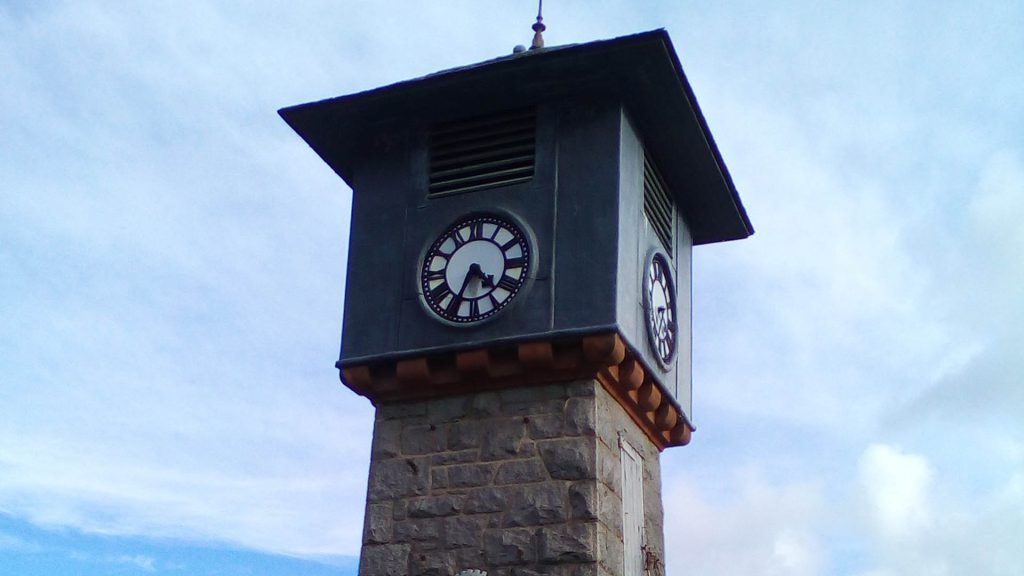
When you first arrive in Tobermory, the iconic, colourful buildings lining the harbour immediately draw your eye. Such a spectacular sight explains why this picturesque town on the Isle of Mull captures so many hearts. As you stroll along Main Street, you will encounter a landmark that holds an even deeper and more personal story: the Tobermory Clock Tower. This elegant stone structure stands proudly on the waterfront, right by the Fisherman’s Pier, acting as a constant, timeless guardian. For over a century, it has watched over the harbour, serving as a poignant memorial with a truly remarkable history rooted in the bond between two extraordinary sisters.
The Sisters Behind the Tobermory Clock
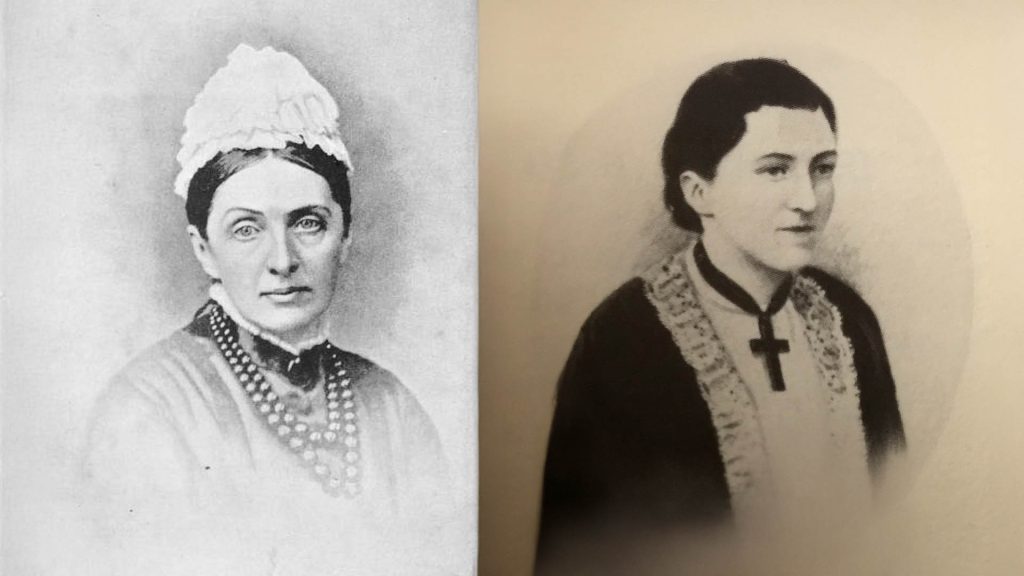
The story of the Tobermory Clock Tower begins with Isabella and Henrietta Bird, two Victorian women who defied the era’s narrow expectations for their gender. Isabella Bird gained international fame as a fearless explorer, writer, and photographer. She travelled solo through the Rocky Mountains, Japan, China, and Korea, often in conditions that would break a seasoned soldier. Despite her global reach, Isabella always considered her younger sister, Henrietta, her “sheet-anchor” and the magnetic pole of her life.
While Isabella sought adventure across distant horizons, Henrietta chose a quieter but equally impactful life. She moved to Tobermory on the Isle of Mull, where she deeply integrated herself into the local community. A compassionate and dedicated nurse, Henrietta established a small convalescent home in the town to provide care and comfort to those in need. Her kindness earned her the lasting affection of the islanders, making her a beloved figure in Tobermory’s history.
The Fearless Voyager
Isabella Bird was a woman of fascinating contradictions. At home in Britain, she often suffered from a spinal ailment and nervous headaches that left her bedridden. However, the moment she stepped onto a foreign shore, her health seemingly transformed. She rode horses cross-saddle, survived blizzards in the Rockies, and navigated the treacherous Yangtze River. Her adventures weren’t just for thrill-seeking; she documented every detail, producing best-selling books like A Lady’s Life in the Rocky Mountains (1879).
Throughout these voyages, Henrietta remained Isabella’s primary audience and confidante. Isabella wrote thousands of pages of letters to her sister, which later formed the basis of her published works. Henrietta provided the critical eye and emotional support that Isabella needed to sustain her grueling career. When Isabella returned from her travels, she often retreated to Henrietta’s cottage in Tobermory to recover and write, further cementing the sisters’ connection to the Isle of Mull.
In this fascinating collection of Bird's previously unpublished letters to her homebound younger sister Henrietta, one experiences her journeys firsthand and gains insight into the ambiguous private life of a woman who often invented her public face. Containing correspondence from her first two grand tours to Australia, Hawaii, and Colorado in 1872-1873, and to Japan, China, Malaya, and the Holy Land in 1878-1879, 'Letters to Henrietta' provides a fresh view of the legendary Victorian traveler.


A Tragic Loss and a Lasting Vision
Tragedy struck in 1880 when Henrietta contracted typhoid pneumonia in Tobermory. Despite the best efforts of local doctors and Isabella’s own devoted care, Henrietta died at the age of 49. The loss devastated Isabella, who felt as though she had lost the very foundation of her world. In the years following Henrietta’s death, Isabella continued to travel, even founding hospitals in India and China in memory of her late husband, Dr. John Bishop, but she never forgot her promise to honour Henrietta in Tobermory.
Isabella envisioned a monument that would reflect Henrietta’s practical and kind nature. Instead of a cold, useless statue, she desired something functional that would serve the people Henrietta had loved so dearly. Her commission for a clock tower aimed to provide a reliable timekeeper for the fishermen and ferrymen who relied on the tides of the Hebridean seas.

Designing the Tobermory Clock Tower
Isabella approached her close friend, the artist and illustrator Charles Whymper, to provide the initial concept and sketches for the tower. Whymper’s artistic vision captured the spirit of the memorial, but the technical execution required a professional hand. The project eventually fell to Edward Boardman, a prominent architect from Norwich known for his civic and ecclesiastical buildings. Boardman’s firm translated the sketches into the elegant stone structure we see today.
Although Isabella died in 1904, her estate ensured the completion of the tower to her exact specifications. Workers finished the construction in 1905, officially handing it over to the community as the “Henrietta Amelia Bird Memorial.” The tower’s design blends local stone with classic Victorian architectural sensibilities, ensuring it stands out against the backdrop of the harbour while harmonising with the surrounding buildings. Its four clock faces look out over the water and the town, serving as a constant reminder of the sisters’ legacy.

A Living Landmark on the Waterfront
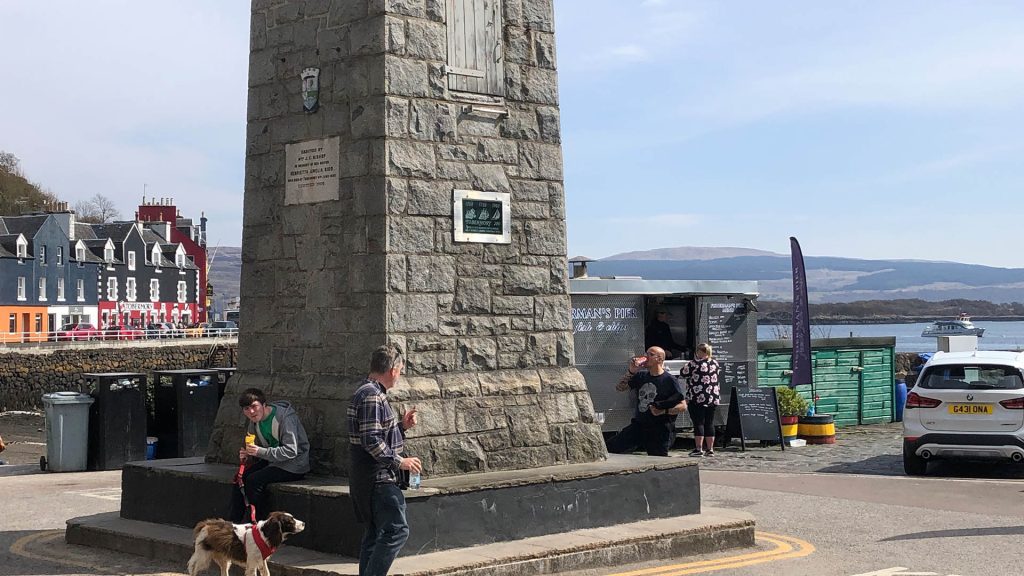
Today, the Tobermory Clock Tower remains one of the most photographed structures on the Isle of Mull. It has witnessed over a century of change, from the era of steam-powered ferries to the bustling tourism of the modern age. While its primary function remains timekeeping, the site has evolved into a vital social hub. The wide, sturdy base of the tower provides a perfect seating area where locals and visitors gather to watch the boats come and go.
In a charming local tradition, the tower’s steps serve as the unofficial “dining room” for those enjoying fresh seafood from the nearby vans and shops. As you sit there eating your fish and chips, you are participating in a living history. The tower continues to fulfill Isabella’s wish: it serves the community, facilitates social connection, and stands as a silent guardian of the harbour’s daily rhythm.

Why You Should Visit
On your next visit to Tobermory, I encourage you to do more than just admire the tower from afar. Walk up to its base and read the plaque dedicated to Henrietta. Consider the vast distances Isabella travelled and the thousands of letters she sent back to this very spot. The tower represents a bridge between a small Scottish fishing village and the farthest reaches of the Victorian world.
The Tobermory Clock Tower teaches us that the best stories often hide in plain sight. It serves as much more than a monument to time; it is a monument to a sisterly bond that spanned continents and survived the greatest of losses. Whether you are a history enthusiast, a fan of Victorian literature, or simply a traveller looking for a beautiful view, the clock tower offers a moment of reflection in one of Scotland’s most beautiful settings.
