



In the early hours of 17 January 1943, the quiet coastline of southwest Mull was shaken by the arrival and eventual destruction of the SS Ostende, a Belgian cargo steamship laden with war supplies. Her story is one of maritime misfortune, wartime urgency, and unexpected local impact. For residents of Mull, especially those around Bunessan and Ardtun, the wreck left more than twisted steel in the shallows. It brought fragments of global conflict to local shores and, in some cases, unexpected sustenance during a time of rationing.
From German Freighter to Allied Workhorse
Originally launched as the SS Ehrenfels in 1903 by Swan Hunter & Wigham Richardson in Newcastle, the ship was built for the German company Hansa of Bremen. Measuring 375.5 feet in length and displacing 4,450 gross tons, she was powered by a 4-cylinder steam engine and designed for general cargo transport.
After World War I, the vessel was seized by the UK as part of war reparations and transferred to the Belgian government in 1920. Renamed SS Ostende, she was operated by Cie Nationale de Transports Maritime and repurposed for Allied logistics during World War II.
The Final Voyage: January 1943
On her last journey, the SS Ostende was en route from New York to Liverpool, carrying a mixed cargo of war supplies including over 500 tons of bombs and artillery shells. At 12:51 AM on 17 January 1943, while sailing 9.5 miles west of Skerryvore Lighthouse, an explosion rocked the bow of the ship. The cause was never confirmed. No mine or torpedo was seen, but the damage was immediate. Hold No.1 flooded rapidly, and the captain made a critical decision to beach the vessel before she sank.
Initially aiming for Scarinish on Tiree, the captain changed course and successfully grounded the ship in Loch na Lathaich near Bunessan on the Ross of Mull. The Ostende settled on a gently sloping seabed, her bow in 4 fathoms and stern in 6. Salvage crews arrived quickly, hoping to repair and refloat her.
Catastrophe at Bunessan
Three days later, on the night of 20 January, disaster struck. A fire broke out aboard the stranded ship and ignited the volatile cargo. The resulting explosions were heard across the Ross of Mull. The Ostende was torn apart, leaving only fragments of her bridge and forecastle visible above water. Two crew members died in the blast, and the drifter Lydia Long, moored alongside, was also destroyed. Her crew survived.
Local Impact: Flour on the Shores of Ardtun
While the official records focus on the ship’s specifications and tragic end, the Ostende’s story did not end with her destruction. For islanders living nearby, the wreck became a source of unexpected bounty.
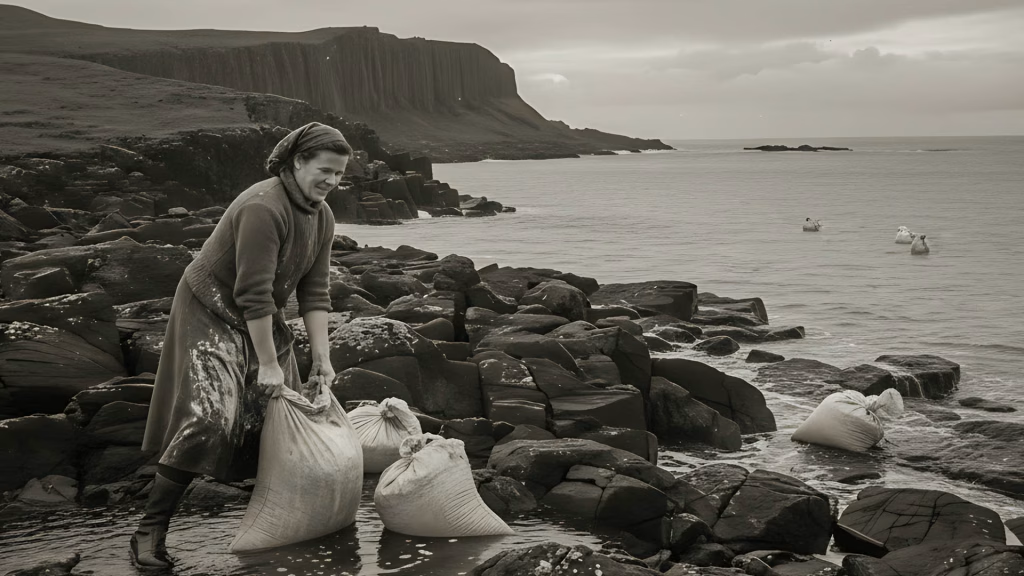
My grandmother often spoke of the days following the explosion. Among the debris washed ashore were large sacks of flour, part of the ship’s general cargo. Though soaked by seawater, the outer layers of the flour hardened, forming a protective crust. Inside, the flour remained dry and usable.
In a time of strict wartime rationing, this was a remarkable find. She would carefully carve into the hardened sacks and extract the dry flour from the centre. It was a rare luxury, allowing families to bake bread and scones without dipping into their limited rations. For many, it was a quiet act of resilience, turning wreckage into nourishment.
The Wreck Today: A Dive Site and Historical Marker
The remains of the SS Ostende still lie off the old Bendoran Boatyard near Bunessan. Though largely collapsed and buried in sand, the wreck measures approximately 90 metres long and 15 metres wide. The shallowest part sits at 5.5 metres, making it accessible to divers and snorkellers.
The site is sheltered and ideal for training dives, though caution is advised. Shell casings and remnants of the ship’s explosive cargo have been found in the area, and Royal Navy clearance divers have previously removed live ordnance. Divers are urged to follow safety protocols and avoid disturbing any remaining munitions.
Historical Significance
The Ostende’s story reflects the global reach of World War II, the vulnerability of supply chains, and the human cost of logistics under fire. Her destruction was a loss not only of material but of life. Her presence on Mull’s shores remains a stark reminder of wartime realities.
Yet through stories like the flour salvage on Ardtun’s beaches, we also see the quiet ingenuity of island life. Mull’s residents did not just witness history. They adapted to it, finding sustenance and solidarity in the aftermath of chaos.
Archival and Auction Interest
Artifacts believed to be from the SS Ostende occasionally surface in auctions. In 2024, a .38 Smith & Wesson pistol in shipwrecked condition was listed at the Charlestown Shipwreck Museum sale, believed to be recovered from the wreck site. Such items offer tangible links to the ship’s story and continue to draw interest from collectors and historians.
Conclusion: Memory, Wreckage, and Resilience
The SS Ostende may have arrived on Mull as a casualty of war, but her legacy endures in local memory. From the dramatic explosions that lit up the night sky to the quiet recovery of flour on Ardtun’s beaches, her story is woven into the fabric of the island’s wartime experience.
For families who lived through those years, the wreck was more than a maritime disaster. It was a moment of connection between global conflict and local survival. And today, as divers explore her remains and historians trace her journey, the Ostende continues to speak to the resilience of Mull’s people and the enduring power of memory.
Sources
- Scottish Shipwrecks – SS Ostende
- David Lay Auctions – Lot 445
- The Saleroom – Charlestown Shipwreck Museum Sale
