



The Isle of Mull is one of Scotland’s most important places for birds, supporting an exceptional range of species throughout the year. Its combination of sea lochs, freshwater lochans, moorland, coastal grassland and offshore islands creates a mosaic of habitats that attract resident, breeding, wintering and passage birds. Together with the nearby Treshnish Isles, Mull forms a key stronghold for both seabirds and birds of prey, as well as many waders and waterfowl.
The birdlife of Mull is shaped by its Atlantic location. Many species arrive seasonally to breed or overwinter, while others use the island as a vital stopover during long migrations. This constant movement means that the island’s bird populations change dramatically with the seasons.

Birds of Prey
Mull is particularly well known for its birds of prey. Both Golden Eagle and White-tailed Sea Eagle are present, making Mull one of the few places in Britain where the two species occur together. Golden eagles favour upland and moorland areas, while white-tailed sea eagles are more closely associated with coastlines and sea lochs.
Other birds of prey recorded on Mull include Buzzard, Hen Harrier, Peregrine Falcon, Kestrel, Merlin and Sparrowhawk. These species occur across a range of habitats, from coastal cliffs to open moorland. Ravens are also widespread and conspicuous throughout the island.
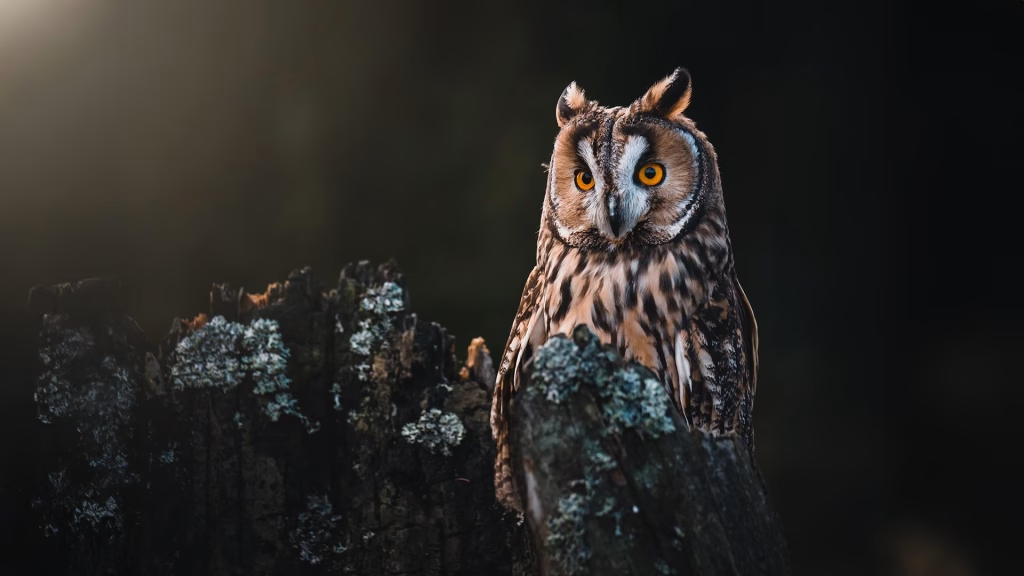
Owls
Several owl species are found on Mull. Barn Owl, Tawny Owl and Long-eared Owl are resident, while Short-eared Owl occurs as a breeding species in suitable years. Short-eared owls are often active during daylight hours and are typically associated with open moorland and rough grassland.

Sea Lochs and Coastal Waters
Mull’s deeply indented coastline forms numerous sheltered sea lochs, which are among the island’s most important bird habitats, particularly outside the breeding season.
Wintering ducks regularly recorded on Mull’s sea lochs include Wigeon, Teal, Shelduck, Goldeneye and Red-breasted Merganser. Sea lochs and coastal waters are also important for divers, with Great Northern Diver and Black-throated Diver present in winter. Red-throated Diver is associated with freshwater lochans during the breeding season and may also be seen offshore.
Grebes are another winter feature, with Slavonian Grebe a regular visitor and Red-necked Grebe recorded occasionally.

Waders and Passage Birds
Mull plays an important role for waders both as a breeding area and as a stopover site during migration. Tidal flats, beaches and wet grassland provide feeding and resting areas for many species.
Waders recorded on Mull include Redshank, Greenshank, Curlew, Snipe, Woodcock, Lapwing, Golden Plover, Ringed Plover, Turnstone, Dunlin, Oystercatcher, Whimbrel and Bar-tailed Godwit. Many are most numerous during spring and autumn passage. Whooper Swan is also recorded as a passage species.

Freshwater Lochans
Freshwater lochans across Mull are particularly important for breeding birds. These quiet inland waters are used by Red-throated Diver during the summer months. Wet ground around loch margins attracts species such as Snipe and Greenshank, while nearby open ground can support breeding Lapwing and Redshank.

Lochdon and Grasspoint
Lochdon is one of the most productive birding areas on Mull. The loch, mudflats and surrounding fields attract a wide range of species throughout the year. Winter visitors include Great Northern Diver, with occasional Black-throated Diver.
Waders recorded here include Redshank, Greenshank, Bar-tailed Godwit, Whimbrel, Curlew, Lapwing, Golden Plover, Ringed Plover, Snipe and Woodcock. Grasspoint, at the mouth of Lochdon, provides views over coastal waters where seabirds may be seen offshore.

Loch na Keal
Loch na Keal is another important sea loch for birds. Species recorded include Slavonian Grebe, Great Northern Diver, Red-throated Diver and occasional Black-throated Diver. Waders using the loch shores include Greenshank, Redshank, Dunlin, Turnstone, Ringed Plover, Oystercatcher and Common Sandpiper.
Loch Scridain
Loch Scridain is particularly noted for its divers. Great Northern Diver, Black-throated Diver and Red-throated Diver are all recorded here, especially during winter. The loch also supports a variety of wintering ducks.

Iona and the Ross of Mull
Nearby Iona forms part of the wider birding area and is notable for Corncrake, which arrives in late April and is more often heard than seen. The Ross of Mull supports breeding Redshank, Lapwing, Snipe and Greenshank, while winter brings geese including White-fronted Goose, Barnacle Goose and Greylag Goose.

The Treshnish Isles
The Treshnish Isles, lying off the west coast of Mull, are internationally important for seabirds. These islands support large breeding colonies of Puffin, Guillemot, Razorbill, Shag, Cormorant, Kittiwake and Fulmar.
During the breeding season, cliffs and grassy slopes are densely packed with nesting birds, while surrounding waters are alive with feeding activity. Boat trips to the Treshnish Isles provide the main opportunity to see these seabirds, as most do not breed on Mull itself.
Seasonal Importance
Birdlife on Mull and the Treshnish Isles is defined by seasonal change. Winter brings ducks, divers and grebes, while spring and autumn are marked by passage waders and migrants. Summer is the breeding season for raptors, divers, waders and seabirds, with the Treshnish Isles at their most spectacular.
The combination of Mull’s varied habitats and the seabird colonies of the Treshnish Isles makes this area one of the most significant bird regions in western Scotland.
