



If you spend enough time driving through Glen More, especially when the mist hangs low over the heather and the damp soaks into the very stones, it is easy to understand why the old stories survive. We often think of ghost stories as things made up to scare children. However, here on the island, the legend of Mull’s Headless Horseman feels less like a story and more like a memory stamped into the landscape itself. It is a tale that combines the worst parts of human nature, including greed, pride, and a bad marriage, with the terrifying inevitability of fate. Eoghann a’ Chinn Bhig is not just a spook; instead, he remains a permanent scar on the history of the Maclaine clan.
The tragedy dates back to 1538, a time when sword arms were strong and tempers were short. The Maclaines of Lochbuie were a powerful family who controlled the south of the island. The chief was Iain Og, a man who had held his ground for years. His son, Ewen, was a skilled warrior and ready to lead, yet he had a fatal flaw. Reckless ambition drove him. With no interest in waiting for his inheritance, he coveted the title of Chief and refused to wait for his father to die to get it.
The Voice in His Ear
History is rarely kind to the people who whisper from the sidelines, and folklore remembers Ewen’s wife as the spark that lit the fire. She was a MacDougall, a woman of fierce ambition. Consequently, she was far from content with her husband playing second fiddle to his aging father. Night after night, she would chip away at Ewen’s loyalty. She asked him why a man of his strength was begging for scraps from the old chief, telling him he was weak for not taking what was his by right.

It is a dynamic as old as time; a man torn between love for his father and the demands of his wife. Eventually, Ewen broke. He went to his father and demanded he hand over the lands of Fanmore and Tormore instantly. This betrayal hurt Iain Og, but as a chief, he could not bow to threats, even from his own flesh and blood. So, he refused. Ultimately, that refusal provided the spark Ewen’s wife needed to push her husband into open rebellion. Ewen gathered his followers, young men of the clan who were hungry for a fight, and prepared to take the estate by force.
The Washer at the Ford
The day before the battle, Ewen was riding his pony through the glen. As he approached a stream, he heard a sound that would freeze the blood of any Highlander. It was the slap of wet cloth against stone, accompanied by a low, mournful singing. He knew before he even saw her that he had stumbled upon a Bean Nighe, the washerwoman of the dead.
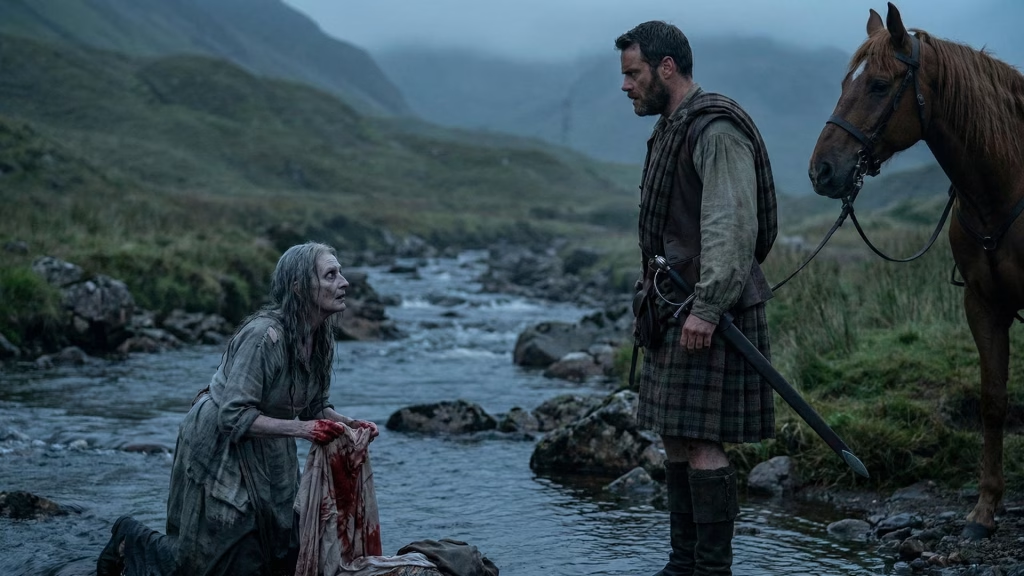
She was down by the water, scrubbing blood-stained clothes. In the old beliefs, seeing her was bad enough, but Ewen was desperate. He needed to know the outcome of the war he had started. He rode up to the spirit and asked her plainly if he would win the battle the next day. The washerwoman stopped her work and looked at him. She told him that his fate rested on a very small, domestic detail. If his wife served him butter with his porridge the next morning without him asking for it, he would be victorious. But if he had to ask for the butter, he would not leave the battlefield alive.
The Morning of Silence
You can imagine the tension in the house the next morning. Ewen sat down at the table, his stomach likely in knots. He wasn’t thinking about tactics or weapons; he was staring at his bowl. His wife was serving the food. She placed the porridge in front of him. Ewen waited. He watched her hands, waiting for the slab of butter that would promise him a long life and a victory.
Unfortunately, she put nothing else on the table.
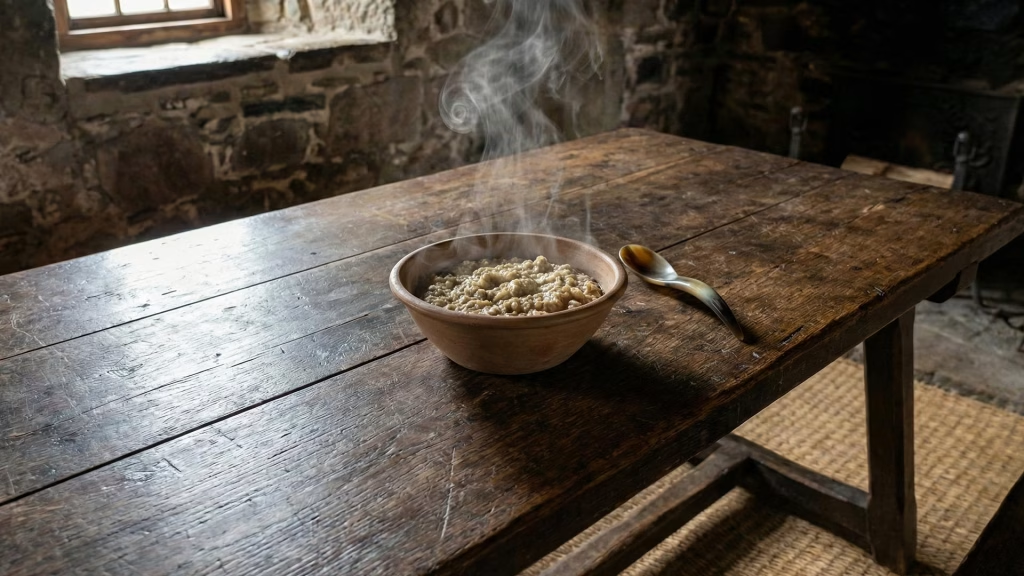
The silence must have been unbearable. Ewen sat there, the steam rising from the bowl, while the minutes ticked by. He was hoping she had just forgotten, hoping she would turn around and fetch it. But she didn’t. She went about her business, ignoring the man she had pushed into this war. Finally, Ewen’s temper snapped. He slammed his hand on the table and shouted for the butter. As the words left his mouth, the memory of the washerwoman’s prophecy crashed down on him. He had asked. The seal was broken. In that instant, he knew he was a dead man walking.
The Battle in the Glen
Ewen stormed out of the house in a blind rage, leaving the breakfast untouched. Mounting his faithful dun-colored pony, he rode straight for Glen Cainnir to face his father’s forces. There was no strategy to his attack that day. Instead, he charged into the lines like a man with nothing left to lose, hacking and slashing without a single care for his own defense.
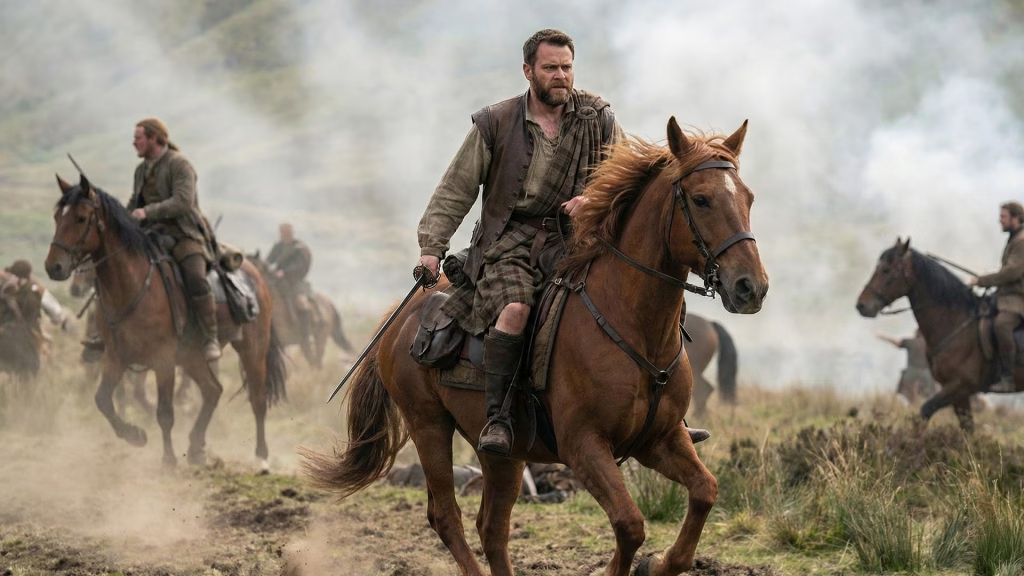
The Macleans of Duart, the clan from the other side of the island, had joined his father, Iain Og. In the end, a follower of the Duart chief ended it. In the chaos of the melee, this warrior swung a massive claymore at Ewen. The blade didn’t just kill him; it took his head clean off his shoulders. The strike was so powerful that the head flew through the air, yet Ewen’s body did not fall.

The Last Ride
This is where the history ends and the ghost story begins. Ewen had jammed his feet hard into the stirrups, and the shock of the blow caused his horse to bolt. The terrified animal galloped away from the clash of steel, carrying its master’s headless corpse still upright in the saddle. It tore through the heather, blood spurting from the neck, running blindly for home.
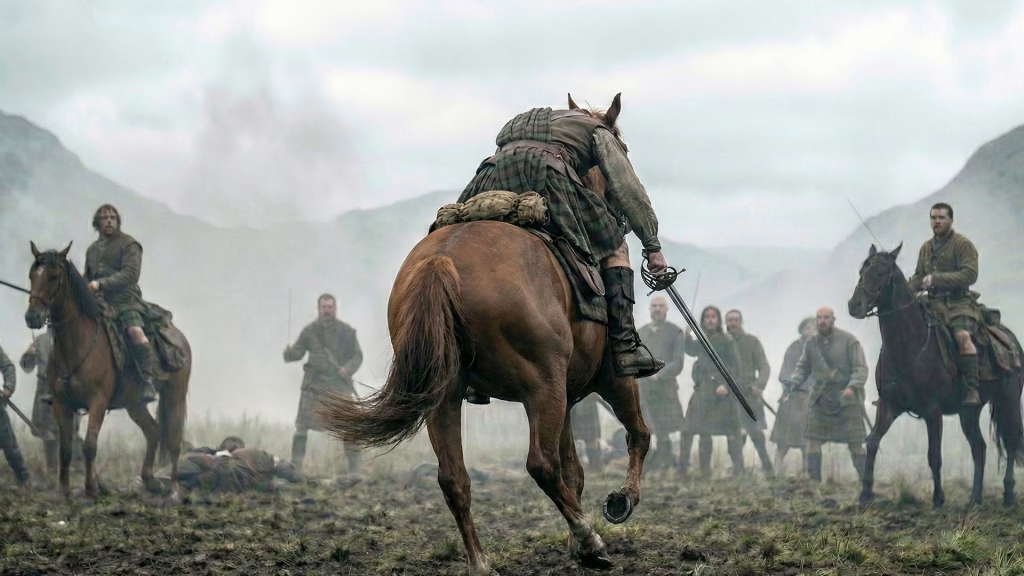
The horse made it a good distance, galloping frantically through the glen until exhaustion finally took it. The animal collapsed, and Ewen’s body finally tumbled to the ground. A cairn of stones now marks the spot where he was buried. It is a lonely grave for a man who wanted to own the whole valley.
The Watcher of Moy
Ewen of the Little Head never really left. The legend says he became a guardian spirit for the very family he tried to overthrow. He doesn’t haunt the glen to scare tourists; rather, he haunts the Maclaine chiefs. The story goes that whenever the hereditary chief of the Maclaines of Lochbuie is about to die, the family hears the sound of galloping hooves ringing around the walls of Moy Castle.

Some people claim to have seen him, a dark figure on a horse with a cloak pulled tight, missing the head he lost in the heat of a family feud. He is a reminder of the price of greed and the danger of ignoring the warnings the spirits offer us. So, when you are out near Lochbuie or walking through the silence of the glen, and you hear the faint sound of a horse running hard on the road, it might just be the wind. But plenty of locals will tell you they wouldn’t bet on it.
