



Early Life of Unity Mitford
Unity Mitford was born on 8 August 1914 into one of Britain’s best-known aristocratic families. She was the fourth daughter of David Freeman-Mitford and Sydney Bowles. The Mitfords became famous for their beauty, sharp wit, and wildly different political beliefs. Unity spent her early years in grand country houses, first at Asthall Manor in Oxfordshire and later at Swinbrook House.


Life in the Mitford household was lively and often dramatic. The sisters debated politics and literature around the dinner table and loved putting on plays and performances. Unity grew up alongside her siblings, including the novelist Nancy Mitford and the future activist Jessica Mitford. Each sister chose her own path, but Unity would become the most controversial of them all.
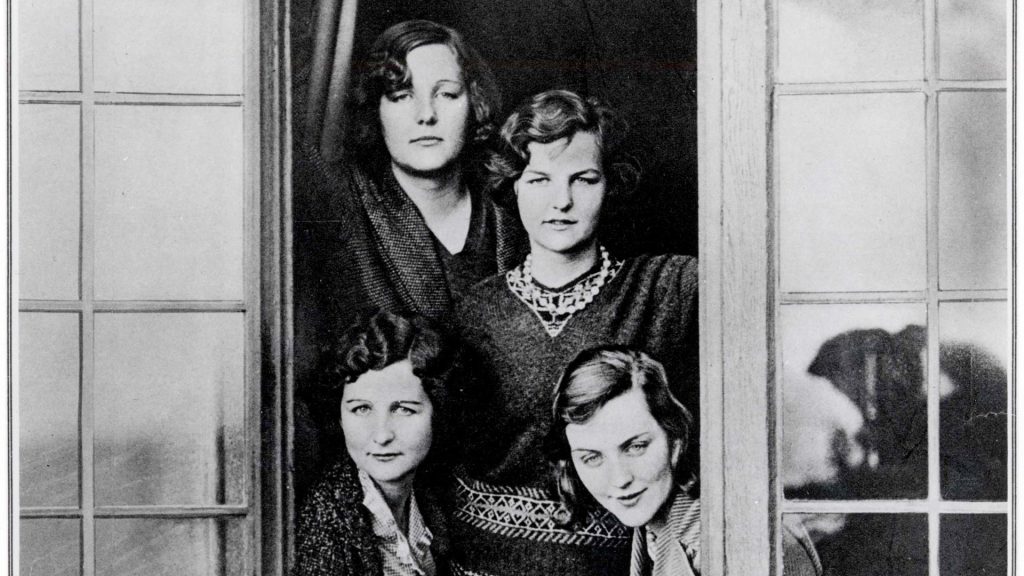
From childhood, Unity showed a strong interest in Germany. Her middle name, Valkyrie, reflected her parents’ fondness for German culture. As she grew older, that interest deepened. By the early 1930s, she had become strongly drawn to German nationalism. While some of her family felt uneasy about this, Unity embraced it with growing enthusiasm.
Even if the six daughters, born between 1904 and 1920, of the charming, eccentric David, Lord Redesdale and his wife Sydney had been quite ordinary women, the span of their lives - encompassing the most traumatic century in Britain's history - and the status to which they were born, would have made their story a fascinating one. But Nancy, Pamela, Diana, Unity, Decca and Debo, 'the mad, mad Mitfords', were far from ordinary.


The 1930s were a time of political tension across Europe, and Unity found herself increasingly attracted to extreme ideas. While her sisters explored different beliefs and lifestyles, Unity moved steadily toward open support for fascism.
Devotion to Hitler
Unity Mitford is best known for her intense admiration for Adolf Hitler. In 1933, soon after he came to power in Germany, she travelled to Munich with her sister Diana. Determined to meet him, Unity repeatedly visited his favourite restaurant, Osteria Bavaria. After many attempts, she finally caught his attention.
By 1935, Unity had been invited to sit at Hitler’s table. She began attending rallies, parades, and private gatherings. German newspapers presented her as a symbol of friendship between Britain and Germany, while many people in Britain reacted with shock and anger. Unity openly defended Hitler and National Socialism in letters and public comments, leaving no doubt about her loyalty.

Life in Nazi Germany
Unity formally joined the Nazi Party and appeared at propaganda events, including the Nuremberg rallies. She met senior Nazi officials and moved confidently within their circle. Her sister Diana’s marriage to Oswald Mosley, leader of the British Union of Fascists, strengthened the family’s links to far-right politics.
Not all the Mitford sisters shared these views. While Unity and Diana supported fascism, Jessica moved in the opposite direction and became a committed communist. The political divide within the family reflected the wider tensions of the time.
As war approached, Unity’s position became more difficult. When Britain declared war on Germany in September 1939, she faced a painful conflict between her country and the regime she admired.
The Suicide Attempt
On 3 September 1939, the day Britain entered the Second World War, Unity shot herself in the head in Munich’s English Garden. The bullet remained lodged in her brain because doctors could not remove it safely. Hitler reportedly visited her in hospital and later arranged for her return to Britain once she was well enough to travel.
She survived, but the injury left her severely weakened. British authorities considered whether she posed a threat, given her close ties to Hitler, yet her condition made it clear she needed care rather than punishment. The damage to her brain caused headaches, seizures, and memory problems for the rest of her life.
Return to Britain
After returning to Britain in late 1939, Unity’s life changed completely. The outspoken and politically active young woman who had moved confidently in Munich now depended on others for daily care. Her family arranged her return discreetly, aware that her close association with Hitler had caused anger and embarrassment at home.
British authorities considered whether she might pose a security risk because of her prominence in Nazi circles. Intelligence services monitored her for a time, yet her serious brain injury made clear that she was physically fragile and mentally impaired. Officials ultimately accepted that she could no longer play any political role.
Meanwhile, the country focused on the realities of war. Bombing raids, rationing, and mounting casualties shaped everyday life. Public hostility toward former fascist sympathisers hardened as the conflict deepened. Although Unity lived quietly under family supervision, her name continued to attract attention. For many people, she stood as a reminder that some members of Britain’s upper classes had once viewed fascism with sympathy in the years before war began.
Life on Inch Kenneth
In her later years, Unity moved to the remote island of Inch Kenneth, off the west coast of Scotland near the Isle of Mull. Her father had purchased the island before the war. It offered privacy and distance from public curiosity. The landscape was rugged and open, with grassy fields, Atlantic views, and the ruins of a medieval chapel.

Life on the island was quiet and closely supervised. Unity took short walks, read when she felt able, and saw family visitors from time to time. Her health remained fragile. The bullet in her brain continued to cause pain and seizures, and doctors warned that she needed constant care.
Myths and Rumors
Over time, stories began to circulate that Unity had signalled German U-boats from Inch Kenneth using lights or mirrors. These tales likely grew from her known support for Hitler and the island’s isolated location.
There is no evidence that she took part in espionage. British intelligence monitored her closely because of her past connections, yet no records suggest she signalled enemy submarines. Given her serious injuries, such actions would have been extremely difficult. Historians generally regard these claims as rumours rather than fact.
Final Years and Death
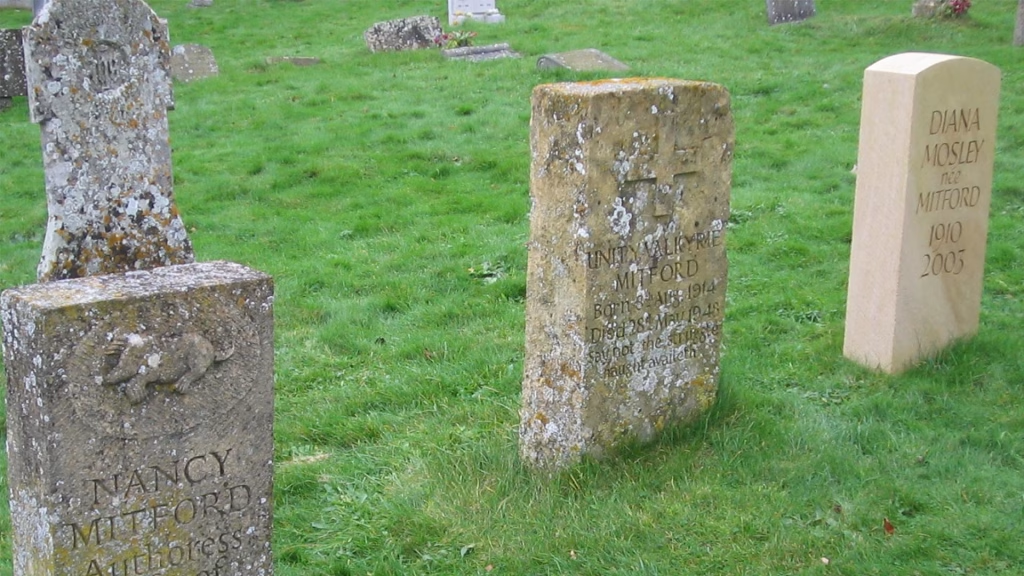
Unity Mitford died on 28 May 1948 at the age of thirty-three. Doctors believed meningitis, likely linked to swelling around the bullet in her brain, caused her death. She never fully recovered from her 1939 injury and remained physically and mentally impaired.
She was buried in Swinbrook churchyard in Oxfordshire, close to her family home.
Historical Context
Unity’s life still sparks debate. Some see her as naive and swept up in political excitement. Others point to her letters, which show clear admiration for Hitler and anti-Semitic views, and argue that she understood what she supported.
Her story reflects the wider atmosphere of the 1930s, when fear of communism and admiration for authoritarian leadership attracted some members of Europe’s aristocracy to fascism. Within her own family, political beliefs stretched from fascism to communism, revealing just how divided society had become between the wars.
Legacy and Cultural Memory
Unity Mitford remains a striking figure because her life combined glamour, privilege, and extreme politics. She crossed moral and national lines at a moment of deep crisis in Europe. Her failed suicide attempt and long decline added a tragic dimension to an already dramatic story.
'The Mitford Girls,' as John Betjeman called them, were one of the twentieth century's most controversial families; said to be always either in shrieks of laughter or floods of tears, they were glamorous, romantic and - especially in politics - extreme. Yet the teasing, often bordering on cruelty, the flamboyant contrasts and the violent disagreements, hid a powerful affection, subtle likenesses in character, and a powerful underlying unity.
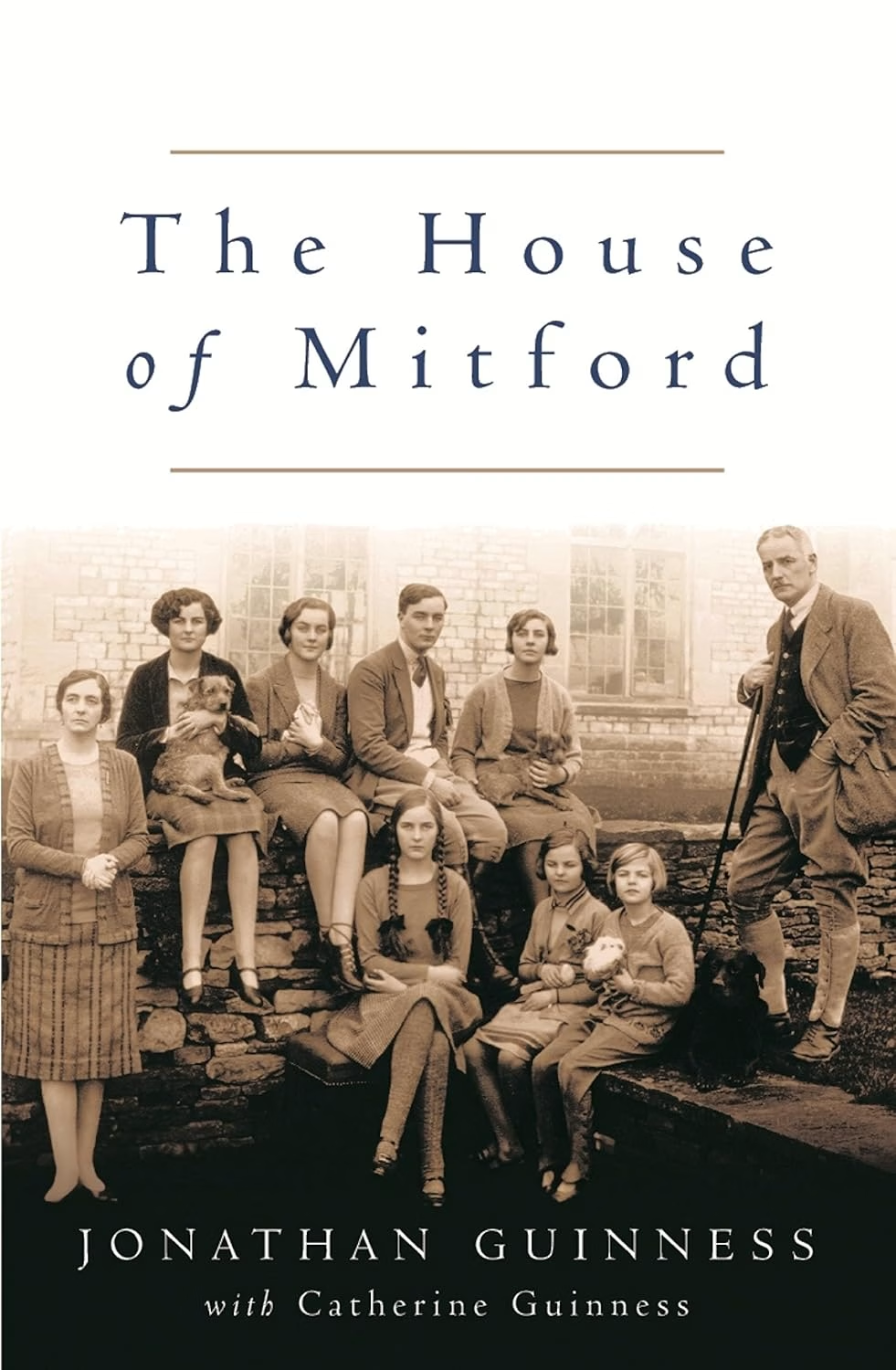
The wider Mitford family story, spanning literature, politics, and activism, continues to attract attention. Among the sisters, Unity stands out for her unwavering support of a destructive regime. Her retreat to Inch Kenneth symbolised the narrowing of her world after her injury.
By the time the full scale of Nazi crimes became widely known after the war, Unity had already died. Today, historians view her as an example of how ideology and personal devotion can lead individuals toward damaging and irreversible choices.
